Wnt Gene Expression Pathways
Introduction to Wnt Signaling
How Cells Talk to Each Other
Just like people, the cells in our bodies need to constantly communicate. This chatter is essential for everything from building an embryo to repairing a cut on your finger. Cells use various chemical signals to send messages, and one of the most important communication systems is the Wnt signaling pathway.
Think of the Wnt pathway as a fundamental instruction manual for cells. It tells them when to multiply, where to move, and what type of cell to become. This pathway plays a starring role during embryonic development, ensuring that a heart develops where it should and that fingers form on a hand. In adults, it helps maintain and repair tissues, like the lining of your intestine.
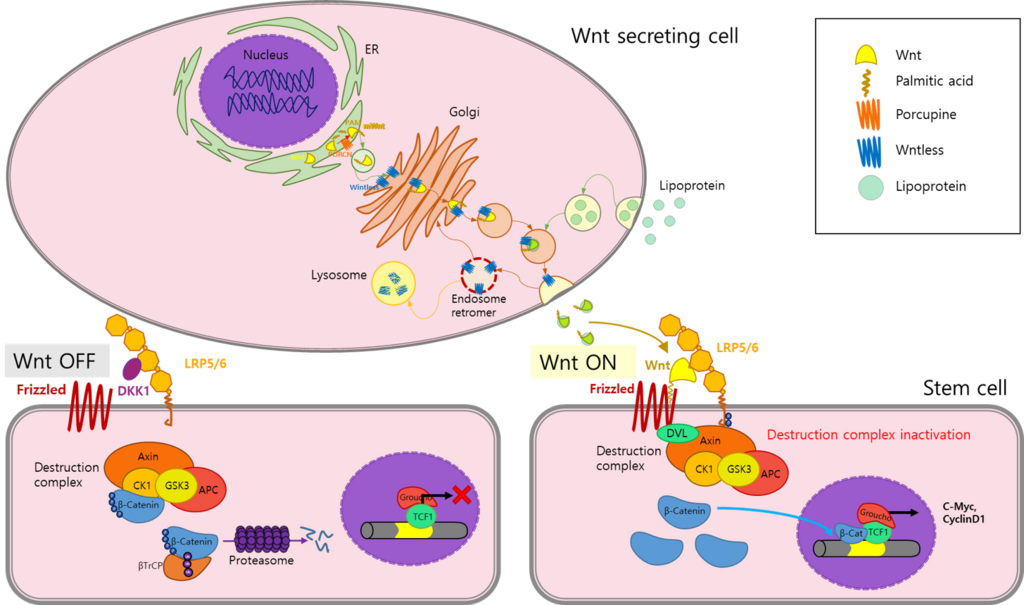
The Key Players
Every communication system has key components. For a phone call, you need a caller, a phone line, and a receiver. The Wnt pathway is similar, relying on a few molecular star players.
Wnt Ligands: These are the messages. They are a large family of secreted proteins that travel from a sending cell to a receiving cell.
The word "Wnt" is a mashup of two gene names: Wingless (from fruit flies) and Int-1 (from mice). Scientists discovered that these seemingly unrelated genes were actually part of the same family, and they combined the names to create Wnt.
Frizzled Receptors: These are the receivers, or the 'antennas' on the surface of the target cell. They are specifically shaped to catch Wnt ligands.
When a Wnt protein binds to a Frizzled receptor, it's like a key fitting into a lock. This connection kicks off a chain of events inside the receiving cell. But Frizzled receptors rarely work alone. They usually team up with a helper molecule.
Co-receptors: These are the assistants. The most common helpers for Frizzled are proteins called LRP5 and LRP6. For the signal to be properly received, the Wnt ligand often needs to bind to both the Frizzled receptor and the LRP co-receptor at the same time.
Two Main Routes
Once the Wnt message is received, the cell has to act on it. The pathway that the signal takes inside the cell can vary. While there are several branches, they are often grouped into two main types.
| Pathway | Key Feature | General Function |
|---|---|---|
| Canonical | Involves a protein called β-catenin | Regulates gene expression and cell fate |
| Non-canonical | Does not rely on β-catenin | Controls cell shape and movement |
The canonical pathway is the most well-studied. When it's activated, it prevents the destruction of a protein called β-catenin. This allows β-catenin to build up, travel into the cell's nucleus, and turn on specific genes. This is a powerful way to change a cell's long-term identity.
The term non-canonical simply refers to several other Wnt pathways that work without β-catenin. Instead of controlling genes, these pathways often have a more immediate effect on the cell's internal skeleton and polarity, telling it which way is 'up' and which way is 'down', or instructing it to move.
Think of it this way: the canonical pathway is like rewriting a company's mission statement, changing its long-term goals. The non-canonical pathways are more like giving immediate directions to the employees, telling them how to arrange the office furniture or where to go for a meeting.
Ready to check your understanding of these core concepts?
What is the primary role of β-catenin in the canonical Wnt signaling pathway?
The name "Wnt" is a portmanteau, or a blend of words, derived from two different gene names discovered in flies and mice.
These components and pathways form the basis of a signaling system that is fundamental to life. By understanding these basics, we can begin to see how Wnt signaling builds and maintains complex organisms.