Wittgenstein's Language Games
Introduction to Wittgenstein's Philosophy
The Two Wittgensteins
It’s rare for a philosopher to revolutionize the field once. Ludwig Wittgenstein did it twice, and he did it by completely disagreeing with himself. He published only one book in his lifetime, but his unpublished notes and lectures became just as influential, effectively creating two distinct philosophical personas: an early Wittgenstein and a later Wittgenstein.
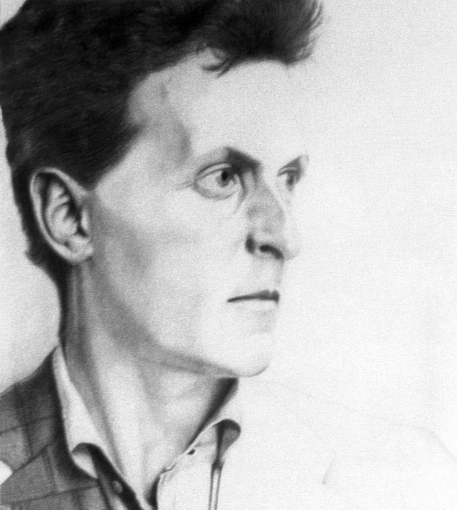
These two phases represent a dramatic shift in thinking about one of the most fundamental human tools: language. Understanding this shift is key to grasping his later, more famous ideas.
Early Wittgenstein and the Perfect Picture
Wittgenstein’s first major work was the Tractatus Logico-Philosophicus. He wrote much of it as a soldier in the trenches of World War I. The core idea is ambitious and elegant: language works by creating logical “pictures” of reality. Every meaningful statement, he argued, must correspond to a possible state of affairs in the world, like a one-to-one map.
For the early Wittgenstein, the main job of philosophy was to clean up language, getting rid of statements that don't picture anything real and are therefore meaningless.
In this view, language has a hidden, perfect logical structure. If we could just analyze it correctly, we could say exactly what can be said and then, as he famously concluded, we should remain silent about the rest. This meant that vast areas of human experience, like ethics, art, and religion, were considered beyond the limits of meaningful language because they don't correspond to factual states of the world.
A Change of Mind
After publishing the Tractatus, Wittgenstein believed he had solved all the major problems of philosophy. He left academia and worked as a schoolteacher and a gardener. But over time, he came to see the deep flaws in his own early work. He realized that language is far more complex and messy than a simple picture-making machine.
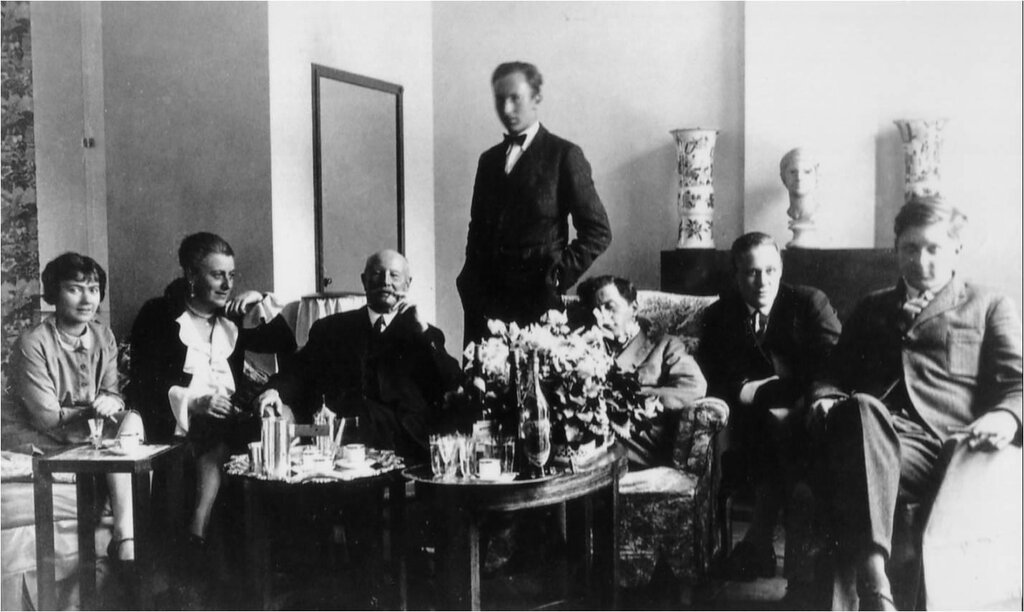
This profound change of heart led to his second masterpiece, Philosophical Investigations, published after his death. Here, he abandons the idea of language as a rigid, logical map. Instead, he argues that language is a diverse collection of tools we use to accomplish different tasks in different contexts.
Wittgenstein’s view of language as linguistic-practices offers a robust naturalised account of language which marks an historical turning point in philosophical thought about the nature of language.
He proposed that the meaning of a word isn't found by linking it to an object, but by observing how it's used. The word “game,” for instance, doesn't have one single definition that covers chess, soccer, and ring-around-the-rosy. Instead, these activities share a
family resemblance
noun
The idea that things in a particular group may be connected by a series of overlapping similarities, where no single feature is common to all.
This was a revolutionary idea. Meaning isn't fixed; it's fluid and depends on the specific social activity we're engaged in. He called these activities Sprachspiele.
Language-games
Instead of one grand, universal structure, language is made up of countless smaller, local activities. The way we talk to a doctor is different from how we talk to a friend, which is different from how we pray or tell a joke. Each is a different
Wittgenstein calls the activities ‘Sprachspiele’ which is often translated into English as ‘language-games’.
From here, the door opens to his most famous concept, which we will explore next. The key takeaway is the journey Wittgenstein himself took: from believing language was a perfect, rigid mirror of the world to seeing it as a flexible, human toolkit shaped by our lives and activities.
Let's check your understanding of this foundational shift.
What is the central thesis of Wittgenstein's early work, the Tractatus Logico-Philosophicus?
In his later philosophy, Wittgenstein uses the example of the word 'game' to illustrate what concept?
By moving from the Tractatus to the Philosophical Investigations, Wittgenstein didn't just change his mind; he changed the course of philosophy.