Winter War Deeper Dive
Strategic Decisions
A Strategy of Survival
Facing the colossal Red Army, Finland's military leaders knew a conventional, head-on fight was impossible. Their goal wasn't to defeat the Soviet Union, but to make an invasion so difficult and costly that Moscow might reconsider. The strategy was one of survival, built on two key pillars: a fortified defensive line in the south and flexible, mobile warfare in the north.
The heart of their static defense was the Mannerheim Line. This wasn't a single, massive wall, but a defense-in-depth system stretching across the narrow Karelian Isthmus. This strip of land, sandwiched between the Gulf of Finland and Lake Ladoga, was the most direct route to Helsinki. The Finns used the terrain to their advantage, integrating concrete bunkers, trenches, and anti-tank obstacles with the region's natural forests, lakes, and marshes.
The line was designed to channel the Soviet advance into kill zones, slowing down their massive armored divisions and exposing them to Finnish artillery. It was a testament to making the most of limited resources, turning geography into a weapon.
The Red Army's Plan
The Soviet Union's strategy was based on overwhelming force and speed. They expected a quick victory, similar to their recent invasion of Poland. The plan, devised by Marshal Kirill Meretskov, called for a multi-pronged assault.
The main thrust would be a massive attack by the 7th Army across the Karelian Isthmus to smash the Mannerheim Line. Simultaneously, other armies would attack further north, aiming to cut Finland in half at its narrowest point near the city of Oulu. This would isolate the southern part of the country and prevent any potential foreign aid from arriving via Sweden.
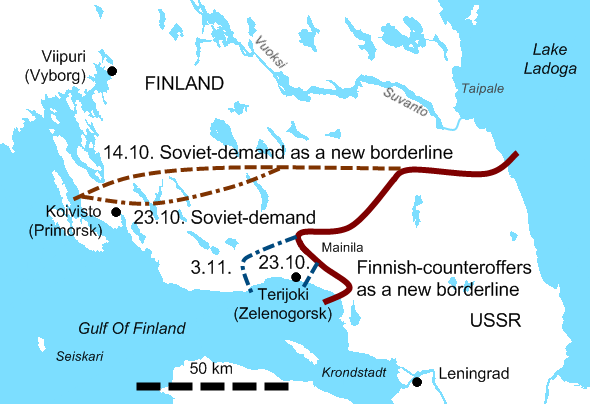
Soviet commanders seriously underestimated their opponent. They believed Finnish workers would welcome the Red Army as liberators. Their intelligence on the Mannerheim Line was poor, and they were woefully unprepared for the harsh winter conditions. Their logistics relied heavily on roads, a fatal flaw in a country with few of them.
Soviet tanks were painted olive green, making them easy targets against the snow. Their soldiers lacked proper winter clothing and skis, leaving them confined to the roads and vulnerable to attack.
Fighting in the Forest
North of the Mannerheim Line, the war was completely different. The landscape was a vast wilderness of forests, swamps, and frozen lakes, with very few roads. Here, Finland's defensive strategy truly shined. Instead of meeting the Red Army head-on, Finnish troops used guerrilla tactics perfected for their environment.
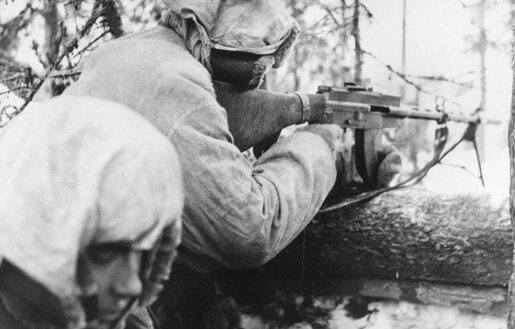
Small, mobile ski patrols would glide silently through the forests, striking Soviet columns before melting back into the woods. They targeted field kitchens and supply trucks, knowing that a cold and hungry army cannot fight effectively. The Finns perfected a tactic that became known as motti warfare.
Motti
noun
A Finnish military tactic where an enemy unit is encircled and isolated. The term originally refers to a cubic meter of stacked firewood, evoking the idea of chopping a larger force into smaller, manageable pieces.
The Finns would allow a long column of Soviet tanks and trucks to advance down a narrow forest road. Then, they would strike from the flanks, destroying the lead and rear vehicles to trap the entire column. Once immobilized, they would chop the column into smaller, isolated pockets—the mottis—and eliminate them one by one. This strategy turned the Red Army's numerical superiority into a disadvantage, as thousands of soldiers were trapped, frozen, and starved in the Finnish wilderness.
What was Finland's primary strategic objective at the beginning of the Winter War?
Which statement best describes the Mannerheim Line?
These contrasting strategies defined the Winter War. Finland's clever use of terrain and tactics allowed it to inflict staggering losses on a much larger foe, while the Soviet Union's initial arrogance and poor planning led to a disastrous and costly campaign.