Winston Churchill A Life in Leadership
Early Life and Education
An Aristocratic Upbringing
Winston Churchill was born into the highest ranks of British aristocracy. His father, Lord Randolph Churchill, was a prominent Conservative politician, and his mother, Jennie Jerome, was a wealthy American socialite. The family name carried immense weight and expectation. They were direct descendants of the 1st Duke of Marlborough, one of Britain's most celebrated military leaders.
Despite his privileged background, Churchill’s childhood was often lonely. His parents were loving but emotionally distant, consumed by their own political and social lives. Young Winston found warmth and affection primarily from his nanny, Elizabeth Everest, whom he affectionately called “Woom.” She became his confidante and a central figure in his early life, offering the emotional support his parents often withheld.
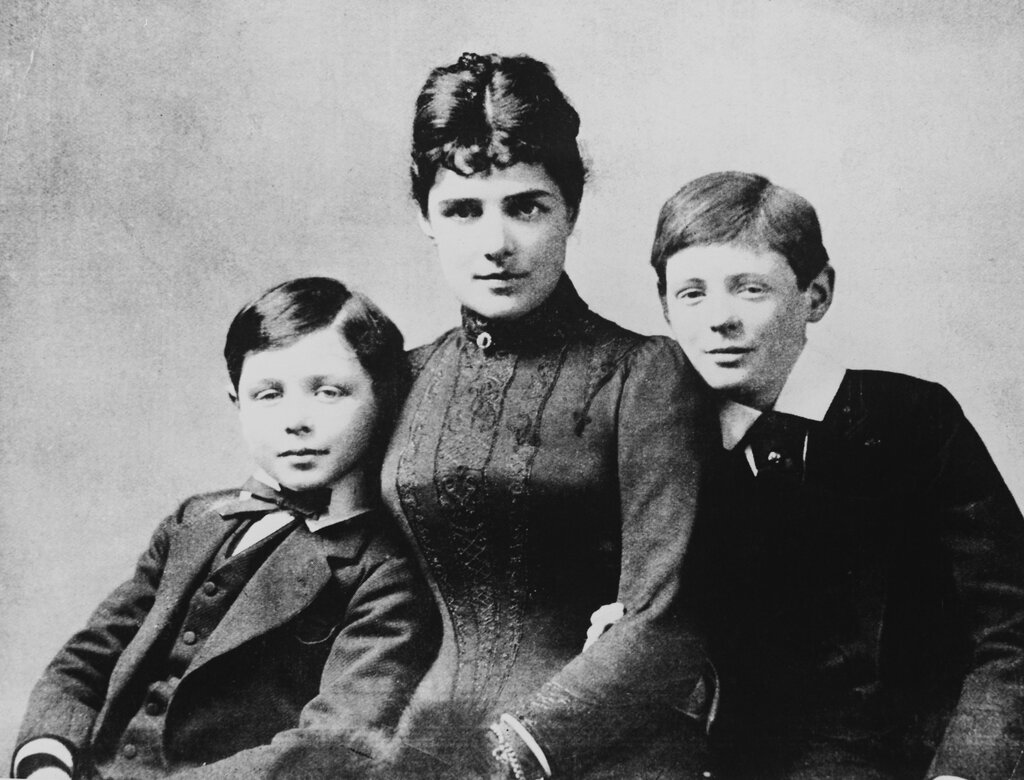
This upbringing instilled in him a deep sense of his own destiny and a profound connection to British history, but it also fostered a fierce independence. Left largely to his own devices, he developed a powerful imagination and a stubborn, self-reliant streak that would define his character.
A Rebellious Student
Churchill was not a model student in the traditional sense. He detested the rigid curriculum of his early boarding schools, particularly the focus on classics like Latin and Greek. He was willful, forgetful, and often found himself at the bottom of his class. His reports were filled with complaints about his lack of discipline and his tendency to question authority.
In 1888, he was sent to Harrow School, one of England's most prestigious institutions. While he continued to struggle with subjects he found uninteresting, he began to show glimmers of his future brilliance. He excelled in English and History, subjects that allowed him to immerse himself in stories of conflict, courage, and leadership. He also won a school fencing championship, displaying a competitive spirit that had little outlet in the classroom.
He learned on his own terms, diving deep into subjects that captured his imagination while resisting those that did not. This independent streak was a source of frustration for his teachers but a key to his later success.
Finding His Path at Sandhurst
Given his poor academic record, a university education seemed out of the question. His father decided on a military career for him, a path that suited Winston's adventurous nature. However, entry into the Royal Military College at Sandhurst was competitive, and it took Churchill three attempts to pass the entrance exam.
Once admitted in 1893, he thrived. The structure and focus of military life suited him far better than the abstract studies at Harrow. At Sandhurst, learning had a clear, practical purpose. He applied himself with a newfound determination, specializing in the cavalry, the most prestigious and daring branch of the army.
He graduated eighth out of a class of 150 in December 1894. His time at Sandhurst had given him the discipline his early schooling lacked and honed his innate desire for action and leadership. He was no longer just the rebellious son of an aristocrat; he was a commissioned officer in the British Army, ready to make his own mark on the world.