Winning Chess Strategies and Tactics
Core Tactical Motifs
The Double Threat
In chess, the most effective moves often accomplish more than one thing at once. The simplest and most powerful example of this is the double attack, where a single piece threatens two or more of your opponent's pieces simultaneously. Your opponent can only respond to one threat, which means you're guaranteed to gain an advantage.
The most feared double attack is the knight fork. Because of the knight's unique L-shaped move, its attacks are often hard to spot until it's too late.
Imagine a white knight lands on the e6 square. From there, it attacks both the black king on g8 and the black queen on g7. Black must move the king out of check, which allows the white knight to capture the queen on the next turn. This is a classic knight fork and a devastating tactic that can instantly swing a game in your favor.
While knights are the quintessential forking pieces, queens, rooks, bishops, and even pawns can execute forks. The key is to look for geometric patterns where one of your pieces can hit two enemy targets in a single move. These are because they drastically limit the opponent's available responses.
Pins and Skewers
Pins and skewers are tactics that happen along a single line: a rank, file, or diagonal. They rely on the power of long-range pieces like the queen, rook, and bishop to immobilize the opponent's forces.
Pins are a clever strategy in chess where a piece is trapped and unable to move without revealing a more important piece hiding behind it.
There are two types of pins. An absolute pin is when a piece is pinned to the king. In this case, the pinned piece is legally forbidden from moving because doing so would put its own king in check. A relative pin is when a piece is pinned to another, more valuable piece (like a queen or rook). The pinned piece can legally move, but it's a terrible idea because you would lose the more valuable piece behind it.
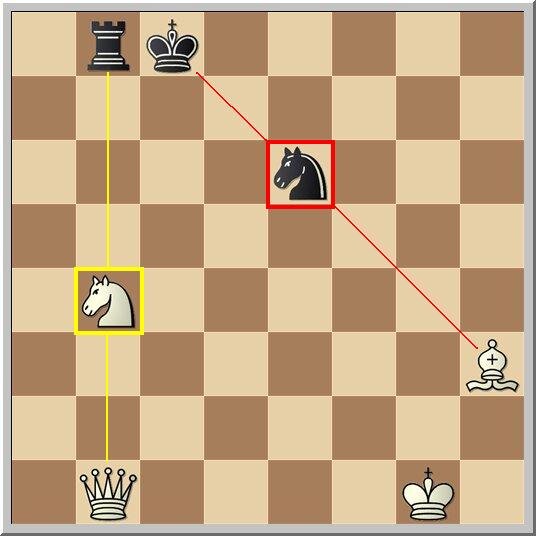
A skewer is the inverse of a pin. With a skewer, the attacking piece threatens a more valuable piece first. The valuable piece is forced to move out of the way, exposing a less valuable piece behind it to be captured. While a pin immobilizes, a skewer forces a retreat that results in a loss of material.
The Hidden Attack
Not all attacks are direct. Some of the most elegant tactics are revealed in two steps. A discovered attack occurs when you move a piece that was blocking an attack from another one of your pieces. Suddenly, a seemingly quiet move unleashes a hidden threat.
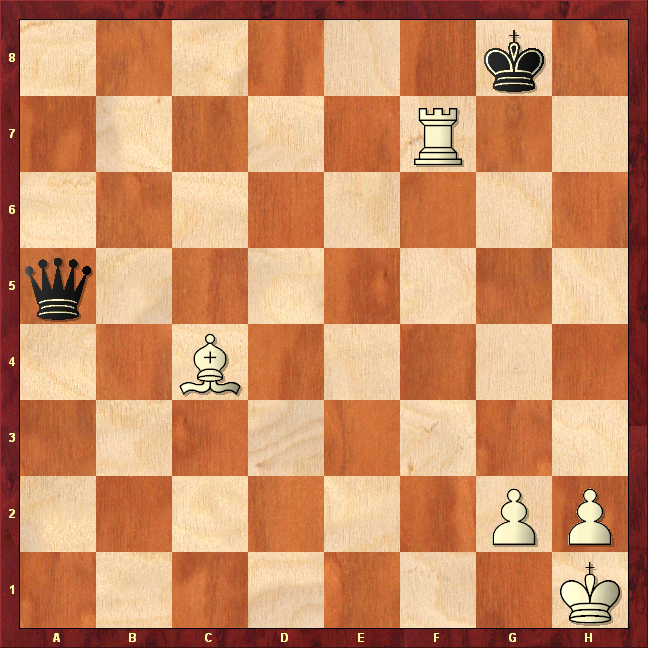
The most powerful version is a discovered check. Since the opponent must respond to the check, the piece that moved is free to do something else devastating—like capture another piece or deliver a second threat—all on the same turn. The dual threats are often impossible to parry.
A final, crucial concept ties all these tactics together: removing the defender. Sometimes, your opponent has a piece that is just barely holding their position together, preventing your fork or pin.
Your goal then becomes to eliminate that key defensive piece. You can capture it, or use a sacrifice to lure it away from its post. Once the defender is gone, the position collapses, and your tactical shot becomes available.
What is the primary characteristic of a 'double attack' in chess?
Imagine a white queen on d1, a black king on h7, and a black rook on f5. Which of the following describes the situation?
Recognizing these patterns is the first step. With practice, you'll start to not only see them but create them in your own games.