Wing Foiling Fundamentals
Introduction to Wing Foiling
A New Way to Fly
Imagine gliding silently just above the water's surface, powered only by the wind. You're not on a boat, and you're not being pulled by one. You're wing foiling, a sport that combines the grace of surfing with the freedom of sailing into something entirely new. It feels like flying.
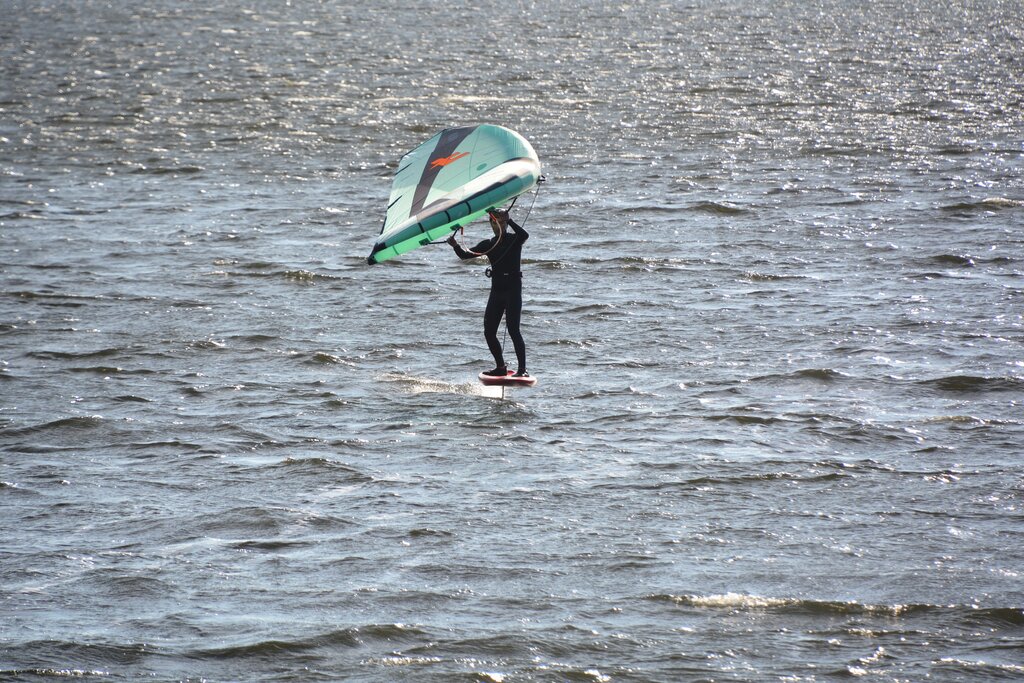
At its heart, wing foiling involves two key pieces of equipment: a handheld inflatable wing and a board with a hydrofoil attached underneath. The wing acts like a sail, catching the wind to propel you forward. The hydrofoil is essentially an underwater wing that, as it gains speed, lifts the entire board up and out of the water. This lift is what eliminates drag and creates that incredible sensation of weightless flight.
Where Did It Come From?
Wing foiling might seem like it appeared overnight, but its roots run deep in the history of water sports. Think of it as a greatest hits album, mixing the best elements of its predecessors. The concept of a handheld wing isn't new; people have been experimenting with them since the 1980s. But early versions were heavy and inefficient.
The real breakthrough came when two technologies matured: modern, lightweight inflatable kites from kitesurfing and efficient hydrofoils from foiling. Kitesurfing technology made it possible to create powerful, light, and safe wings. At the same time, hydrofoils, which had been used on boats for decades, were refined for surfboards, kiteboards, and stand-up paddleboards (SUPs). By combining a modern inflatable wing with a hydrofoil board, a new sport was born. It offered a unique blend of accessibility and performance that caught on quickly around the world.
Foil, Wing, or Surf?
If you're familiar with other board sports, you might wonder how wing foiling fits in. It borrows ideas from many, but the experience is unique.
Unlike windsurfing, the wing isn't attached to the board with a mast. This gives you more freedom of movement and makes the gear much simpler to handle, both in and out of the water.
Compared to kitesurfing, the wing is held directly in your hands, eliminating the long lines that connect a rider to a kite high in the sky. This means you need less space to launch and can ride in more confined spots. The power delivery is also more direct and intuitive, and safety is simpler since you can just let go of the wing to instantly depower it.
And while it shares the feeling of riding a wave with surfing, wing foiling isn't dependent on them. The hydrofoil can lift you up on even the smallest bumps on the water, or "swell," allowing you to ride for long distances on open water, turning any body of water with a bit of wind into a playground.
What are the two essential pieces of equipment for wing foiling?
What is the primary function of the hydrofoil in wing foiling?