Wing Chun Fundamentals
Introduction to Wing Chun
An Art Born from Necessity
Wing Chun's story begins not in a grand temple, but with a practical problem. Legend tells of a Buddhist nun named Ng Mui who wanted to create a martial art that didn't rely on brute strength. She observed a fight between a snake and a crane, studying how each animal used its natural advantages—the snake's fluid movements and direct strikes, the crane's stability and sharp pecks.
Ng Mui refined these observations into a new system. She later taught it to a young woman named Yim Wing-chun, who used it to defend herself against an unwanted suitor. The art was named after her, and its core philosophy remains: practicality over spectacle.
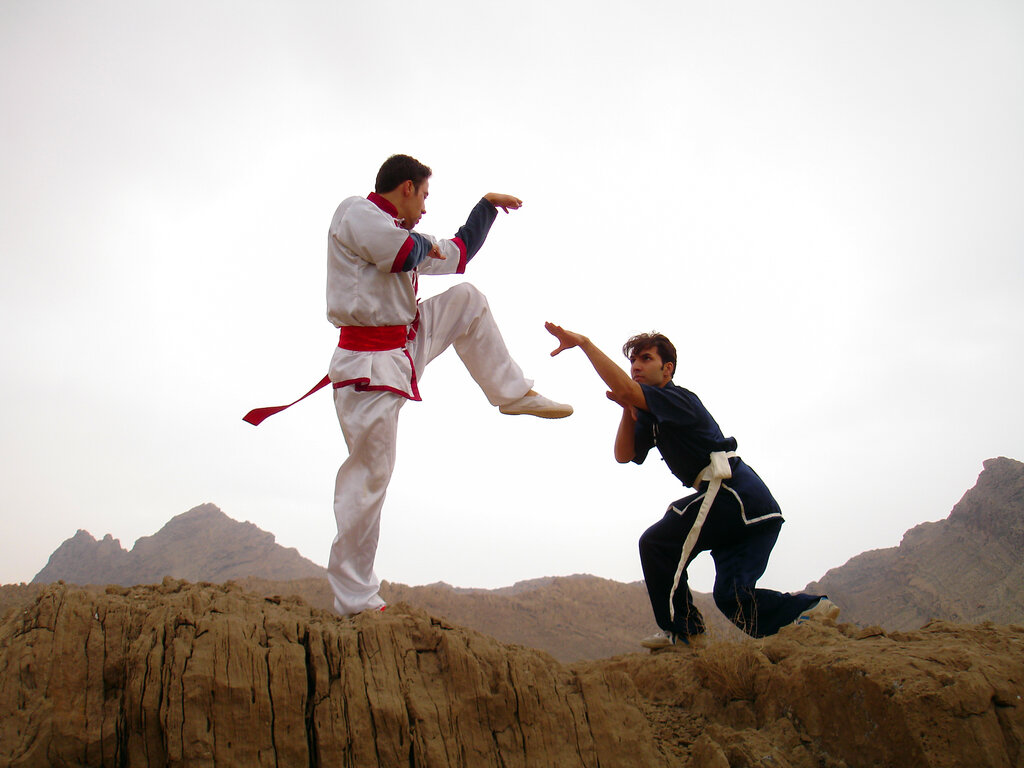
This focus on real-world effectiveness shaped Wing Chun's foundational principles. It's a system built on simple, powerful ideas that allow a smaller person to overcome a larger, stronger opponent.
The Core Ideas
Three concepts form the bedrock of Wing Chun. The first and most important is the Centerline Theory.
Imagine a vertical line running down the middle of your body, from the top of your head to the ground. Along this line are your most vital targets: eyes, nose, throat, solar plexus, and groin. This is your centerline. In a fight, your primary job is to protect this line while attacking your opponent's.
By keeping your guard positioned along your centerline, you create a protective wedge. Any incoming attacks are deflected to the outside, away from your vital areas. Meanwhile, all of your own strikes are directed straight down your opponent's centerline, taking the most direct path to their weakest points.
Control the line, control the fight.
The second principle is Economy of Motion. Wing Chun practitioners waste no movement. Every action is precise and direct. There are no high kicks or flashy, spinning attacks. The philosophy is simple: the shortest distance between two points is a straight line. Punches travel directly from your guard to the target, conserving energy and maximizing speed.
The third principle is Simultaneous Attack and Defense. Many martial arts teach you to block an attack first, and then counter with your own strike. Wing Chun combines these into a single fluid motion. For example, a practitioner might use one hand to deflect an incoming punch while striking with the other at the exact same time. This robs the attacker of their momentum and leaves them little time to react.
Built for the Real World
These principles make Wing Chun an incredibly practical system for self-defense. It's designed for close-range confrontations, the kind that are most likely to happen in a real-world scenario. The focus on structure, directness, and efficiency allows a practitioner to neutralize a threat quickly, regardless of their size or strength.
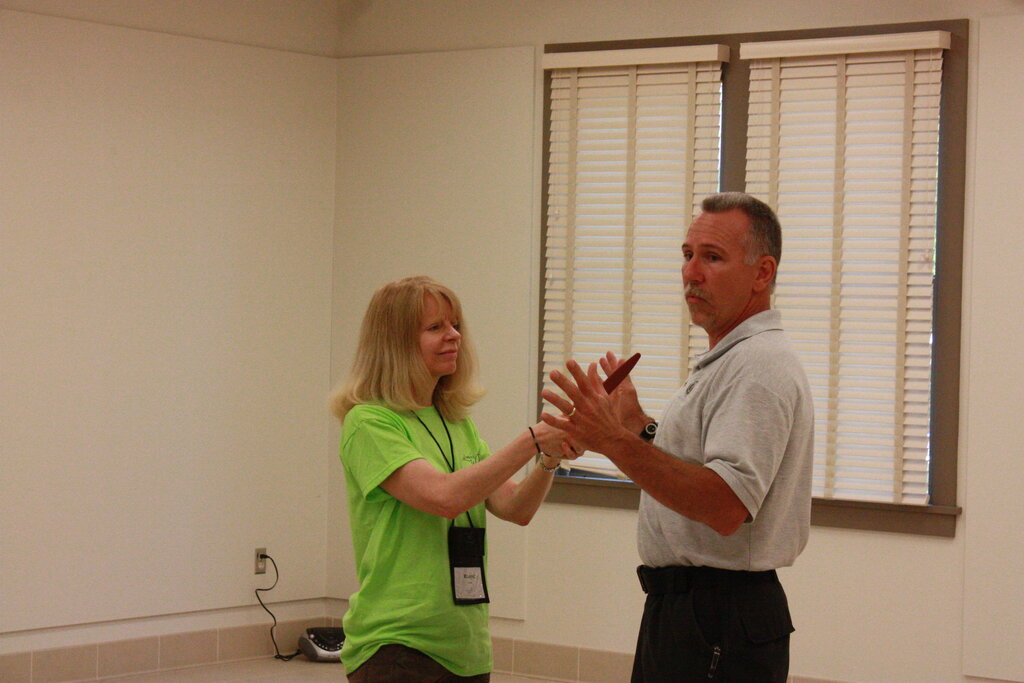
By understanding the centerline, moving efficiently, and combining offense with defense, Wing Chun provides a logical framework for handling a physical threat. It's less about memorizing countless techniques and more about internalizing these core concepts.