Wicca Explained
Introduction to Wicca
What Is Wicca?
Wicca is a modern Pagan religion centered on a deep reverence for nature. It emerged in England in the mid-20th century through the writings of Gerald Gardner. While it draws inspiration from pre-Christian European folklore and magical traditions, Wicca is not an ancient, unbroken faith. Instead, it's a contemporary spiritual path that reconstructs and reinterprets older ideas for the modern world.
At its heart, Wicca is an earth-based religion. Practitioners, known as Wiccans, see the divine in the natural world—in the changing seasons, the cycles of the moon, and the life that springs from the earth. This focus on nature shapes every aspect of their beliefs and practices.
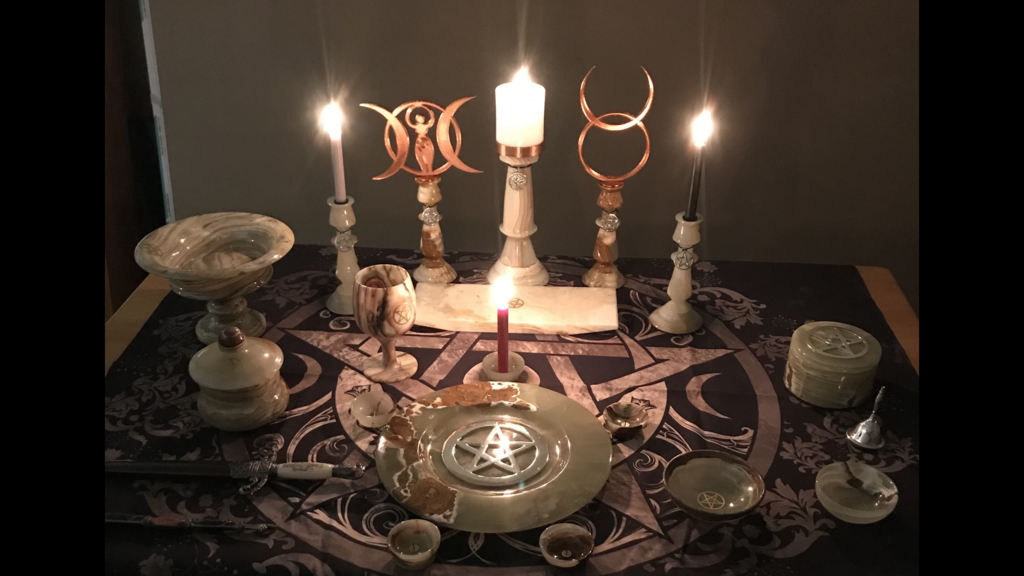
The Divine Duality
Most Wiccans worship a divine duality: a Goddess and a God. They are not seen as opposing forces like good and evil, but as complementary partners who represent the balanced forces of the universe.
The Goddess is often associated with the Earth, the Moon, creativity, and intuition. She is seen as the universal mother, representing the cycles of birth, life, and death. The God, often called the Horned God, is connected to the Sun, the wilderness, and the hunt. He represents the cycle of life, death, and rebirth in nature. Together, their union is believed to be the source of all life.
This belief in a divine pair emphasizes balance: light and dark, creation and destruction, summer and winter. It's a reflection of the cycles observed in the natural world.
Nature and the Elements
Because the divine is present in nature, the physical world is sacred to Wiccans. Many rituals are timed to align with the phases of the moon and the changing of the seasons, known as the Wheel of the Year. This practice helps practitioners feel connected to the rhythms of the Earth.
A key part of this worldview is the focus on the five classical elements: Earth, Air, Fire, Water, and Spirit. These are not just physical substances but symbolic representations of different types of energy and aspects of life. They are considered the building blocks of the universe and are often invoked during rituals to create a sacred space.
| Element | Associations |
|---|---|
| Earth | North, stability, body, prosperity |
| Air | East, intellect, communication, thought |
| Fire | South, passion, energy, transformation |
| Water | West, emotions, intuition, healing |
| Spirit | Center, balance, the divine, the self |
Core Ethical Principles
Wicca does not have a set of divine commandments like many other religions. Instead, it is guided by personal responsibility and two core ethical principles: the Wiccan Rede and the Threefold Law.
The Wiccan Rede is a simple guideline, famously summarized as: "An it harm none, do what ye will."
This isn't a license to do anything you want. It's a call to exercise personal freedom while taking great care not to cause harm to yourself, other people, or the natural world. It encourages Wiccans to think through the consequences of their actions before they act.
The Threefold Law acts as a principle of karmic return. It states that whatever energy a person puts out into the world—positive or negative—will be returned to them three times over.
This principle reinforces the Rede by adding a layer of personal accountability. Whether you perform an act of kindness or an act of malice, you can expect that energy to come back to you, magnified. Together, these two principles form the ethical foundation of Wiccan practice, emphasizing self-determination and responsibility for one's own actions.
Time to check what you've learned.
True or False: Wicca is an ancient religion that has been practiced continuously since pre-Christian times.
How do most Wiccans typically view the relationship between the Goddess and the God?
These foundational beliefs—in divine duality, the sacredness of nature, and personal ethical responsibility—are the starting point for understanding the diverse and growing path of Wicca.