Why Enterprise AI Projects Fail Before Launch
Understanding Enterprise AI
What Is Enterprise AI?
When people hear “AI,” they often think of science fiction or the voice assistants on their phones. Enterprise AI is different. It’s the application of artificial intelligence to solve specific, practical problems within a business.
Think of it less as building a thinking machine and more as creating a highly specialized tool. This tool might automate repetitive tasks, uncover hidden patterns in sales data, or predict when a piece of factory equipment needs maintenance. The goal isn't to replicate human intelligence, but to augment it by integrating AI directly into core business operations, from supply chains to customer service.
Why Bother With AI?
Companies adopt AI for a few key reasons: to become more efficient, to make smarter decisions, and to create better products and services. By automating routine processes, employees can focus on more strategic work. By analyzing vast amounts of data, AI can provide insights that a human might miss, leading to better-informed choices.
This isn't just about cutting costs. It's about fundamentally changing how a business operates. For example, a bank can use AI to detect fraudulent transactions in real time, a retailer can optimize its inventory to match local demand, and a streaming service can recommend movies you'll actually want to watch.
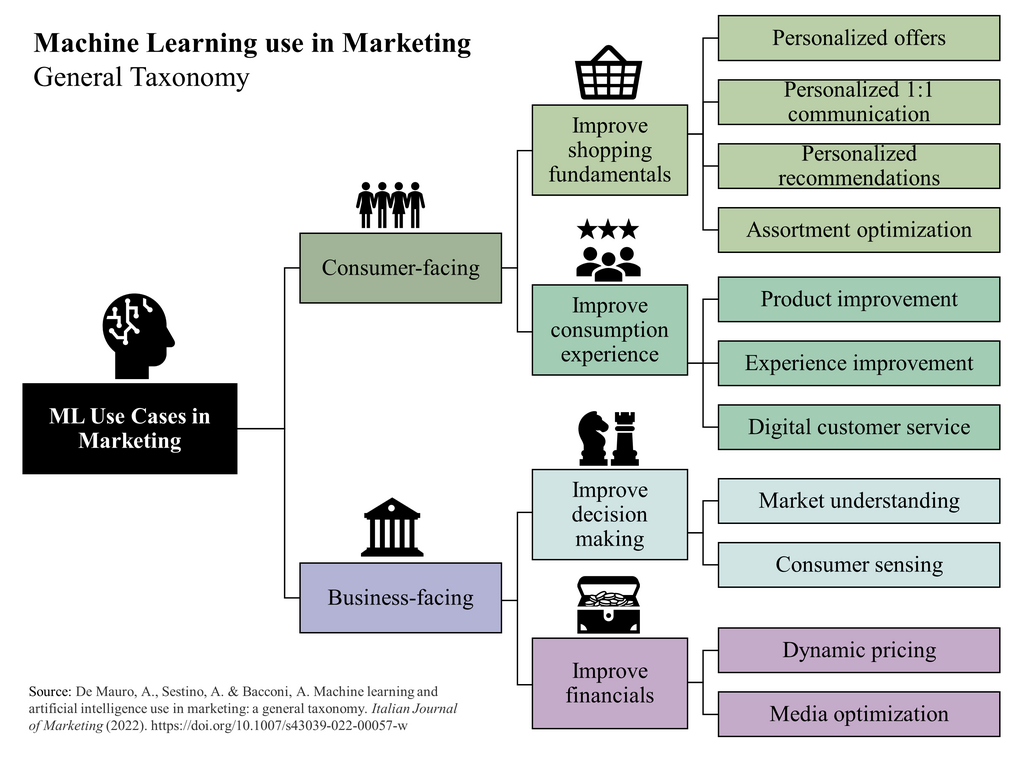
The potential benefits are huge, transforming how organizations compete and deliver value.
AI technologies enhance productivity through automation, analytics, and process optimization.
It’s Not a Magic Wand
For all its promise, implementing AI is rarely a simple plug-and-play affair. It introduces unique and complex challenges. One of the biggest hurdles is simply integrating the new technology with a company's existing systems, which are often old and inflexible.
A major obstacle is the complexity of integrating AI with legacy infrastructure and multiple data systems, which can prevent AI tools from delivering meaningful insights.
Furthermore, a successful AI initiative requires a clear purpose. Without a direct link to a strategic business goal, an AI project can easily become a costly science experiment with no real-world impact. It's not enough to want "AI"; a company needs to know exactly what problem it wants AI to solve. Is the goal to reduce customer churn by 10%? Or to improve sales forecasting accuracy? Specific, measurable objectives are crucial.
Data Is the Fuel
AI models learn from data. If the data is messy, incomplete, or biased, the AI's performance will be poor. This is a critical point that many organizations overlook. The principle of "garbage in, garbage out" is especially true for artificial intelligence.
This is where data governance comes in. Governance is the set of rules and processes for managing a company's data. It ensures data is accurate, consistent, and secure. Without strong data governance, an organization might spend millions on an AI system only to feed it unreliable information, leading to flawed insights and bad business decisions.
If there's one factor that dooms more AI projects than any other, it's poor data quality and governance.
Beyond quality, there's also the challenge of getting enough of the right data. Many AI projects stall because the necessary information is scattered across different departments in incompatible formats. Preparing and cleaning data often takes up the majority of the time and effort in an AI project.
Common Pitfalls
Even with a clear goal and good data, AI adoption can stumble. One common pitfall is setting unrealistic expectations. AI is a powerful tool, but it's not a silver bullet that will instantly solve every problem. Overhyping its capabilities can lead to disappointment and a loss of support from stakeholders.
Another frequent mistake is failing to involve the right people. An AI project isn't just an IT initiative. It requires collaboration between technical experts, business leaders, and the employees who will ultimately use the AI-powered tools. Without buy-in and feedback from all these groups, the resulting system may not meet the needs of the business or its users.
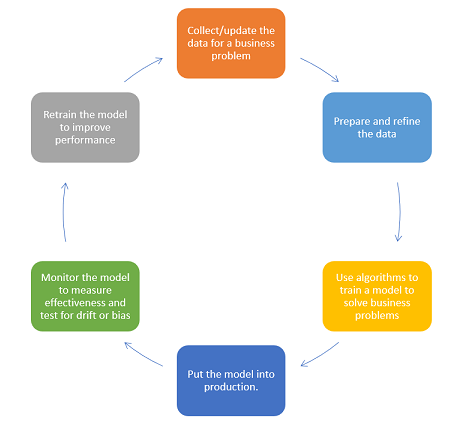
Finally, many businesses lack the internal skills to build and manage AI solutions. Finding talent is competitive, and without the right expertise, projects can quickly go off the rails.
Many businesses lack the expertise to implement AI solutions effectively, leading to failed projects and wasted resources.
Let's review these core concepts before moving on.
What is the primary goal of Enterprise AI?
The principle of "garbage in, garbage out" is especially true for AI. What does this highlight the importance of?
Understanding these foundational ideas is the first step toward navigating the complex but rewarding world of enterprise AI.