Who is Google's AI?
Introduction to Large Language Models
What Are Large Language Models?
A large language model, or LLM, is a type of artificial intelligence designed to understand and generate human-like text. Think of it as a very advanced autocomplete. It predicts the next word in a sentence based on the words that came before it. By doing this over and over, it can write emails, summarize articles, translate languages, and even create stories.
The core purpose of an LLM is to process and produce language in a way that is coherent and contextually relevant. This ability stems from being trained on enormous amounts of text data, allowing the model to learn grammar, facts, reasoning skills, and different styles of writing.
From Simple Rules to Deep Learning
Language models are not new. Early versions relied on statistical methods and hand-crafted rules. For example, a simple model might look at a pair of words, like "thank you," and calculate how often "you" appears after "thank." This is called an n-gram model. While useful, these models had a very limited understanding of context. They couldn't grasp the meaning of a sentence beyond a few words.
The big leap forward came with neural networks, which can learn complex patterns from data. This led to the development of today's LLMs. Instead of just looking at adjacent words, these models can process entire sentences or paragraphs at once, capturing deeper meanings and relationships within the text. The transition was from models that counted word frequencies to models that learned the meaning behind the words.
The evolution was a shift from simple statistical predictions to a deeper, context-aware understanding of language.
Why Size Matters
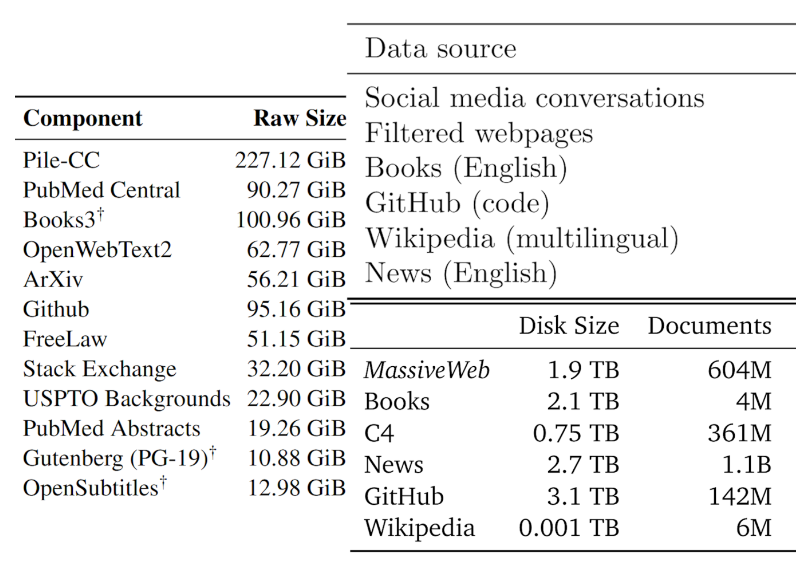
The "large" in large language model is key. It refers to two things: the size of the model itself (the number of parameters, which are like adjustable knobs) and the massive amount of data it was trained on.
A model with billions of parameters, trained on a significant portion of the internet and a vast library of books, can learn more intricate patterns. This scale allows LLMs to develop a more nuanced grasp of grammar, style, and even abstract concepts. Larger models often exhibit "emergent abilities"—skills like performing simple arithmetic or writing code that they weren't explicitly taught, but that arise from the sheer complexity of the language patterns they've learned.
The Transformer Architecture
The breakthrough that enabled modern LLMs was an architecture called the Transformer, introduced in 2017. Before the Transformer, models processed text sequentially, one word at a time. This made it difficult to keep track of long-range dependencies, like connecting a pronoun at the end of a paragraph to the noun it refers to at the beginning.
The Transformer's key innovation is the attention mechanism. This allows the model to look at all the words in the input text simultaneously and decide which ones are most important for understanding the context of any given word. When generating a response, it can "pay attention" to the most relevant parts of the prompt, resulting in much more coherent and contextually aware text. It's what allows an LLM to understand that in the sentence "The dog chased the ball until it was tired," the word "it" refers to the dog, not the ball.
This ability to weigh the importance of different words is what makes Transformer-based models so powerful and versatile for a wide range of language tasks.
Now, let's test your understanding of these core concepts.
What is the primary function of a Large Language Model (LLM)?
What does the 'large' in 'Large Language Model' primarily refer to?
Understanding these fundamentals—what LLMs are, how they evolved, the importance of scale, and the role of the Transformer architecture—is the first step to grasping the power of modern AI.