What is the Biggest Thing in the World?
Defining 'Biggest'
What Does 'Biggest' Mean?
When you hear the word “biggest,” what comes to mind? A skyscraper? A whale? A planet? The word seems simple, but it can mean different things. Whether something is the “biggest” depends entirely on how you decide to measure it.
Let's break down the four most common ways we measure size. Understanding them is the key to making fair comparisons, whether you're talking about animals, mountains, or entire galaxies.
Four Ways to Measure Size
The first and most straightforward way to measure something is by its length.
Length
noun
The measurement of something from end to end.
Length is a one-dimensional measurement. We use it for height (how tall), width (how wide), and distance (how far). A giraffe is tall, so it has a great length from head to toe. A long rope has a great length from one end to the other. But length doesn't tell the whole story. A very long, thin snake isn't necessarily 'bigger' than a shorter, wider elephant.
That's where area comes in. Area measures a flat surface, like the floor of a room or a piece of paper.
Area
noun
The extent of a two-dimensional surface or shape.
Think about buying a rug. A long, skinny runner has a greater length, but a square rug might cover more total floor space. The square rug has a larger area. When we want to know how much surface something covers, we're talking about area. It’s a two-dimensional measurement, usually calculated by multiplying length times width.
But what about things that aren't flat? To measure the space an object occupies, we need to think in three dimensions. This is called volume.
Volume
noun
The amount of three-dimensional space an object occupies.
A hot air balloon has a massive volume because it takes up a lot of space. A small, solid rock has a very small volume. Volume tells us how much room something takes up, regardless of what it's made of.
Finally, we have mass. This is often confused with weight, but it's slightly different. Mass measures how much 'stuff' or matter is in an object.
Mass
noun
A measure of the amount of matter in an object.
Imagine two boxes of the same size. One is filled with feathers, and the other is filled with rocks. They have the same volume, but the box of rocks has far more mass. It contains more 'stuff.' A tiny object can have a huge mass if it's incredibly dense.
Context is Key
So, which metric is the right one? It depends on the question you're asking.
| Metric | What it Measures | Example Question |
|---|---|---|
| Length | Distance in one dimension | Which river is the longest? |
| Area | Space on a flat surface | Which country covers the most land? |
| Volume | Space an object occupies | Which building has the most room inside? |
| Mass | Amount of matter in an object | Which animal is the heaviest? |
A blue whale has the greatest mass of any animal on Earth. But is it the 'biggest'? The Great Barrier Reef covers a much larger area, and some giant sequoia trees are taller (greater length).
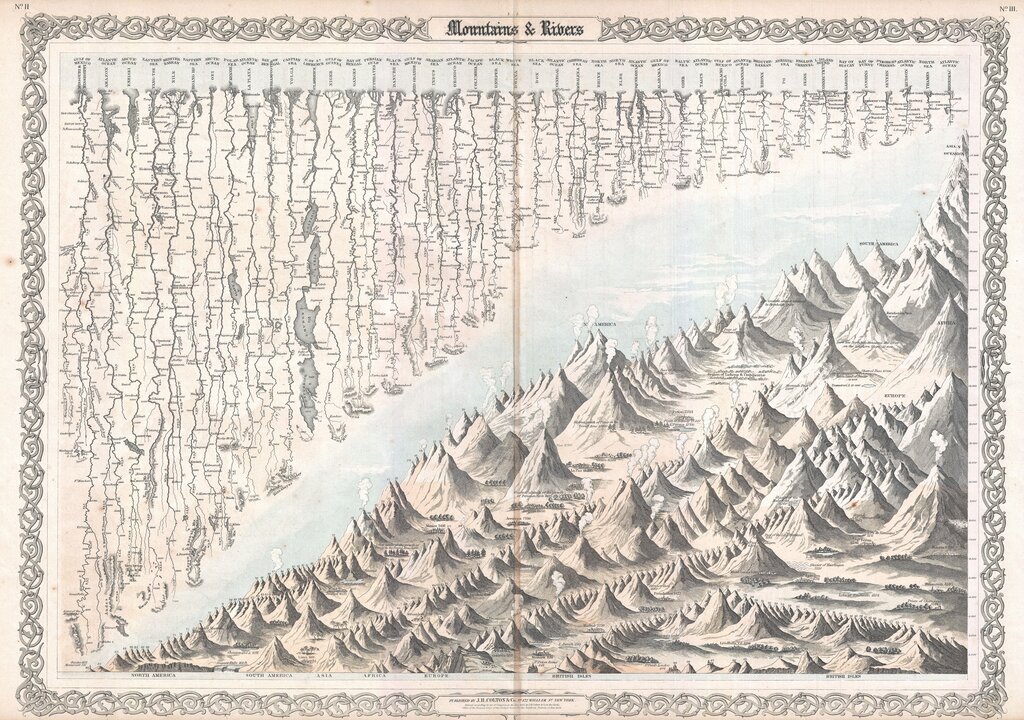
Asking 'what's the biggest' is meaningless without asking 'how are we measuring?'
Now that you have a handle on these different ways of thinking about size, let's check your understanding.
Which of the following is the best measure of the amount of 'stuff' or matter an object contains?
If you wanted to know how much water a swimming pool can hold, you would need to measure its __________.
By specifying whether you mean longest, most massive, or something else, you can make clear and accurate comparisons. It's the first step to truly grasping the scale of things in our world and beyond.