Whale Anatomy Flashcards
Whale Anatomy Basics
A Whale's Body Plan
Whales might look like giant fish, but they're mammals, just like us. They breathe air, are warm-blooded, and even have a little bit of hair. But to live in the ocean, they've developed a unique body plan perfectly suited for an aquatic life. Let's take a tour of a whale's external anatomy, from head to tail.
Up for Air
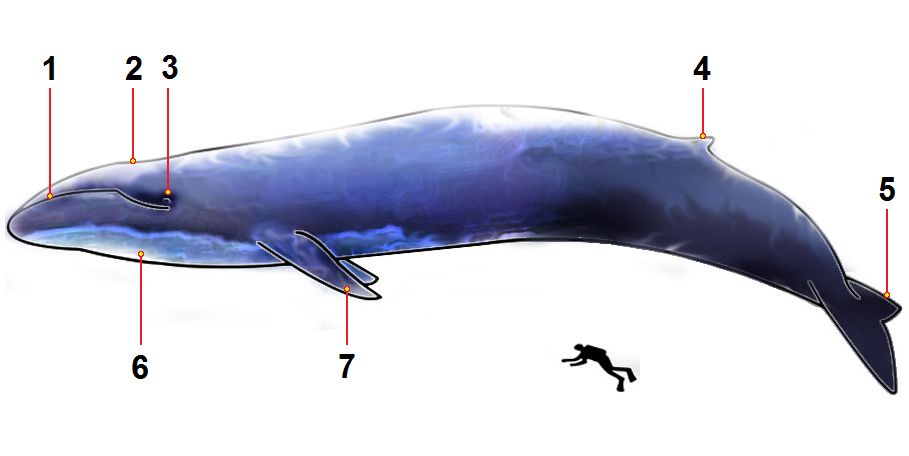
The most iconic whale feature is its spout. That spray of water and vapor comes from the blowhole, which is essentially the whale's nose located on the top of its head. This clever placement allows a whale to breathe without having to lift its entire head out of the water. Just the very top of its body needs to break the surface.
Whales are divided into two major groups, and you can tell them apart by their blowholes. Toothed whales, like dolphins and orcas, have a single blowhole. Baleen whales, like humpbacks and blue whales, have two blowholes side-by-side, creating a V-shaped spout.
A whale can't breathe through its mouth. The windpipe and esophagus are completely separate, so there's no risk of water going down the wrong tube.
Fins and Flukes
A whale's powerful body is guided and propelled by a set of specialized fins. On its sides, you'll find the pectoral fins. These are used for steering, stopping, and even for social touching. They're the equivalent of our arms and hands.
The fin on a whale's back is called the dorsal fin. It acts like the keel of a boat, providing stability and preventing the whale from rolling over in the water. The size and shape of the dorsal fin vary greatly between species, and some whales, like the gray whale and right whale, don't have one at all.
The engine of the whale is its tail. The two lobes of the tail are called flukes. Unlike a fish's tail, which moves side-to-side, a whale's flukes move up and down. This motion is driven by an incredibly powerful set of muscles, allowing these massive animals to propel themselves through the water and even launch into the air.
Two Ways to Eat
A whale's mouth reveals everything about its diet. As mentioned, there are two main types of whales: toothed and baleen.
Toothed whales (Odontoceti) have teeth, as you'd expect. They use them to catch prey like fish, squid, and seals. The number and shape of their teeth vary widely, from the single tusk of a narwhal to the hundred-plus conical teeth of a spinner dolphin.
Baleen whales (Mysticeti) don't have teeth. Instead, they have hundreds of overlapping plates of baleen hanging from their upper jaws. Baleen is made of keratin, the same protein found in our hair and fingernails. It acts like a giant filter. A baleen whale will take a huge gulp of water, then use its tongue to push the water out through the baleen plates, trapping tiny animals like krill and small fish inside to be swallowed.
Now that you've got the basics down, let's see what you remember.
What is the primary function of a whale's blowhole?
A whale with a single blowhole that eats fish and squid is most likely a...