Western Civilization A Macro View
Ancient Greece
The Rise of the City-State
Ancient Greece wasn't a single, unified country like we think of today. Instead, it was a collection of independent, fiercely proud city-states, or poleis. The rugged, mountainous terrain and scattered islands of the Greek peninsula naturally divided people into small, self-governing communities. Each polis had its own laws, army, and patron deity.
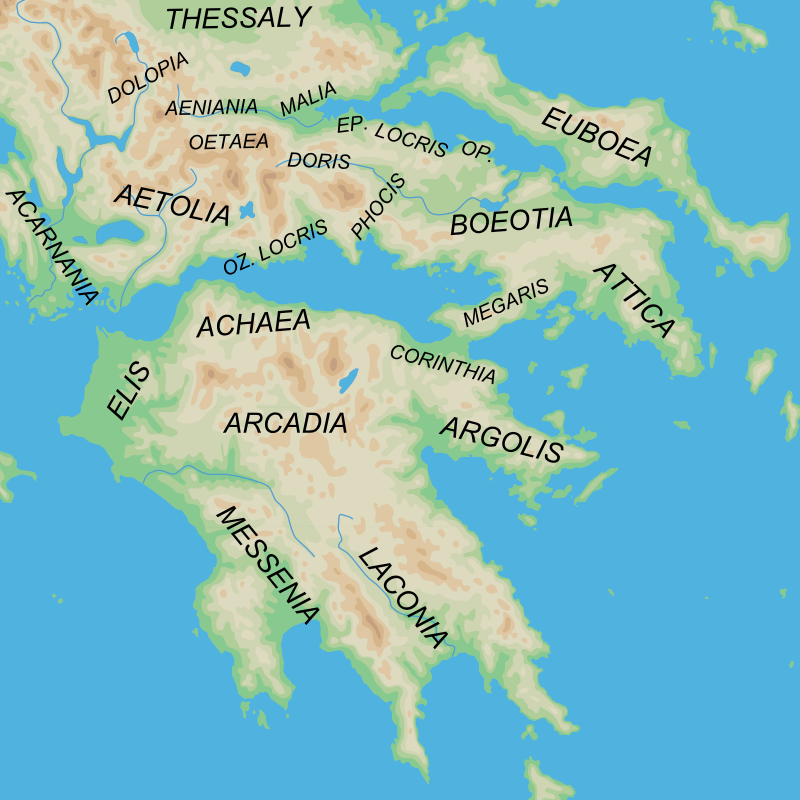
Among the hundreds of poleis, two rose to prominence: Athens and Sparta. They were rivals and represented two clashing ideals. Athens was a bustling port city, a center for trade, arts, and a new idea called democracy. Sparta, on the other hand, was a landlocked, militaristic society where life revolved around discipline and the army. While often at odds, these city-states would occasionally unite to face common threats, most famously the Persian Empire.
The Athenian Experiment
In Athens, a revolutionary political system took shape: dēmokratía, or "rule by the people." This was a direct democracy, unlike the representative systems common today. Any adult male citizen had the right to speak and vote in the Assembly, the city's main governing body, which met on a hill called the Pnyx. Important decisions—from going to war to raising taxes—were made here.
Other key institutions included the Council of 500, which handled daily government business, and the law courts, where citizens served as jurors. While groundbreaking, Athenian democracy was also limited. Only about 10-20% of the population could participate. Women, slaves, and foreign residents had no political voice.
The Mind of Greece
Athens wasn't just a political powerhouse; it was the cradle of Western philosophy. Three thinkers stand out: Socrates, his student Plato, and Plato's student Aristotle.
Socrates was famous for his method of constant questioning, designed to challenge assumptions and arrive at deeper truths. He believed that the "unexamined life is not worth living."
Socrates himself wrote nothing down. We know of his ideas primarily through the writings of Plato. Plato took philosophy a step further, proposing a world of ideal "Forms" that he believed were more real than the physical world we perceive. He founded a school called the Academy, which can be considered the first university in Europe.
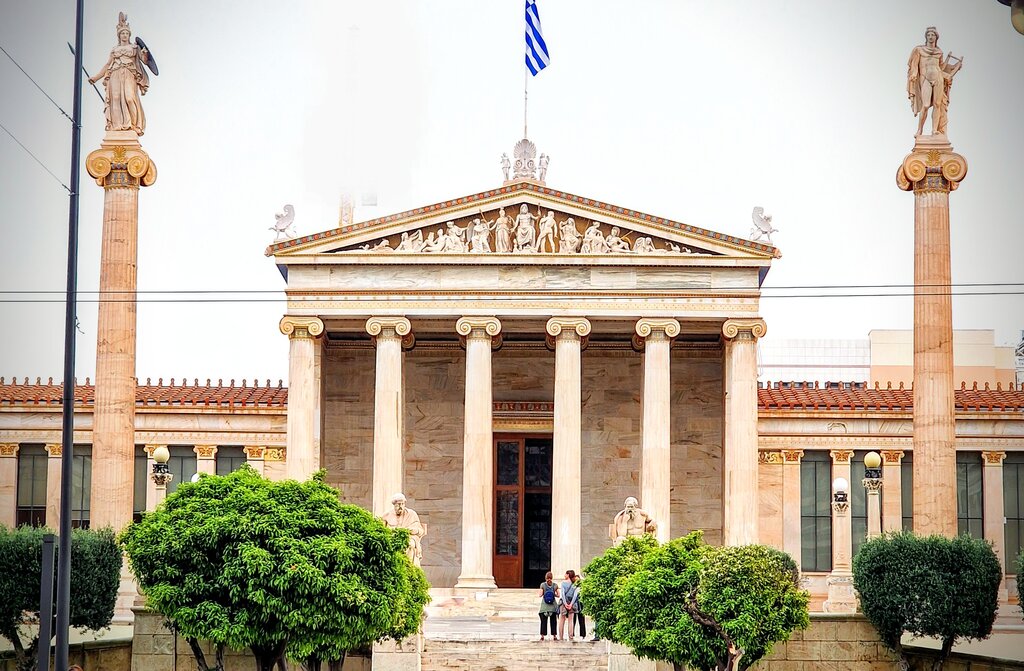
Aristotle, Plato's most brilliant student, had a different approach. He was an empiricist, meaning he emphasized observation and data collection. He studied everything from biology and physics to ethics and politics, creating systems of logic that would dominate Western thought for centuries. He founded his own school, the Lyceum.
A Lasting Legacy
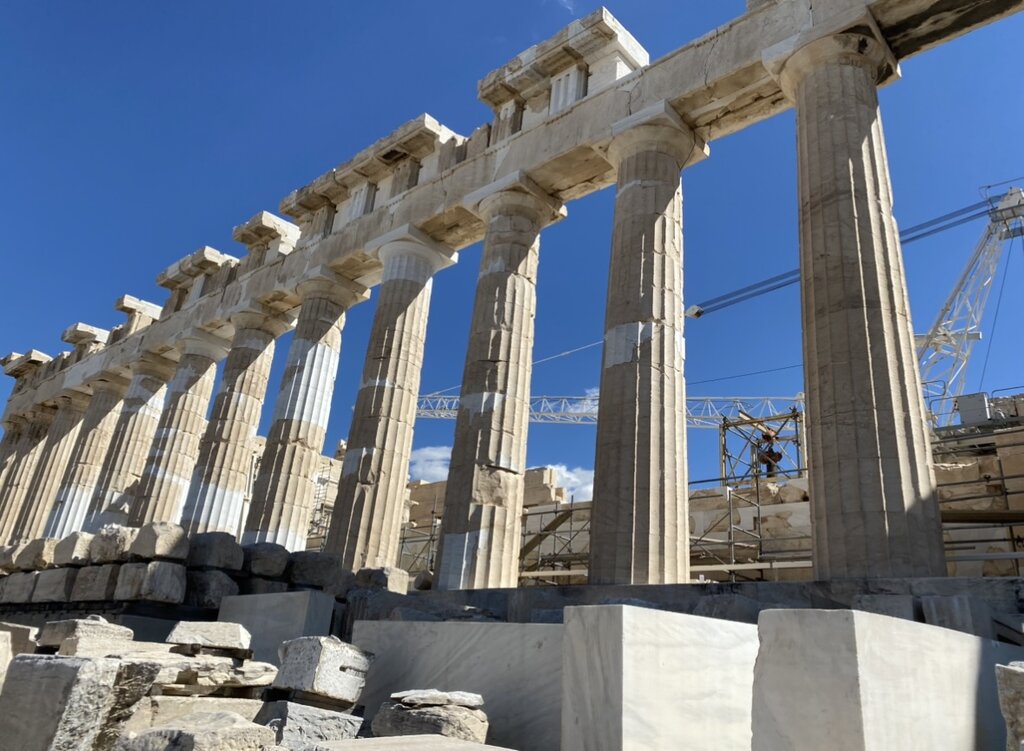
The Greeks' influence extends far beyond politics and philosophy. Their art and architecture pursued ideals of balance, proportion, and beauty. The Parthenon, a temple dedicated to the goddess Athena on the Athenian Acropolis, is the most famous example of this vision, with its perfectly balanced Doric columns.
In literature, the poet Homer composed two of the most foundational epics of Western literature: the Iliad, about the Trojan War, and the Odyssey, about the long journey home of the hero Odysseus. The Greeks also invented theater as we know it, gathering in large outdoor amphitheaters to watch tragedies by playwrights like Sophocles and comedies by Aristophanes.
Their curiosity also drove advances in science and mathematics. Thinkers like Pythagoras explored the mathematical principles of the universe, while Hippocrates laid the groundwork for modern medicine by arguing that diseases had natural, not supernatural, causes. This shift toward logic and reason, away from pure myth, is one of Ancient Greece's most enduring gifts.
Now, let's see what you've learned about this foundational civilization.
What was the fundamental political unit in ancient Greece?
Which statement best contrasts the core values of Athens and Sparta?
The ideas born in these small city-states—from democracy to logic to drama—have echoed through the centuries, shaping the world we live in today.