Weight Loss Medication Prescribing in Primary Care
Understanding Obesity
What Is Obesity?
Obesity is a complex medical condition characterized by an excessive amount of body fat. It's not just about weight, but about the point where body fat levels are high enough to negatively impact health. The most common tool used to screen for obesity is the Body Mass Index, or BMI.
BMI is a simple calculation that uses a person's height and weight to estimate their body fat. While it's a useful screening tool for the general population, it has limitations. For example, it doesn't distinguish between fat and muscle mass, so a very muscular athlete might have a BMI in the 'obese' range without having excess body fat.
The formula for BMI is straightforward:
Based on the result, adults are typically categorized into the following groups.
| Category | BMI Range |
|---|---|
| Underweight | < 18.5 |
| Normal weight | 18.5 – 24.9 |
| Overweight | 25.0 – 29.9 |
| Obesity Class I | 30.0 – 34.9 |
| Obesity Class II | 35.0 – 39.9 |
| Obesity Class III | ≥ 40.0 |
Beyond BMI, clinicians also consider factors like waist circumference. This measurement helps assess visceral fat—the fat stored around internal organs—which is a particularly strong predictor of health risks.
A Complex Web of Causes
Obesity is rarely caused by a single factor. It's a multifactorial condition that arises from a prolonged energy imbalance, where calorie intake consistently exceeds energy expenditure. But what drives this imbalance is a complex interplay of genetics, environment, and individual physiology.

Genetic predisposition plays a significant role. Dozens of genes influence appetite, metabolism, and how the body stores fat. Someone with a family history of obesity may be genetically more susceptible to gaining weight in a modern food environment.
This environment, often called 'obesogenic,' is characterized by the widespread availability of high-calorie, processed foods and a sedentary lifestyle. Social and economic factors, such as access to healthy food options and safe places for physical activity, also contribute significantly.
Physiologically, our bodies have powerful mechanisms to regulate energy balance. Hormones like leptin (which signals fullness) and ghrelin (which signals hunger) communicate between fat cells, the stomach, and the brain. In obesity, the signaling of these hormones can become dysregulated, a condition known as 'leptin resistance,' where the brain doesn't properly receive the signal to stop eating, even when fat stores are high.
Leptin
noun
A hormone produced by fat cells that helps regulate energy balance by inhibiting hunger.
How Obesity Affects the Body
Excess adipose tissue is not just a passive storage depot for energy. It's an active endocrine organ that releases a variety of inflammatory mediators and hormones. This can lead to a state of chronic, low-grade inflammation throughout the body, which is a key mechanism linking obesity to other diseases.
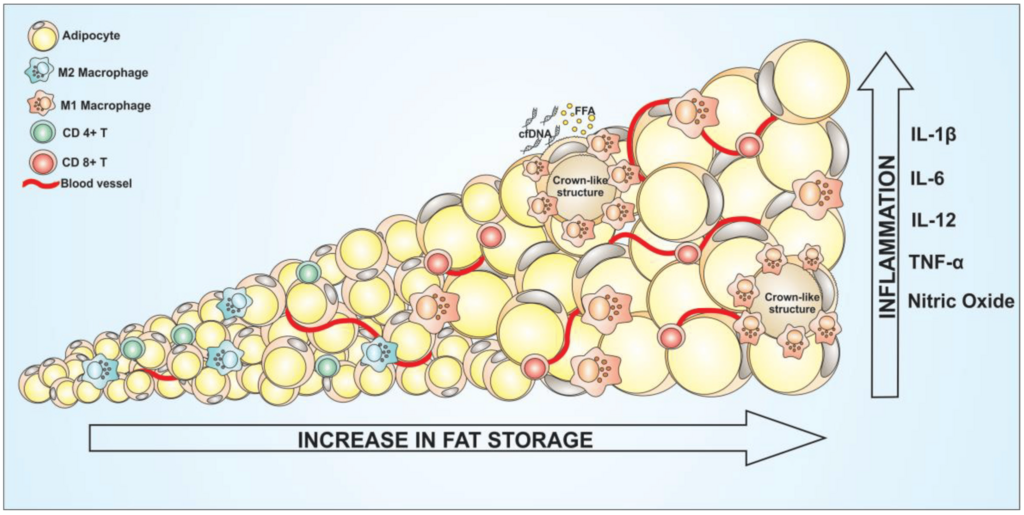
The health risks associated with obesity are extensive and affect nearly every organ system. These include:
- Metabolic Diseases: Obesity is a primary risk factor for type 2 diabetes, as excess fat can lead to insulin resistance, where the body's cells don't respond effectively to insulin. It's also linked to high cholesterol and high blood pressure.
- Cardiovascular Disease: The combination of high blood pressure, high cholesterol, and inflammation dramatically increases the risk of heart disease, stroke, and other cardiovascular problems.
- Respiratory Issues: Excess weight can put pressure on the lungs, leading to conditions like obstructive sleep apnea, a serious disorder where breathing repeatedly stops and starts during sleep.
- Musculoskeletal Problems: Carrying extra weight places significant stress on joints, particularly the knees and hips, accelerating the wear and tear that leads to osteoarthritis.
- Certain Cancers: Chronic inflammation associated with obesity is linked to an increased risk of developing several types of cancer, including breast, colon, and kidney cancer.
Understanding these interconnected factors is the first step in addressing obesity not as a personal failure, but as a complex medical condition requiring comprehensive care.
Now, let's test your understanding of these core concepts.
What is the primary role of the Body Mass Index (BMI) in the context of obesity?
The term 'obesogenic environment' refers to a setting that primarily...
By grasping the definition, causes, and health implications of obesity, healthcare providers can better understand the importance of weight management in primary care.