Website Development Fundamentals
Website Planning
Start with the Why
Before you think about colors, fonts, or flashy animations, you need to answer a fundamental question: Why does this website exist? A website without a clear purpose is like a ship without a rudder. It might look nice, but it won't go anywhere meaningful.
Defining your website's objectives is the first and most critical step. Are you trying to sell products? Generate leads for a service? Provide information to a specific community? Or maybe you're building a portfolio to showcase your work. Your goal will influence every other decision you make.
Think of it this way: you wouldn't build a house without a blueprint. A clear objective is the blueprint for your website.
Your objectives should be specific and measurable. For example, instead of a vague goal like "get more customers," a better objective would be "increase online sales by 20% in the next quarter" or "capture 50 new email subscribers per week."
These concrete goals give you a target to aim for and a way to measure success after the site is live. Write down one to three primary objectives for your site before moving on.
Know Your Audience
Once you know why you're building a site, you need to figure out who you're building it for. Your website isn't for you; it's for your users. Understanding their needs, wants, and pain points is essential for creating a site they'll find useful and easy to navigate.
Who is your ideal visitor? Are they tech-savvy millennials or older adults who are less comfortable with technology? Are they looking for quick information or in-depth articles? What problems are they trying to solve when they land on your page?
Answering these questions helps you tailor your content, structure, and language to your audience. A common practice is to create user personas, which are fictional characters representing your key user types. This makes your audience feel less like an abstract group and more like real people.
| Persona Trait | Details |
|---|---|
| Name | Creative Carla |
| Age | 28 |
| Occupation | Freelance Graphic Designer |
| Goal | Find a reliable printing service for client projects. |
| Frustration | Other sites are confusing to navigate and have hidden fees. |
Create a Blueprint
With your objectives and audience defined, it's time to map out the structure of your website. This is done with a sitemap, which is essentially a flowchart that shows all the pages on your site and how they connect to one another.
A sitemap provides a high-level overview of your site's architecture. It helps you organize your content logically, ensuring that users can find what they're looking for without getting lost. It also forces you to think about what pages are truly necessary and how they should be grouped.
Start with your main pages, like Home, About, Services, and Contact. Then, think about any sub-pages that need to live under those main sections. This structure forms the basis of your website's navigation, helping both users and search engines understand your site.
Plan Your Content
Finally, you need a content strategy. Content is the information on your website—the text, images, videos, and blog posts. Your content is what will ultimately engage your audience and help you achieve your objectives. A strategy ensures that what you publish is consistent, relevant, and valuable to your users.
Your content strategy should answer a few key questions:
- What topics will you cover?
- What tone of voice will you use (e.g., professional, casual, witty)?
- Who will create the content?
- How often will you update the site with new content?
This is where your audience research pays off. By understanding what your users are interested in and what problems they face, you can create content that directly addresses their needs. This builds trust and positions you as a helpful authority.
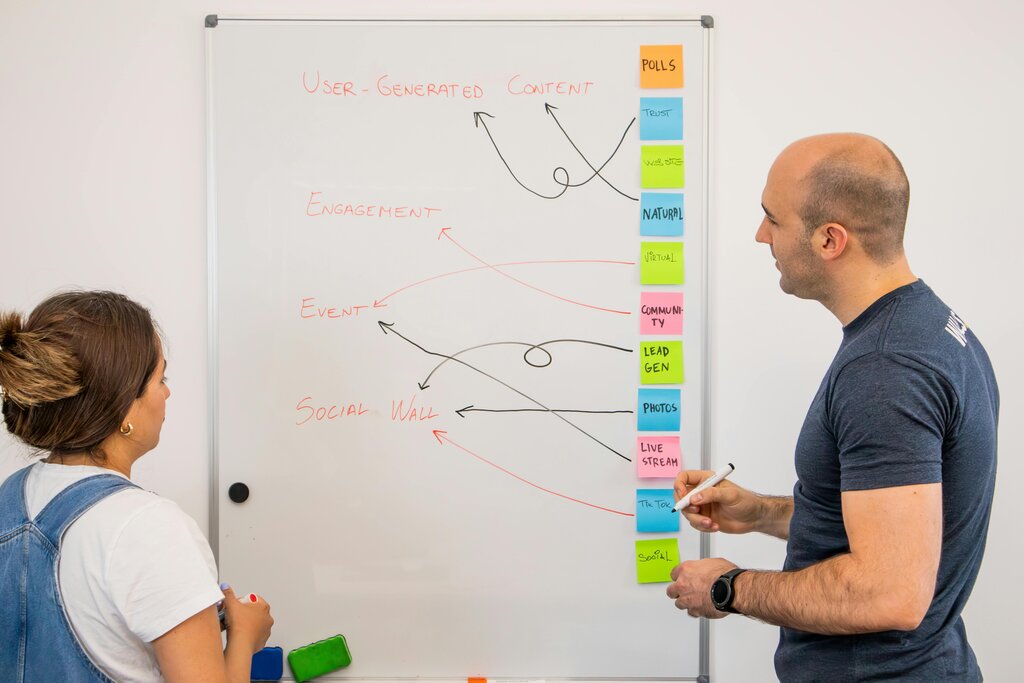
Planning isn't the most glamorous part of building a website, but it's the most important. A solid plan based on clear objectives, a deep understanding of your audience, a logical sitemap, and a thoughtful content strategy sets the stage for a successful final product.
Which of the following is the most effective website objective?
The primary purpose of a sitemap is to plan the visual design and branding of the website.
With these planning fundamentals in place, you're ready to move on to the next stages of design and development with confidence.