Web3 and Blockchain Trends
Introduction to Web3 and Blockchain
From Web1 to Web3
The internet has gone through a few major phases. Think of the early web, or Web1, as a giant digital library. You could read information on static websites, but you couldn't really interact with it. It was a one-way street of information consumption.
Then came Web2, the internet we know today. It's the read-write web. We create content on social media, write reviews, and upload videos. It’s interactive and social, but there's a catch. Our data and content live on servers owned by large companies. They control the platforms and the rules.
Web3 is the next step: a read-write-own internet. The goal is to shift power from central companies to individual users. Instead of platforms owning your data, you do. This change is made possible by a technology called the blockchain.
The Idea of Decentralization
To understand Web3, you need to grasp decentralization. Most systems we use are centralized. A bank, for example, is a central authority that holds all of our financial information and verifies our transactions. They have total control.
A decentralized system works differently. Instead of one central authority, the power and data are spread out among many participants. No single person or company is in charge. This creates a system that is transparent and resistant to censorship because there's no central point of failure or control.
At the core of Web3 is blockchain—a secure, transparent, and decentralized ledger system.
Blockchain is the technology that makes this decentralized vision a reality. It's the backbone of Web3.
How Blockchain Works
At its heart, a blockchain is a special kind of database. It’s a chain of blocks, where each block contains a list of transactions. But what makes it unique are a few key components.
Distributed Ledger
noun
A digital record of transactions or data that is shared and synchronized across multiple computers in a network, rather than being stored in a central location.
Imagine a shared notebook that everyone in a group can see. When someone adds a new entry, everyone else's notebook updates automatically. No single person owns the notebook; the group collectively maintains it. This is the essence of a distributed ledger. Because countless copies exist, it’s extremely difficult for anyone to cheat or change the past entries without everyone else noticing.
With so many copies of the ledger, how does the network agree on which transactions are valid? This is handled by consensus mechanisms. These are the rules that participants follow to agree on the state of the ledger. One early and famous example is Proof-of-Work, where computers on the network solve complex math problems to validate transactions and create new blocks.
Finally, blockchains can run code. Smart contracts are programs stored on a blockchain that automatically execute when certain conditions are met. Think of them as self-enforcing digital agreements. For example, a smart contract could automatically release payment to a musician once their new song gets 1,000 streams. It removes the need for intermediaries, making transactions faster and more direct.
Cryptocurrencies and Tokens
Cryptocurrencies are the fuel for these decentralized networks. They are digital currencies, like Bitcoin or Ether, that are secured using cryptography. They serve two main purposes:
- A medium of exchange: They can be used to buy goods and services, just like traditional money.
- An incentive: They reward the participants (often called miners or validators) who contribute computing power to keep the network secure and running.
But not all digital assets on a blockchain are cryptocurrencies.
Tokens are digital assets built on top of an existing blockchain, like Ethereum. They can represent almost anything: a share in a project, a vote, a collectible piece of art (an NFT), or access to a service.
While cryptocurrencies have their own independent blockchains, tokens leverage the security and infrastructure of another blockchain. This flexibility is what allows for a huge range of decentralized applications, from finance to gaming.
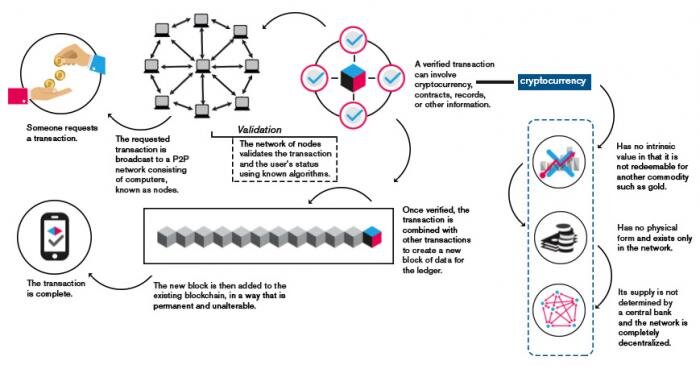
This combination of a decentralized web, powered by blockchain, smart contracts, and digital assets, forms the foundation of Web3. It's a new way of building and interacting with the internet, focused on ownership and community control.
Which phase of the internet is best described as 'read-write-own'?
What is the primary function of a consensus mechanism in a blockchain?