Web Infrastructure Essentials
Introduction to the Internet
What Is the Internet?
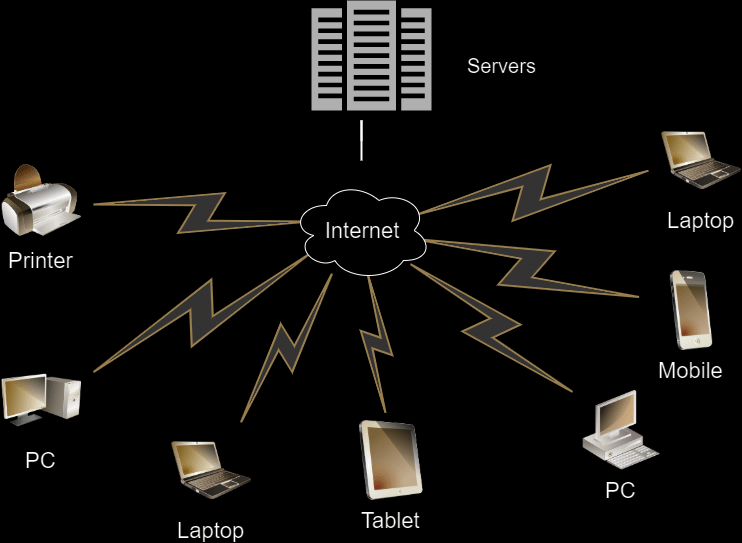
The internet is a massive, global network connecting billions of computers and other electronic devices. Think of it as a worldwide system of interconnected roads, but instead of carrying cars, it carries information. Its main purpose is to allow these connected devices to share data and communicate with each other, whether they're in the same room or on opposite sides of the planet.
This network isn't a single entity owned by one company. It's a decentralized web of countless smaller networks, from those run by governments and universities to the one in your home. This structure allows you to send an email, stream a movie, or video chat with family instantly. It's the infrastructure that makes the modern digital world possible.
A Brief History
The internet began in the 1960s as a United States military project called ARPANET. The goal was to create a communication network that could survive a potential nuclear attack. By designing it to be decentralized, no single point of failure could take down the entire system.
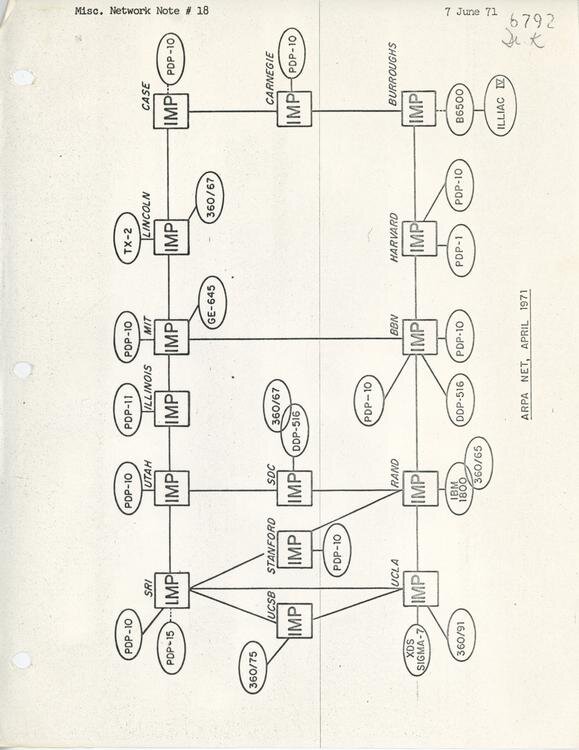
For decades, it remained a tool primarily for scientists, academics, and the government. A major breakthrough came in the 1970s with the development of TCP/IP, a set of communication rules that standardized how data was sent and received across the network. This became the foundation for the modern internet.
But it was the invention of the World Wide Web in 1990 by computer scientist Tim Berners-Lee that truly brought the internet to the public. The Web provided a user-friendly way to access information through websites and hyperlinks, leading to the explosion of personal and commercial use we see today.
How It's Put Together
The internet is a combination of physical hardware and the rules that govern how it works. The main components are end devices, network infrastructure, and service providers.
End Devices: These are the computers, phones, and servers we use every day. Your device acts as a client, requesting information (like a webpage). A server is a powerful computer that stores that information and "serves" it to your client.
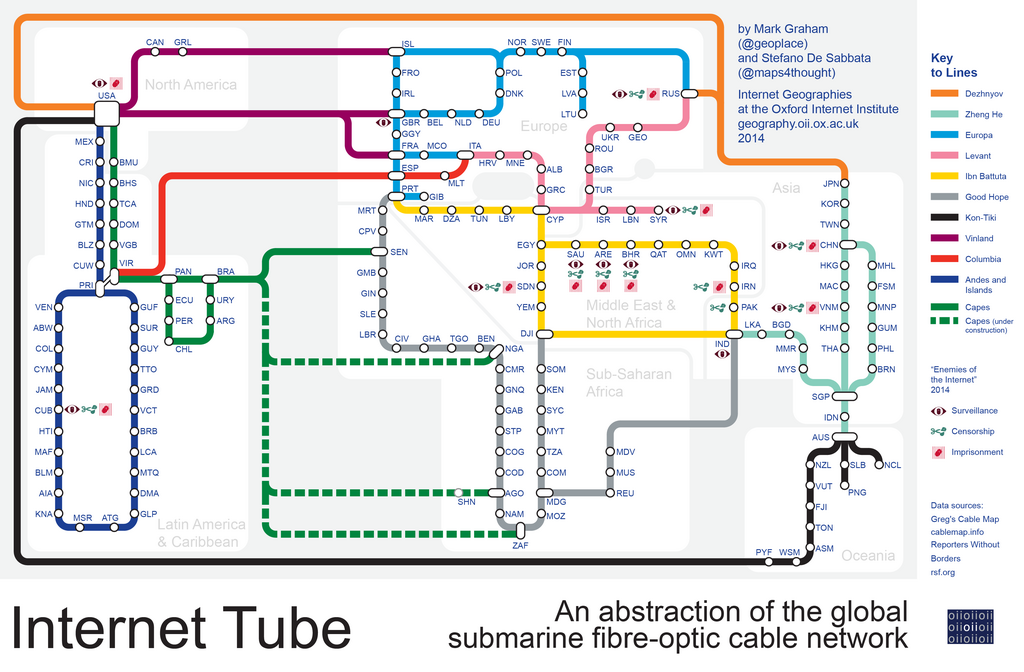
Network Infrastructure: This is the physical hardware that connects everything. It includes routers that direct traffic, switches that manage local networks, and massive bundles of fiber-optic cables that run under oceans to connect continents.
Internet Service Providers (ISPs): These are the companies, like Comcast, Verizon, or AT&T, that provide access to the internet. They manage the local infrastructure that connects your home or business to the wider global network.
The Rules of the Road
For devices all over the world, built by different manufacturers and running different software, to communicate seamlessly, they need to follow a common set of rules. These rules are called protocols.
Think of network protocols as the "languages" that computers use to talk to each other.
The most important set of protocols is the TCP/IP suite. It’s the fundamental language of the internet and has two key parts:
IP (Internet Protocol)
noun
Responsible for addressing. Every device on the internet has a unique IP address, which acts like a mailing address. When you send data, IP ensures it's addressed to the correct destination.
TCP (Transmission Control Protocol)
noun
Responsible for reliability. TCP breaks down data into smaller pieces called packets, sends them, and then reassembles them in the correct order at the destination. It also checks for errors and resends any lost packets to ensure the full message gets through.
Together, these protocols—and many others—work behind the scenes to make the internet a reliable and functional tool for global communication and information sharing.
What was the original purpose of ARPANET, the precursor to the modern internet?
Which of the following best describes the fundamental structure of the internet?
Now you have a foundational understanding of what the internet is, where it came from, and the basic principles that allow it to work.