Web Development Fundamentals
Introduction to Web Development
How Websites Get to You
When you type a website address into your browser and hit Enter, you kick off a lightning-fast chain of events. It feels instant, but your computer is having a conversation with another computer, possibly thousands of miles away. This conversation happens over the internet.
Think of the internet as a giant, global network connecting billions of devices. It's like a massive postal system, but for digital information. Instead of letters, it sends tiny packets of data. Your request for a website is bundled into these packets and sent on its way.
Your data packets travel through a complex web of routers and cables to find the exact computer that stores the website you're looking for. Once found, that computer sends the website's data back to you, and your browser assembles it into the page you see.
The Client and the Server
This process relies on a simple but powerful concept called the client-server model. In this relationship, your device acts as the client, and the computer hosting the website acts as the server.
A client is any device that requests information. This is usually your web browser, whether it's on your phone, laptop, or tablet. A server is a powerful computer that is always on, waiting to serve up information when a client asks for it. It stores the website's files, databases, and logic.
Think of it like ordering food at a restaurant. You (the client) look at the menu and place an order. Your waiter takes the request to the kitchen (the server). The kitchen prepares your meal and sends it back to your table. The web works the same way: your browser requests a webpage, and the server finds the right files and sends them back.
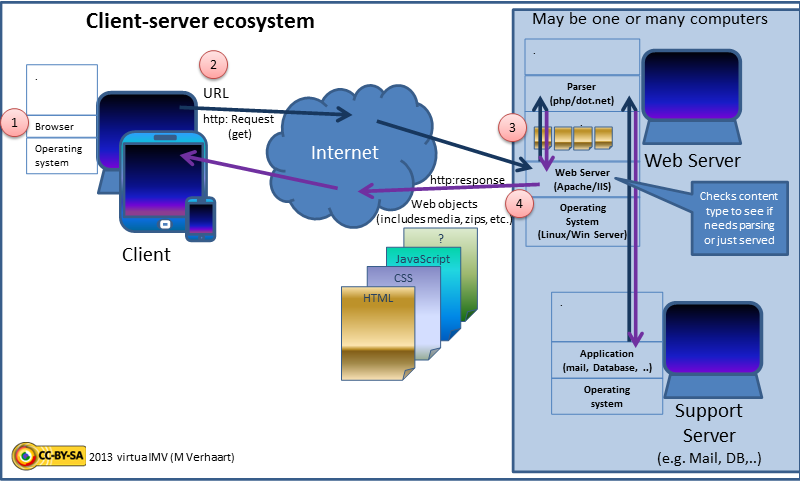
This constant back-and-forth of requests and responses is the foundation of how we browse the internet.
Two Sides of a Website
Every website or web application is built in two parts: the front-end and the back-end. They work together, but they handle very different jobs.
Front-end development is all about what you see and interact with in your browser. It’s the layout, the colors, the buttons, and the text. The goal of a front-end developer is to create a smooth, intuitive, and visually appealing experience for the user. It's the 'storefront' of our restaurant analogy—the decor, the seating, and the menu you hold in your hands.
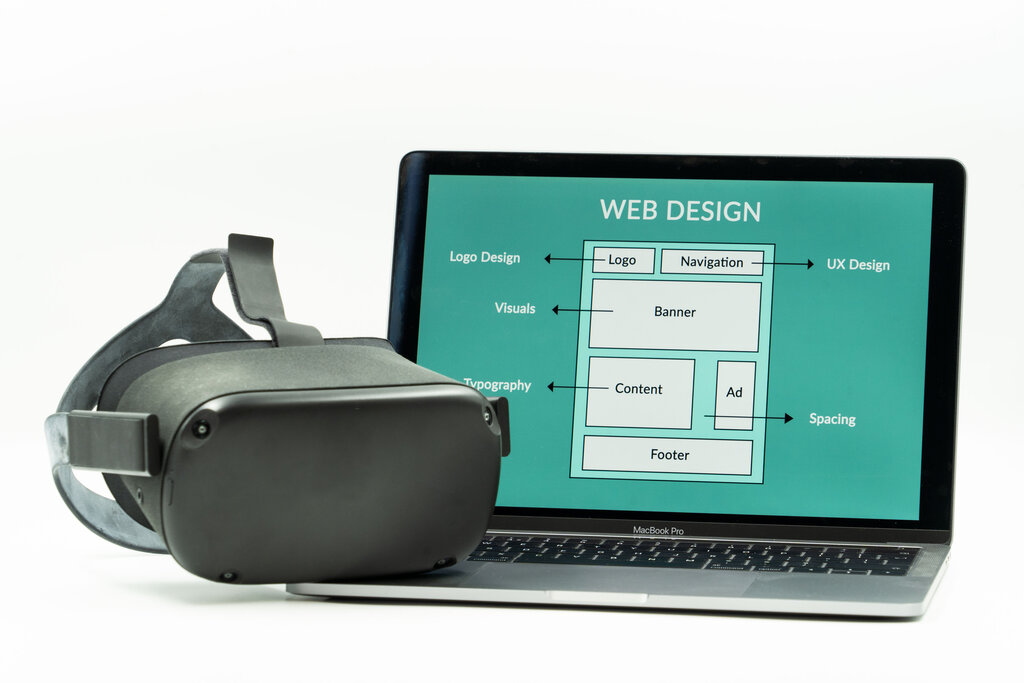
Back-end development is the behind-the-scenes machinery that makes everything work. It includes the server, the database where user data is stored, and the application's logic. When you log into an account, save an item to your cart, or publish a post, the back-end is doing the heavy lifting. It processes your request, interacts with the database, and ensures the right information is sent back to the front-end. It's the kitchen, the chefs, and the inventory system of our restaurant.
| Front-End (The Client) | Back-End (The Server) | |
|---|---|---|
| What it is | Everything the user sees and interacts with. | The server, database, and application logic. |
| Concerns | Layout, design, user experience. | Data storage, security, performance. |
| Analogy | The restaurant's dining area and menu. | The restaurant's kitchen and staff. |
A developer who works on both the front-end and the back-end is known as a full-stack developer. They have the skills to build a complete web application from start to finish, managing both the user-facing parts and the server-side logic.
While frontend focuses on user interfaces and experience, backend development handles the behind-the-scenes logic, databases, and server-side processes that power web applications.
Understanding these core ideas—the internet as a network, the client-server relationship, and the roles of the front-end and back-end—is the first step in learning web development. With this foundation, you can start exploring the specific technologies that bring websites to life.
Ready to check your understanding?
In the client-server model, what is the primary role of the 'client'?
Which of the following tasks is handled by the front-end of a website?
Now that you've got the big picture, you're ready to dive into the specific languages that build the web.