Web Application Architectures Deep Dive
Introduction to Web Application Architectures
The Blueprint of an App
Every web application has an architecture. It's the fundamental structure that dictates how all its different parts—from the user interface to the database—are organized and how they communicate with each other. Think of it as the blueprint for a house. Before you can build, you need a plan that shows where the rooms go, how the plumbing connects, and where the electrical wiring runs. A web app architecture serves the same purpose.
This blueprint isn't just an abstract diagram. It directly impacts how an application is developed, how easy it is to update, and how well it can handle growth. A good architectural choice can make an application robust and scalable, while a poor one can lead to headaches down the road.
A Quick Tour of Architectures
Over the years, developers have come up with several standard patterns for building web applications. Each has a different approach to organizing code and components. Let's look at a few common ones.
Monolithic
adjective
A software architecture where the entire application is built as a single, unified unit. All components, such as the user interface, business logic, and data access layer, are tightly coupled and run as a single service.
Imagine an old-fashioned, all-in-one stereo system. The radio, cassette player, and speakers are all housed in one large box. Everything is bundled together. This is the core idea of a monolithic architecture. The entire application is a single, self-contained piece of software. It’s a straightforward approach, especially for smaller projects, since everything is in one place.
All for one, and one for all. In a monolithic app, every component is part of a single, deployable unit.
As applications grew more complex, developers needed better ways to organize their code. This led to the Model-View-Controller, or MVC, pattern. It isn't a full architecture itself, but a design pattern often used within other architectures. The main goal is to separate concerns.
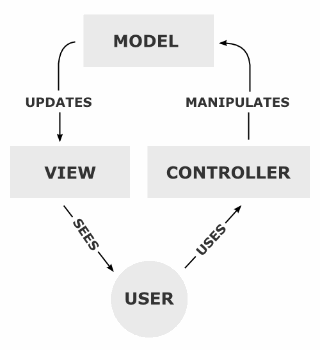
The MVC pattern splits the application into three parts:
- Model: Manages the application's data and business logic. It's the brains of the operation.
- View: The user interface. This is what the user sees and interacts with, like the buttons and forms on a webpage.
- Controller: Acts as an intermediary, taking user input and telling the Model and View what to do.
Next came N-Tier architecture, which takes the idea of separation a step further. Instead of just organizing code, it separates the application into distinct functional layers, or tiers, that can run on different physical machines. A common example is the 3-tier architecture:
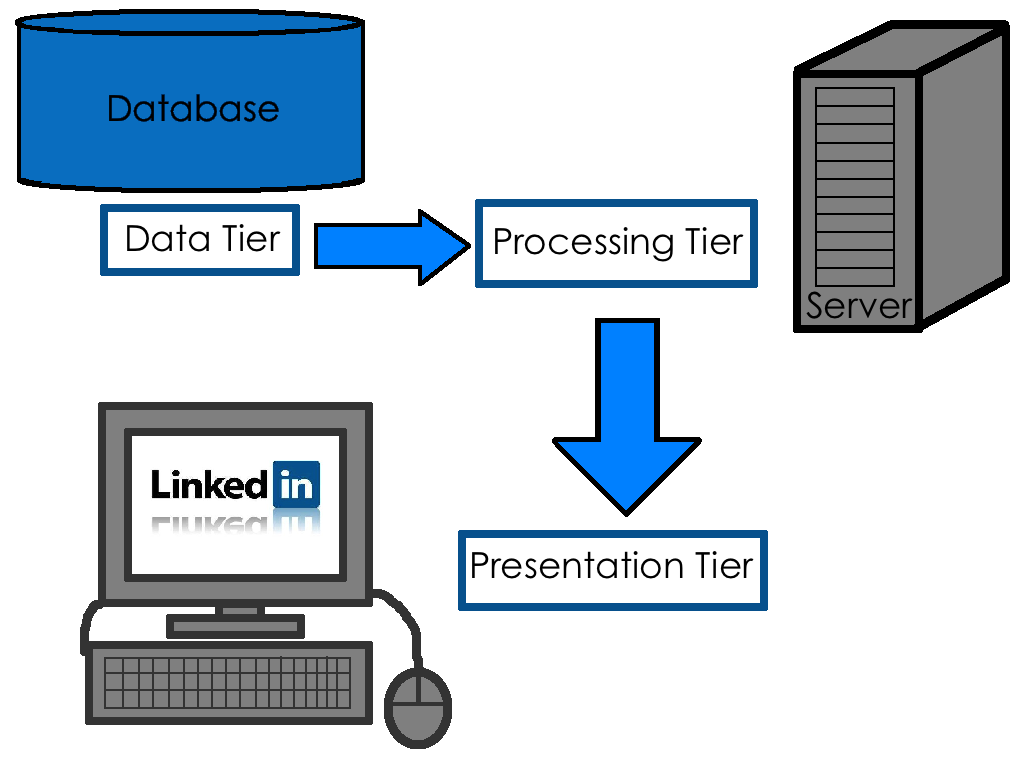
- Presentation Tier: The user interface that runs in the browser.
- Application Tier: The middle layer containing the business logic, often called the logic tier.
- Data Tier: The database and other data storage systems.
This separation allows teams to work on different tiers independently and helps with scaling specific parts of the application.
More recently, the Microservices architecture has gained popularity. It's the philosophical opposite of the monolithic approach. Instead of one big unit, an application is broken down into a collection of small, independent services. Each service handles a specific business function, has its own database, and communicates with other services over a network.
Think of it like a modern home entertainment setup. You have a separate TV, soundbar, and streaming device. Each does one job well, and they all work together. If you want to upgrade your speakers, you don't have to replace the whole system.
Why It Matters
The journey from monolithic designs to microservices reflects the changing needs of the web. Early websites were simple. A monolithic structure was perfectly fine. But as applications like Amazon and Netflix grew to serve millions of users with countless features, a single-unit architecture became difficult to manage and scale.
The choice between monolithic and microservices architecture depends on the specific needs of the application.
Choosing the right architecture is a critical decision at the start of any project. A startup building a new product might begin with a simple monolith to launch quickly. A large company with multiple development teams might prefer microservices to allow teams to work independently. There is no single "best" architecture—only the one that best fits the project's goals, team size, and long-term vision.
What is the primary purpose of a web application's architecture?
Which architectural style is described as a collection of small, independent services, each handling a specific business function?