Web Application Architecture Patterns
Introduction to Web Application Architectures
The Blueprint of the Web
Every web application, from a simple blog to a massive online store, has an architecture. Think of it as the blueprint for a house. Before you can build, you need a plan that shows where the rooms go, how the plumbing connects, and how the electrical wiring runs. Without a solid plan, you end up with a chaotic, unstable structure that's difficult to live in and even harder to repair.
Web application architecture is that blueprint. It defines how all the different parts of an application—the user interface, the backend logic, and the database—are organized and how they communicate with each other. The goal is to create a system that works reliably, responds quickly, and is easy to update over time. A good architecture ensures that as the application grows, it doesn't collapse under its own weight.
Before jumping into coding, plan the architecture, understand how data flows, how different modules will communicate, and what potential bottlenecks might arise.
A Quick Trip Through Time
Web architecture wasn't always so complex. In the early days of the internet, websites were mostly static collections of HTML files. A server's only job was to find the requested file and send it to a user's browser. It was simple and effective for displaying information.
But soon, people wanted more. They wanted to interact with websites, to buy things, to talk to each other. This led to the rise of dynamic web applications. Technologies like PHP and ASP allowed servers to generate web pages on the fly, pulling information from databases to create personalized content. This was a game-changer, but it also introduced a lot more complexity. Suddenly, developers had to think carefully about how to structure their code to keep it from becoming an unmanageable mess.
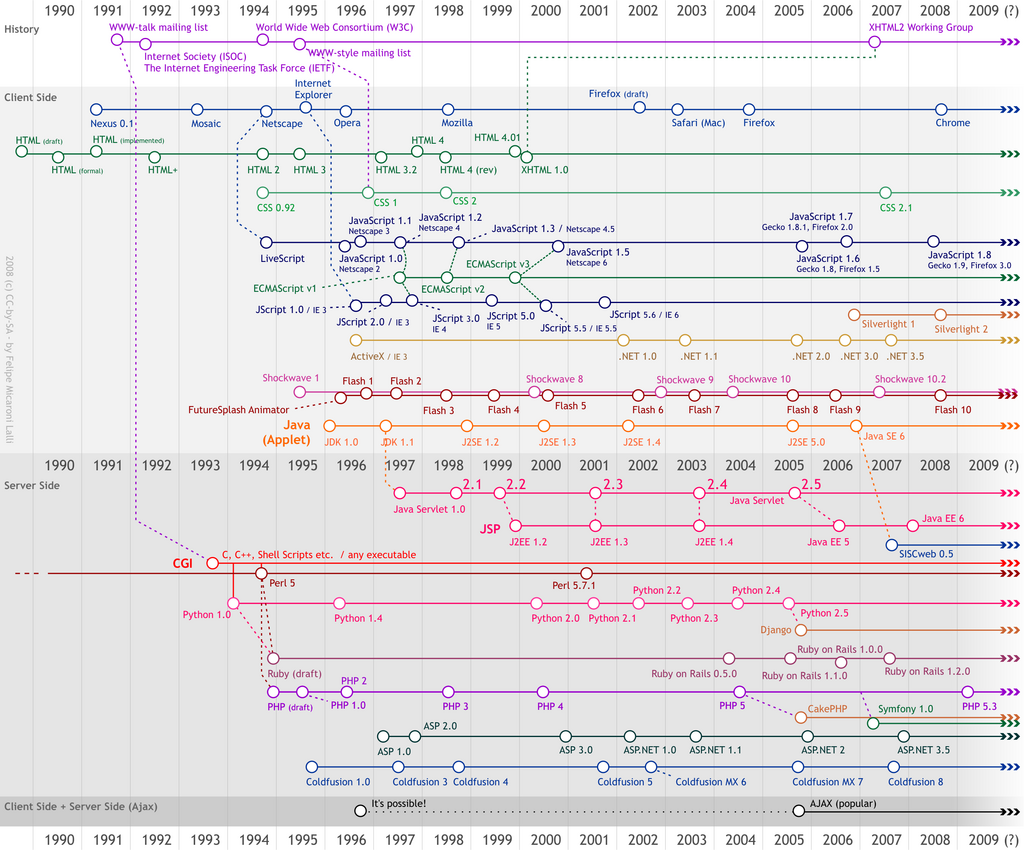
As applications grew, formal architectural patterns emerged as a way to tame this complexity. These patterns provided proven solutions to common problems, helping teams build bigger and more powerful applications without getting lost in the code.
Making the Right Choices
Choosing an architecture isn't about picking the latest trend. It's a series of trade-offs based on the specific needs of the application. Several key factors guide these decisions.
There's no single 'best' architecture. The right choice is always a balance between performance, cost, and the specific goals of the project.
- Scalability: How well can the application handle growth? An architecture that works for 100 users might fail completely with 100,000. Scalability is about planning for success and ensuring the system can grow without a complete rewrite.
- Performance: This is all about speed. How quickly does the page load? How fast do search results appear? A good architecture minimizes delays and provides a smooth, responsive experience for the user.
- Maintainability: Code needs to be updated. Bugs need to be fixed, and new features need to be added. A maintainable architecture is organized logically, making it easier for developers to find what they need and make changes without breaking something else.
- Security: How does the architecture protect user data and prevent unauthorized access? Security must be built into the foundation of the application, not bolted on as an afterthought.
- Cost: Every decision has a price tag. Some architectures require more servers or specialized services, increasing operational costs. Others might require more development time upfront. Balancing features with the budget is a crucial part of the architectural process.
Common Architectural Patterns
Over the years, developers have created a set of common patterns for structuring web applications. These aren't rigid rules but rather proven templates that can be adapted to fit different needs. You'll often hear terms like Monolithic, Microservices, or N-Tier. Each represents a different approach to organizing an application's components.
For example, a Monolithic architecture builds the entire application as a single, unified unit. It's often simpler to develop and deploy initially. In contrast, a Microservices architecture breaks the application down into a collection of small, independent services that communicate with each other. This can make the system more scalable and easier to update, but also adds complexity. These are just two of many styles, each with its own strengths and weaknesses.
Understanding these foundational concepts is the first step. By knowing what architecture is, why it matters, and what factors influence it, you're ready to explore the specific patterns that power the modern web.
What is the primary purpose of web application architecture?
What major technological shift led to the need for more complex web application architectures compared to the early internet?