Weaving on a Four Shaft Table Loom
Introduction to Four-Shaft Table Looms
Meet the Four-Shaft Loom
Moving to a four-shaft loom opens up a world of new weaving possibilities. Unlike simpler rigid-heddle looms, this type of loom gives you much more control over the individual threads, allowing for more complex and intricate patterns.
Let's break down how it works. A four-shaft loom can be a smaller table loom, operated by hand levers, or a larger floor loom, operated by foot treadles. The core principles are the same for both. The key is understanding how its parts work together to create fabric.
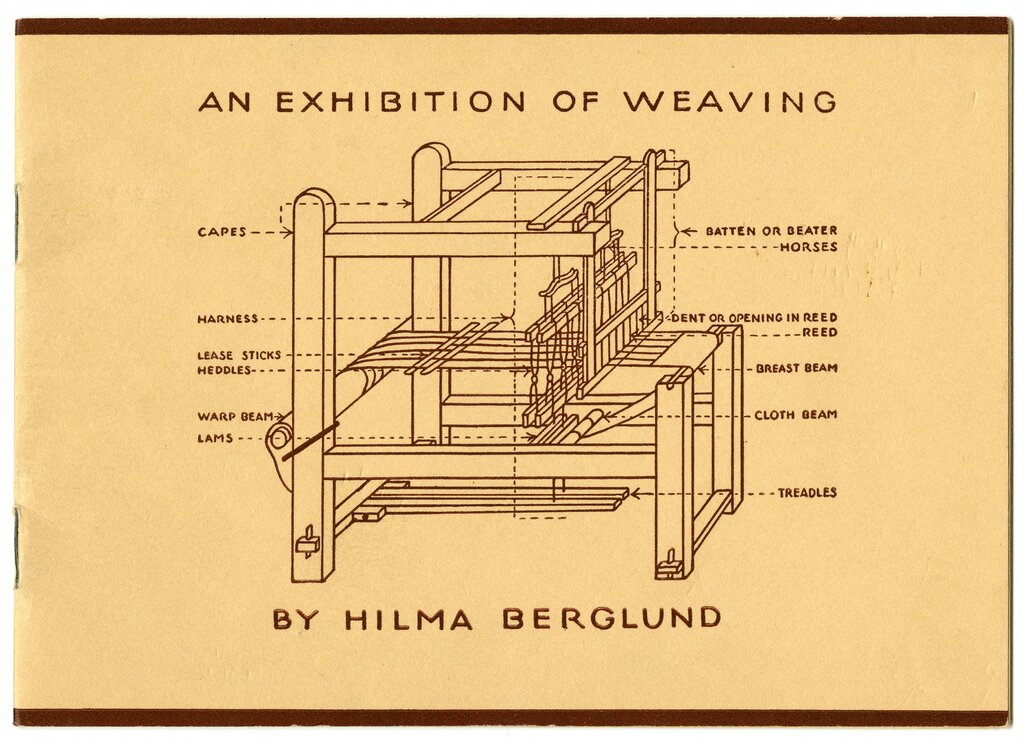
The Anatomy of the Loom
All weaving involves two sets of threads. The warp threads are held under tension on the loom, running from back to front. The weft thread is what you pass through the warp to build up the cloth. A four-shaft loom has several key parts designed to manipulate these warp threads.
Shaft
noun
A frame on a loom that holds a set of heddles. A four-shaft loom has four of these frames, which can be lifted independently or in combination.
Each shaft, also known as a harness, is a frame that can move up and down. On each shaft hang dozens or hundreds of heddles. These are thin wires or cords, each with an eye in the center. Every single warp thread on the loom passes through an eye of a heddle on one of the four shafts. This is how the loom controls the threads. When a shaft is lifted, all the warp threads connected to it are lifted too.
The final key parts are the levers (on a table loom) or treadles (on a floor loom). These are what you use to lift the shafts. Each lever is connected to one or more shafts. Pushing a lever raises the corresponding shaft(s).
The Weaving Process
Weaving on a four-shaft loom follows a simple rhythm. The goal is to create an opening in the warp threads, pass the weft through, and then press it into place.
This opening is called the shed. It's the temporary space between the raised warp threads and the lowered warp threads.
First, you select and press a lever or combination of levers. This raises the attached shafts and their corresponding warp threads, creating the shed. For example, you might lift shafts 1 and 3, leaving 2 and 4 down.
Next, you pass the shuttle, which holds your weft yarn, through this shed from one side to the other. This lays one line of weft thread across the fabric.
Finally, you use the beater, a swinging frame that holds the reed (a comb-like piece), to push the new weft thread snugly against the already-woven cloth. This ensures a tight, even fabric.
Then you repeat the process, choosing a new combination of levers to lift a different set of warp threads. This change in the shed is what creates the pattern. The sequence of lifting, passing the shuttle, and beating is the fundamental action of weaving.
Ready to check your understanding?
What is the primary function of the heddles on a four-shaft loom?
The opening created by lifting some warp threads while others remain down is called the ____.
Understanding these components and their functions is the first step. By changing which shafts you lift and in what order, you can create an endless variety of patterns, from simple twills to complex designs.