Weather versus Climate Dynamics
Temporal Scales Comparison
Time Makes the Difference
When you look out the window, you're seeing the weather. It’s the state of the atmosphere right now, or over a very short period—minutes, hours, days, or maybe a week. Will it rain this afternoon? Is there a heatwave coming next Tuesday? That’s weather. It's immediate and constantly changing.
Climate, on the other hand, is the story of weather over a long time. Think of it as the average weather pattern for a particular location. To get a stable picture of a region's climate, scientists need decades of data. The World Meteorological Organization sets the standard period for calculating a climate “normal” at 30 years. This long-term view smooths out the daily ups and downs to reveal the underlying character of a region’s seasons.
Climate is the average weather in a place over many years.
Signal Through the Noise
A useful way to think about this is to imagine weather as “noise” and climate as the “signal.” The weather is the chaotic, short-term fluctuation—a sudden cold snap in April or a record-hot day in July. These are blips on the radar. The climate is the underlying trend, the consistent signal that emerges only when you zoom out and look at the data over many years.
A single record-breaking cold day in one city doesn't disprove a global warming trend, just as one hot day doesn’t confirm it. To see the real signal, climate scientists analyze vast datasets collected over decades, like those from NOAA's Global Historical Climatology Network, which contains records from thousands of stations worldwide.
This graphic shows how the chaotic, up-and-down nature of weather can obscure the slower, more consistent change in the underlying climate. While any given year might be warmer or cooler than the last, the 30-year average reveals the persistent direction of change.
Prediction vs. Probability
The difference in time scale fundamentally changes how we make predictions. Weather forecasting is largely deterministic. Meteorologists use current atmospheric conditions—temperature, pressure, humidity—to model and predict a specific outcome: "There is a 90% chance of thunderstorms tomorrow at 4 PM."
Climate projection, however, is probabilistic. It doesn't tell you the temperature on a specific day 50 years from now. Instead, it tells you the statistical likelihood of certain conditions over a long period. For example, a projection might state that the average summer temperature in a region is 70% likely to increase by 2°C over the next three decades. This is a core concept in time-series analysis, which helps identify trends, seasonality, and patterns in data collected over time.
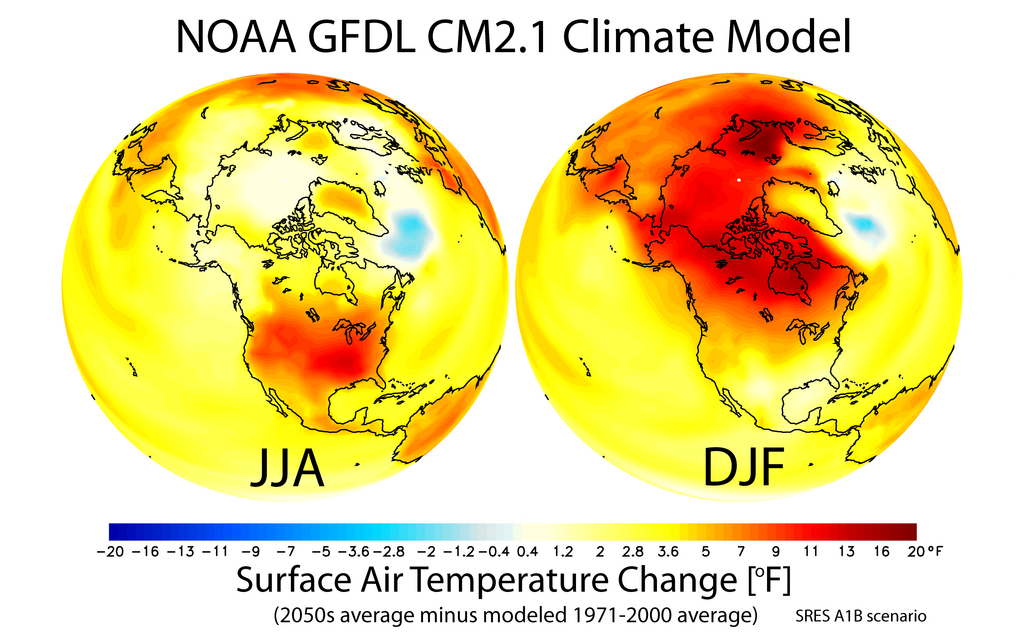
In short, weather is what you get, while climate is what you expect. Knowing the difference is the first step to understanding the larger story of our planet's changing systems.