Water Quality Indicators DO BOD COD Explained
Dissolved Oxygen
The Breath of Water
Just like animals on land, fish and other aquatic creatures need oxygen to survive. They don't breathe air directly, but instead use oxygen gas that is dissolved in the water. This is known as Dissolved Oxygen, or DO. It's one of the most important indicators of a water body's health. Without enough DO, an aquatic ecosystem can't support life.
Dissolved Oxygen
noun
The amount of gaseous oxygen (O2) dissolved in an aqueous solution. Oxygen gets into water by diffusion from the surrounding air and as a waste product of photosynthesis.
So where does this oxygen come from? There are two main sources. The first is direct diffusion from the atmosphere. Oxygen from the air dissolves into the water at its surface. This process is helped along by wind and waves, which mix the water and allow more oxygen to be absorbed.
The second major source is photosynthesis. Just like plants on land, aquatic plants and algae use sunlight to convert carbon dioxide and water into food. A vital byproduct of this process is oxygen, which is released directly into the water.
What Changes DO Levels?
The amount of oxygen water can hold isn't constant. It's influenced by several physical factors. Think of it like a soda: a warm, open can will lose its fizz (dissolved CO₂) much faster than a cold, sealed one.
Temperature: This is the big one. Cold water can hold more dissolved oxygen than warm water. As water warms up, the oxygen molecules get more energetic and escape into the atmosphere. This is why a sudden heatwave can be dangerous for fish, as it can cause DO levels to plummet.
Salinity: Salinity is the measure of dissolved salts in water. Freshwater can hold more DO than saltwater. The salt ions essentially take up space between water molecules, making it harder for oxygen to dissolve.
Atmospheric Pressure: At higher altitudes, where atmospheric pressure is lower, water holds less DO. Conversely, at sea level, the higher pressure helps push more oxygen from the air into the water.
| Factor | Relationship to DO | Why? |
|---|---|---|
| Temperature | Inverse (Temp ↑, DO ↓) | Warmer water molecules are more energetic, allowing O₂ to escape. |
| Salinity | Inverse (Salinity ↑, DO ↓) | Salt ions interfere with the dissolution of oxygen gas. |
| Atmospheric Pressure | Direct (Pressure ↑, DO ↑) | Higher pressure forces more oxygen from the air into the water. |
When Oxygen Runs Low
When DO levels drop too low, aquatic ecosystems become stressed. A state of low oxygen is called hypoxia. If the oxygen disappears completely, it's called anoxia. These conditions can lead to massive fish kills and create areas known as "dead zones," where most life cannot be sustained.
Organisms that can't move easily, like mussels or crabs, are often the first to be affected by hypoxia. Fish might be able to swim to areas with more oxygen, but if the low-DO zone is too large, they can become trapped.
Measuring Dissolved Oxygen
To protect aquatic life, scientists and environmental managers constantly monitor DO levels. There are two primary ways to do this.
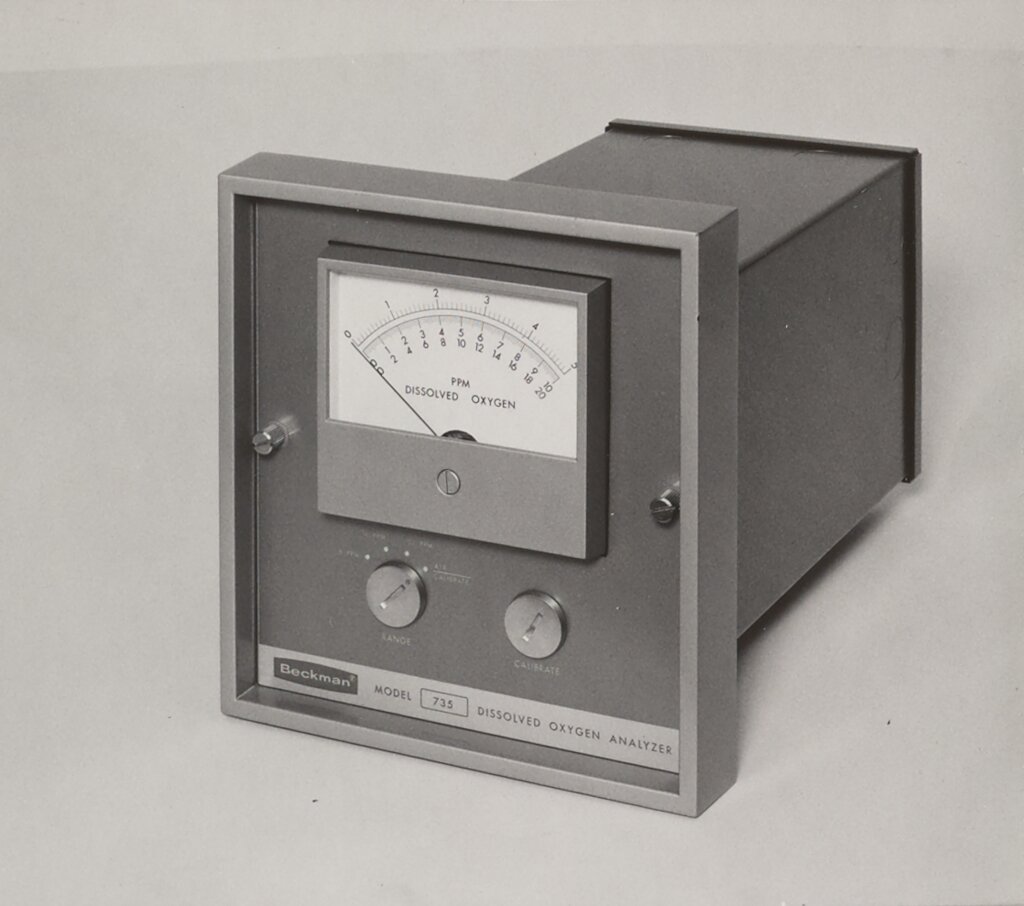
The classic approach is a chemical method called the Winkler titration. It's highly accurate but requires collecting water samples and performing a careful procedure in a lab. It involves adding a series of chemicals that "fix" the oxygen, followed by a titration that reveals the original DO concentration.
More common today are electronic sensors or probes. These devices can be dipped directly into the water to get an instant reading. They typically use either an electrochemical or optical sensor to measure the partial pressure of oxygen, which is then converted into a concentration reading, usually in milligrams per liter (mg/L) or parts per million (ppm).
Continuously track key water quality parameters like pH, ammonia, nitrates, and dissolved oxygen using digital sensors.
Understanding and monitoring dissolved oxygen is fundamental to water quality management. It gives us a direct window into the health of our rivers, lakes, and oceans, and the ability of these vital ecosystems to support life.
Which of the following conditions would result in the highest concentration of dissolved oxygen?
An area in a body of water where oxygen levels have dropped so low that most aquatic life cannot be sustained is called a __________.