Water from Air
Introduction to Atmospheric Water Extraction
Water from Thin Air
The air around us is full of water. It's not in a liquid form we can see or drink, but as an invisible gas called water vapor. The process of capturing this vapor and turning it back into liquid water is known as atmospheric water extraction. It’s a way to source fresh water directly from the air, which can be incredibly useful, especially in places where liquid water is scarce.
Water Vapor
noun
The gaseous phase of water, which is produced when water evaporates or boils. It is invisible in the atmosphere.
The amount of water vapor in the air is described by humidity. You've probably heard the term "relative humidity" in weather forecasts. It's a percentage that tells us how much water vapor is in the air compared to the maximum amount it could hold at that specific temperature. A key principle to remember is that warm air can hold more water vapor than cold air. Think of air as a sponge. A warm sponge can soak up a lot of water, but if you cool it down (or squeeze it), the water comes out.
How Vapor Becomes Liquid
The magic behind pulling water from the air is a process called condensation. It's the opposite of evaporation. Condensation happens when water vapor in the air cools down and changes back into liquid water. You see this all the time. On a hot day, if you take a cold drink out of the refrigerator, its outer surface quickly becomes covered in tiny water droplets.
That moisture isn't leaking from inside the glass. It's from the air. The air immediately surrounding the cold glass gets chilled. As it cools, it loses its ability to hold onto all its water vapor. This forces the vapor to turn into liquid water on the surface of the glass.
The specific temperature at which this happens is called the dew point. When air cools to its dew point, it has reached 100% relative humidity. It’s completely saturated and can't hold any more water vapor. Any further cooling will squeeze liquid water out of the air.
Cooling air reduces its ability to hold water vapor, forcing it to release some of that vapor as liquid water.
Nature's Water Harvesters
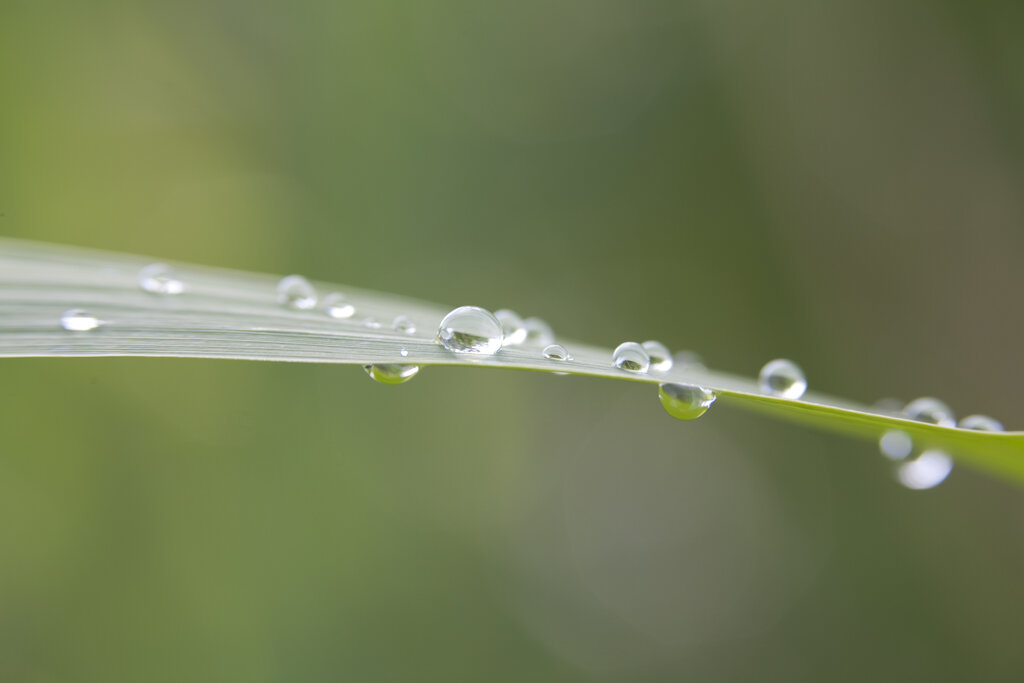
This same principle is at work in nature every day. The most common example is dew. During the night, the ground, grass, and leaves of plants cool down, often becoming colder than the surrounding air. When the air touches these cool surfaces, it also cools to its dew point, and water vapor condenses into the droplets we see as dew in the morning.
For thousands of years, people have observed this process and tried to harness it. Ancient civilizations in desert regions built structures called "air wells" or "dew ponds." These were often piles of stones or specially dug pits designed to create cool surfaces. During the night, these surfaces would chill faster than the surrounding ground, encouraging moisture from the air to condense on them, providing a small but vital source of water.
Understanding these basic principles—that water exists as vapor in the air and can be turned back into a liquid by cooling it to its dew point—is the foundation for all atmospheric water generation.