Warren Hastings in India
Introduction to Warren Hastings
A New Kind of Leader
When Warren Hastings took charge of Bengal in 1772, the British East India Company was in a strange position. It had started as a trading firm, but a series of conflicts and treaties had transformed it into a powerful, land-holding ruler. The problem was, it wasn't very good at ruling. Corruption was rampant, and a devastating famine had just swept through the region.
Hastings was different from the officials who came before him. He wasn't a nobleman sent from London with no knowledge of India. He had worked his way up through the Company's ranks, spending years in the country, learning local languages like Bengali and Urdu, and developing a deep understanding of Indian customs and politics. He saw the mess the Company was in and was tasked with fixing it.
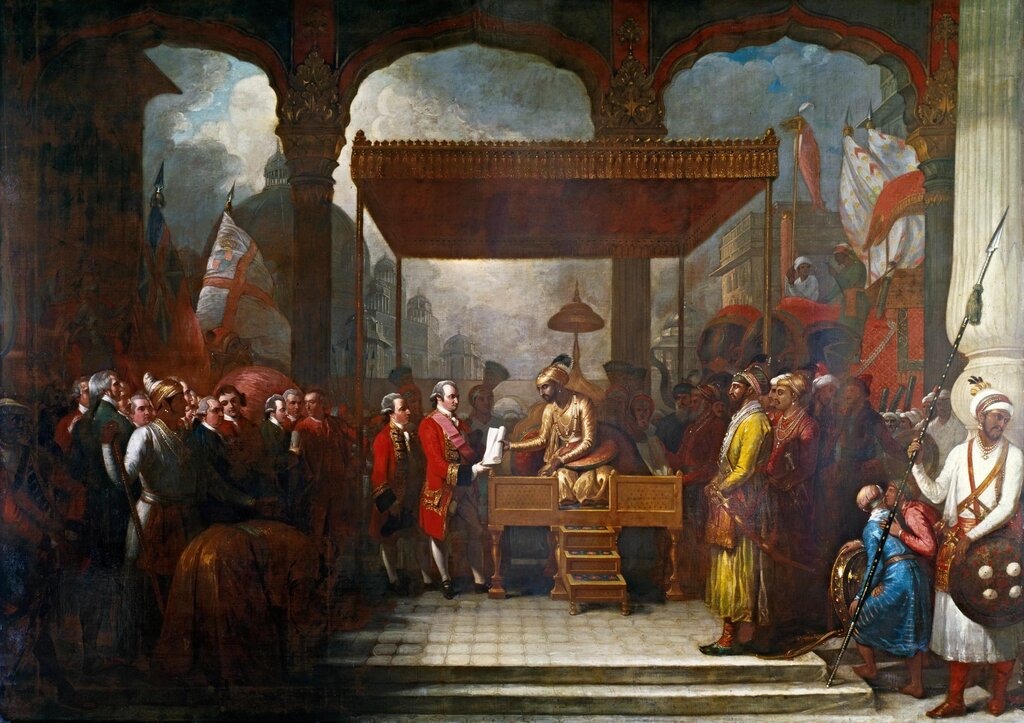
The key moment had come in 1765, when the Mughal Emperor granted the Company the Diwani of Bengal—the right to collect taxes. Suddenly, a private business was responsible for the finances of a massive territory. But the system was a disaster. Company officials, more interested in personal fortunes than good governance, exploited their positions. This period of chaotic plunder left Bengal's administration and economy in ruins.
The Mission
Hastings arrived with a clear mandate from London: bring order to the chaos. His job was to transform the East India Company from a greedy, disorganized merchant into a stable, effective government. He wasn't just there to increase profits, but to build a durable system of British rule.
His primary goal was to create a state, not just a trading post.
To achieve this, Hastings had several core objectives. First, he needed to end the corruption that was draining the Company's resources and oppressing the local population. This meant creating a more formal administrative structure and reining in the private dealings of Company employees.
Second, he aimed to establish a reliable system of law and justice. The existing legal framework was a confusing mix of Mughal tradition and British improvisation. Hastings sought to create a more consistent and predictable system that would serve the new realities of Company rule.
Finally, his mission involved expanding and securing British influence. India in the 18th century was a patchwork of competing powers, including the Maratha Empire and other regional kingdoms, not to mention rival European traders like the French. Hastings had to navigate this complex political landscape to protect the Company's interests and cement its position as the dominant power in the region.
What key right, granted by the Mughal Emperor in 1765, fundamentally transformed the East India Company's role in Bengal?
Which of the following was NOT a primary objective of Warren Hastings when he took charge in 1772?
Hastings's time in office would be defined by these ambitious goals, setting the stage for the next century of British rule in India.