Warehouse Management System Design
Warehouse Management Fundamentals
The Heart of the Operation
A warehouse is much more than just a big building filled with shelves. It's the central hub of a supply chain, a dynamic environment where goods are constantly flowing in and out. Think of it as the heart of a business, pumping products to where they need to go. Managing this flow effectively is what warehouse management is all about.
A warehouse is not just a storage space—it’s a complex system that ensures products move efficiently from suppliers to customers.
The main goals of managing a warehouse are simple to state but challenging to achieve. First, you need to store goods safely and efficiently, making the most of your space. Second, you have to fulfill customer orders quickly and accurately. This means getting the right products to the right people at the right time. Finally, it's all about control, specifically keeping a tight grip on inventory to avoid waste and meet demand. These objectives ensure the entire supply chain runs smoothly.
The Five Core Processes
Every item that passes through a warehouse goes on a similar journey. This journey consists of five key steps that form the backbone of daily operations.
1. Receiving: This is the first point of contact. Goods arrive from suppliers, and the warehouse team unloads them. They inspect the items for damage, verify the quantities against the purchase order, and formally accept the delivery into the system.
2. Storing (or Put-away): Once received, items need a home. Workers move the goods from the receiving dock to their assigned storage location. This could be a specific bin, a shelf, or a pallet rack. The goal is to store items logically so they can be found easily later.
3. Picking: When a customer places an order, the picking process begins. A worker receives a list of items and their locations, then travels through the warehouse to retrieve them. This is often the most time-consuming and labor-intensive part of warehouse operations.
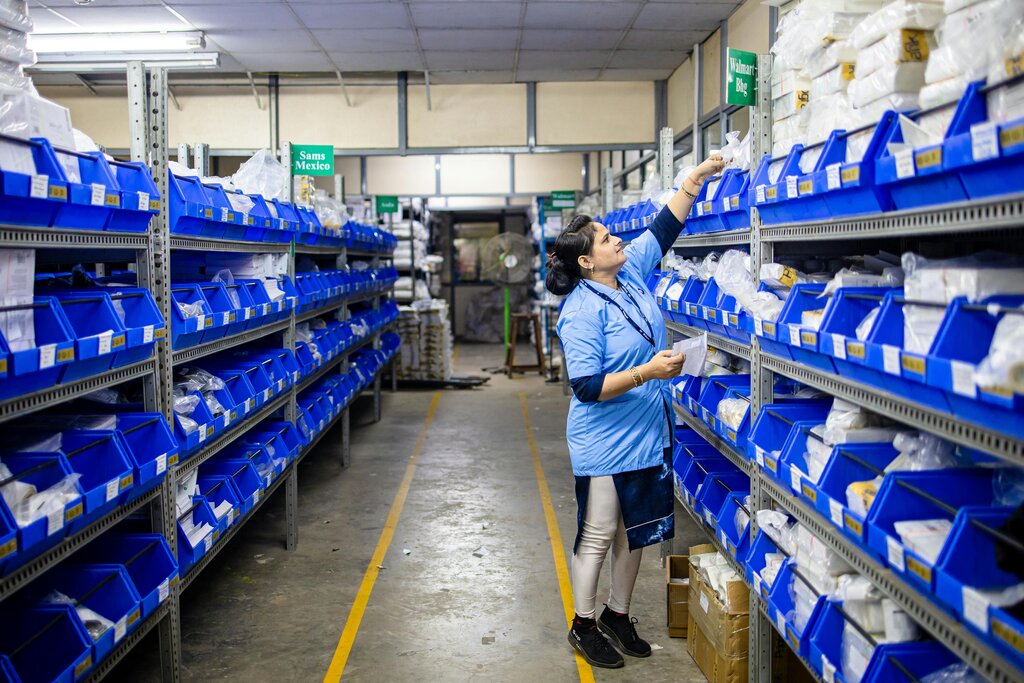
4. Packing: After all items for an order are picked, they're brought to a packing station. Here, they're checked one last time for accuracy, securely packed into a box with appropriate cushioning, and sealed. A shipping label is then attached.
5. Shipping: The final step is getting the package out the door. Packed orders are sorted by shipping carrier and destination. They are then loaded onto trucks for delivery to the customer. Once the truck leaves, the order is officially shipped.
Inventory Control is Everything
Imagine trying to sell something you don't actually have. Or, imagine paying to store hundreds of items that nobody wants to buy. Both scenarios are bad for business, and they're problems that good inventory control solves.
Inventory control is the process of ensuring you have the right amount of stock, in the right place, at the right time. It's a balancing act. Holding too much inventory ties up cash and costs money in storage and insurance. Holding too little leads to stockouts, which means lost sales and frustrated customers.
The core of inventory control is accuracy. If your system says you have 100 units of an item, there should be exactly 100 units on the shelf.
Achieving this accuracy requires constant vigilance. Many warehouses use a technique called cycle counting, where they count a small subset of inventory each day on a rotating schedule. This is less disruptive than shutting down the whole warehouse for a full physical count and helps catch discrepancies early.
The Role of Technology
Modern warehouses don't run on clipboards and paper. Technology is essential for managing the complexity of thousands of products and orders. The central piece of technology is the Warehouse Management System, or WMS.
A WMS is the software brain of the operation. It directs every process, from receiving to shipping. When goods arrive, they are scanned into the WMS. The system then suggests the best place to store them. When an order comes in, the WMS creates the most efficient picking path for an employee to follow.
Other technologies work alongside the WMS. Barcode scanners and RFID (Radio-Frequency Identification) tags allow for quick and accurate tracking of every item. Conveyor belts and even robots can help move goods around, reducing manual labor and speeding up fulfillment.
By integrating these tools, a warehouse can run faster, reduce errors, and provide a clear view of its operations at all times. This technological foundation is key to meeting the demands of modern commerce, whether you're shipping standard products or custom, made-on-demand items.
What are the three primary objectives of effective warehouse management?
Which option lists the five key steps of warehouse operations in the correct order?