Wankel Rotary Engine Explained
Introduction to Internal Combustion Engines
Burning Fuel for Motion
An internal combustion engine, or ICE, is a machine that generates power by burning fuel inside a confined space. This is different from an external combustion engine, like an old steam train, where the fuel (coal) is burned outside the engine to heat water into steam.
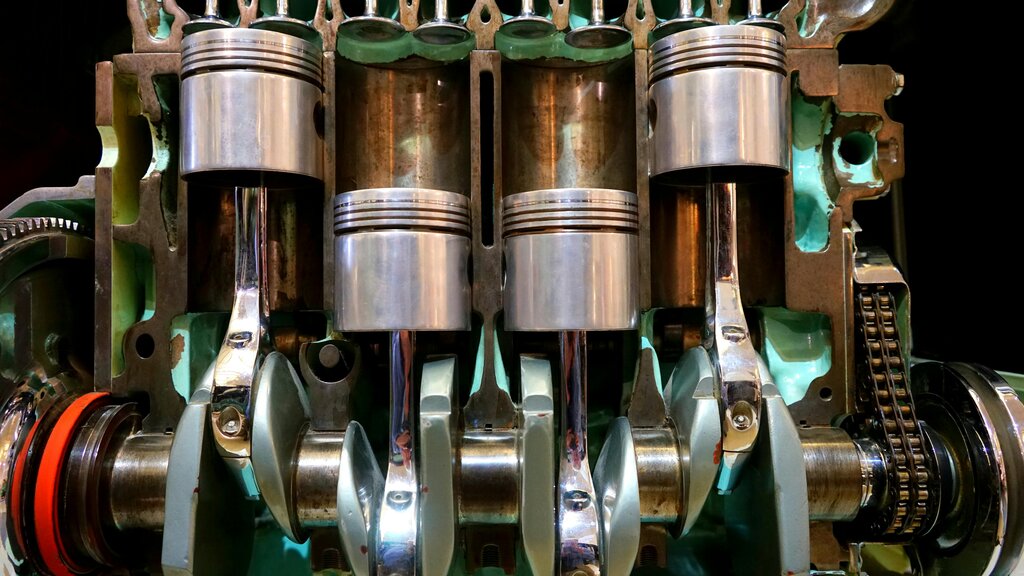
In an ICE, tiny, controlled explosions of an air-fuel mixture force a component called a piston to move. This back-and-forth or up-and-down motion is converted into rotation by a crankshaft. That rotation is what ultimately turns the wheels of a car, spins the blades of a propeller, or drives a generator.
The Four-Stroke Cycle
Most cars on the road today use a four-stroke engine. The process is a continuous cycle of four distinct steps, or strokes, of the piston. For every two complete rotations of the crankshaft, each piston completes this four-stroke cycle.
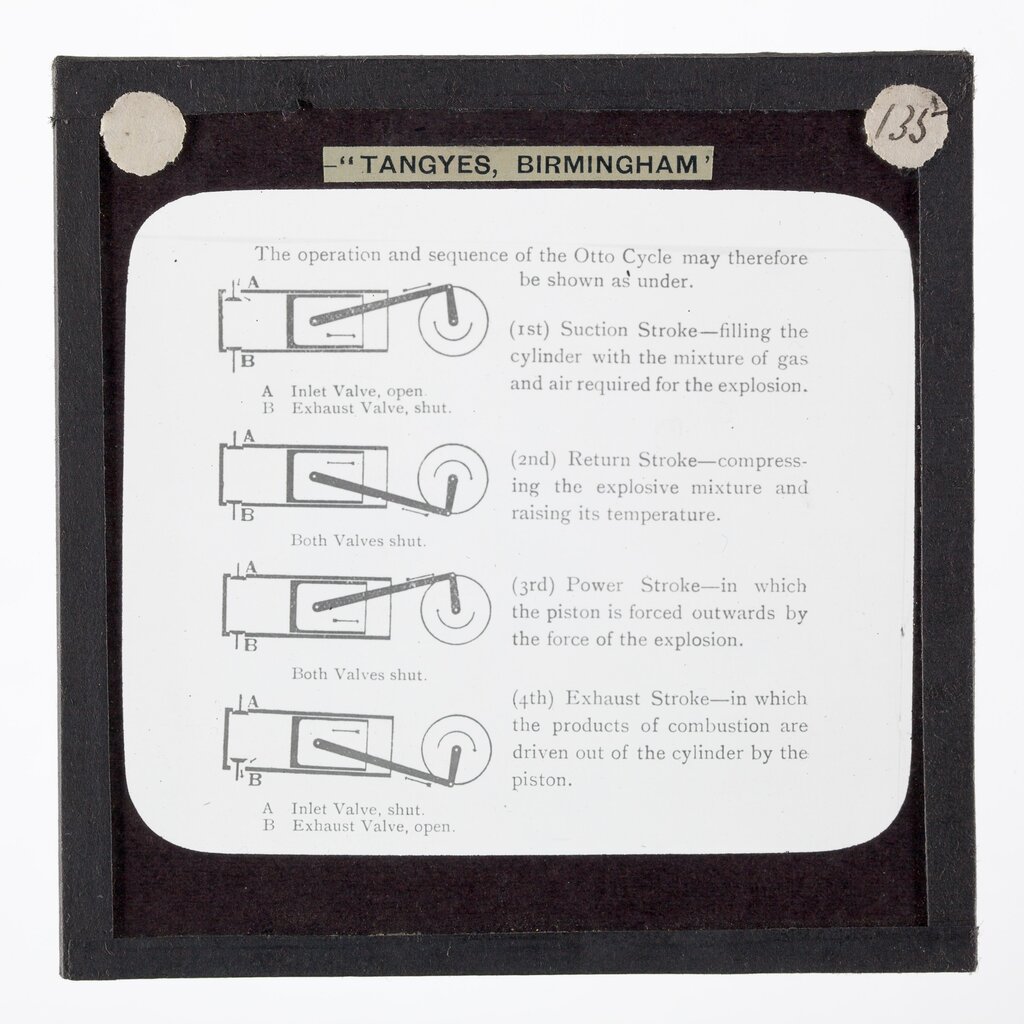
Let's walk through the cycle:
-
Intake: The piston starts at the top of the cylinder and moves downward. The intake valve opens, and a mixture of air and fuel is drawn into the cylinder, filling the space created by the descending piston.
-
Compression: The intake valve closes, and the piston moves back up. This compresses the air-fuel mixture into a much smaller space, making it highly volatile. Squeezing the mixture packs the energy potential tightly together.
-
Power: With the piston at the top of its stroke, a spark plug ignites the compressed mixture. The resulting explosion creates a massive increase in pressure, forcing the piston down with great force. This is the stroke that generates the engine's power.
-
Exhaust: After the power stroke, the piston moves back up. The exhaust valve opens, and the piston pushes the burnt gases out of the cylinder to make way for the next cycle.
Intake, Compression, Power, Exhaust. This four-step dance happens thousands of times per minute in each cylinder of a running engine.
The Two-Stroke Cycle
A simpler alternative is the two-stroke engine. It completes the entire power cycle in just two strokes of the piston, or one full rotation of the crankshaft. This design is lighter and mechanically simpler, which is why it's often used in things like leaf blowers, chainsaws, and some motorcycles.
Instead of valves, two-stroke engines typically use openings in the cylinder wall called ports, which are covered and uncovered by the piston as it moves.
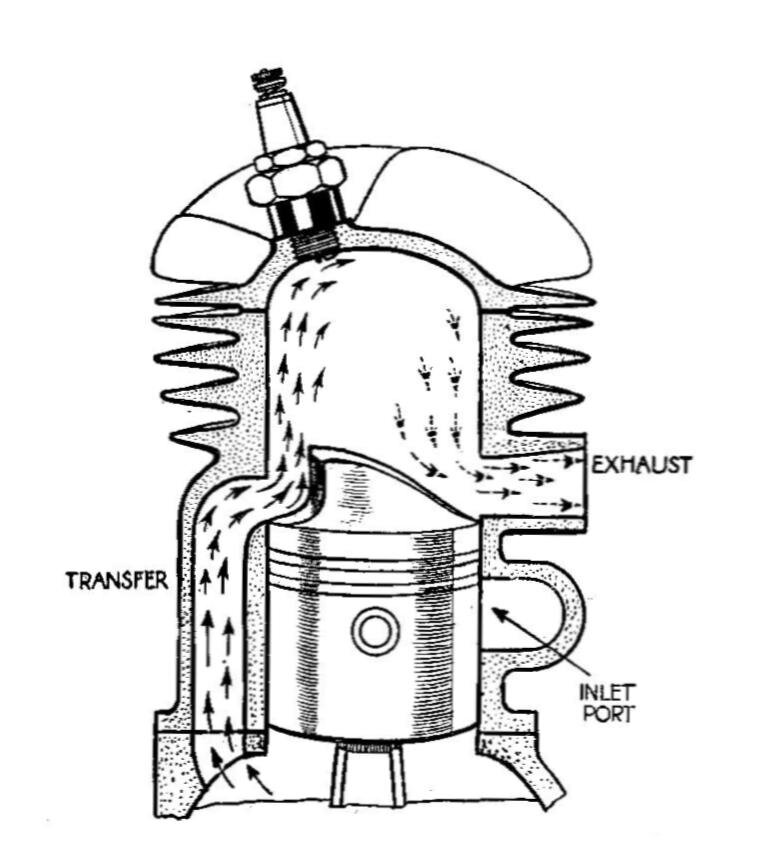
Here's how it combines the steps:
-
Upstroke (Compression & Intake): As the piston moves up, it compresses the air-fuel mixture in the combustion chamber above it. At the same time, its upward movement creates a vacuum in the crankcase below, drawing a fresh air-fuel mixture in through an intake port.
-
Downstroke (Power & Exhaust): The spark plug ignites the mixture, driving the piston down. This is the power stroke. As the piston moves downward, it first uncovers the exhaust port, allowing the burnt gases to escape. A moment later, it uncovers the transfer port, and the fresh mixture that was waiting in the crankcase rushes into the cylinder, pushing out the remaining exhaust and preparing for the next compression stroke.
A Brief History
The idea of internal combustion is surprisingly old. In the 17th century, Dutch physicist Christiaan Huygens experimented with using gunpowder explosions to lift a piston, though he never built a working engine. The first truly functional internal combustion engines appeared in the early 1800s, with innovators like Nicéphore Niépce developing engines that ran on coal dust.
Throughout the 19th century, numerous inventors refined the concept. Étienne Lenoir created the first commercially successful ICE in 1860, which ran on coal gas. A few years later, Nicolaus Otto improved on the design and developed the first successful four-stroke engine, the
Otto cycle
, which became the prototype for most modern car engines.
Karl Benz is credited with creating the first practical automobile in 1886, powered by his own four-stroke gasoline engine. From there, innovation accelerated, leading to the powerful and relatively efficient engines that are central to modern transportation.
What is the primary difference between an internal combustion engine (ICE) and an external combustion engine?
Arrange the four strokes of a typical car engine in the correct order.
These piston-driven engines, in both two-stroke and four-stroke forms, have been the dominant design for over a century. But they aren't the only way to achieve internal combustion.