Voluntary Contributions in IGOs
Introduction to IGOs
Organizations of Nations
Countries, like people, often need to work together to solve big problems. An International Governmental Organization, or IGO, is a formal group created by sovereign states to do just that. Think of it as a club for countries. They join forces by signing a treaty or charter, which acts as the club's rulebook.
The main goal is to tackle issues that don't respect borders—things like international security, economic stability, global health crises, and environmental protection. By creating a formal structure for cooperation, countries can pool resources, share information, and make collective decisions on challenges they can't solve alone.
International relations (IR) (occasionally referred to as international studies (IS), although the two terms are not perfectly synonymous) is the study of relationships between countries, including the roles of states, inter-governmental organizations (IGOs), international nongovernmental organizations (INGOs), non-governmental organizations (NGOs) and multinational corporations (MNCs).
A Spectrum of IGOs
IGOs aren't one-size-fits-all. They come in different shapes and sizes, depending on their membership and mission. We can generally sort them into a few key categories.
Some IGOs are global, meaning they're open to any state in the world. The most famous example is the United Nations, which aims to include every country. Others are regional, limiting their membership to a specific geographic area, like the European Union or the African Union.
IGOs also differ in their purpose. General-purpose organizations, like the UN, handle a vast range of issues from peace and security to human rights and development. In contrast, specific-purpose organizations focus on a single, well-defined area.
| Category | Scope | Purpose | Example |
|---|---|---|---|
| Global, General | Worldwide | Wide range of issues | United Nations (UN) |
| Global, Specific | Worldwide | Focused on one area | World Health Org. (WHO) |
| Regional, General | Specific region | Wide range of issues | European Union (EU) |
| Regional, Specific | Specific region | Focused on one area | OPEC (Oil) |
Roles and Functions
So what do these organizations actually do? Their functions are vital to how the world works today.
First, they provide a forum for cooperation and diplomacy. IGOs are neutral meeting grounds where leaders can talk, negotiate treaties, and de-escalate conflicts. The UN General Assembly hall is a powerful symbol of this function, offering a stage for global dialogue.
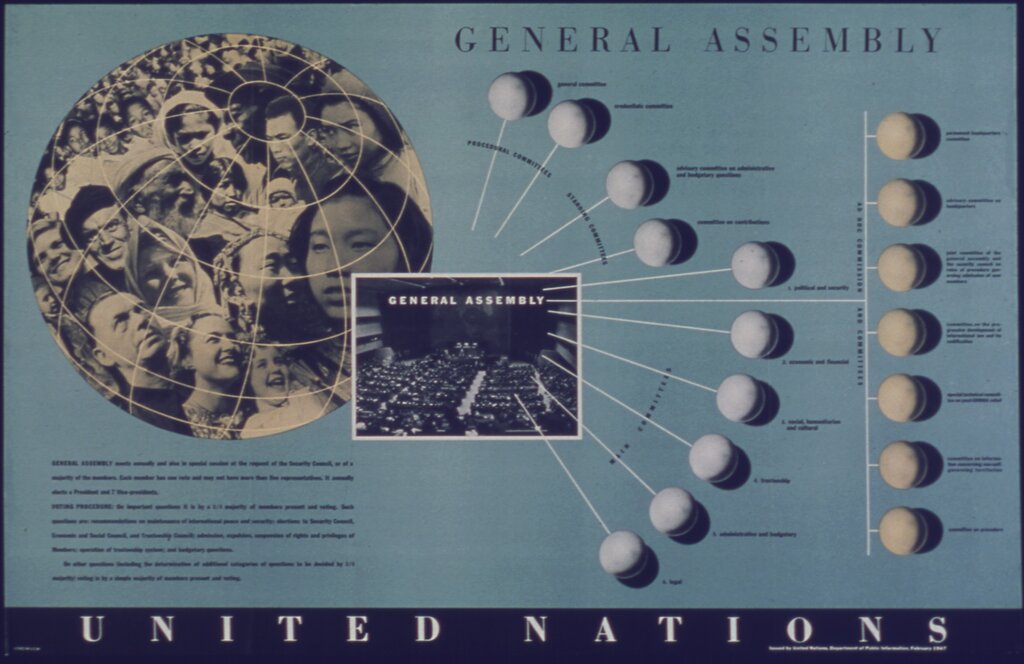
Second, they set international norms and create international law. IGOs help establish the rules of the road for how countries interact. This can range from trade regulations set by the World Trade Organization (WTO) to international human rights standards promoted by the UN.
Finally, they facilitate operational activities to address global problems directly. This is where theory meets practice. The World Health Organization (WHO) coordinates responses to pandemics, UNICEF provides aid to children in crisis zones, and the International Monetary Fund (IMF) offers financial assistance to countries facing economic instability.
These functions—diplomacy, rule-setting, and action—are the core of what makes IGOs essential players on the world stage.
Key Examples
Let's look at a few of the most influential IGOs.
United Nations (UN)
noun
A global organization founded in 1945 to maintain international peace and security, develop friendly relations among nations, and promote social progress, better living standards, and human rights.
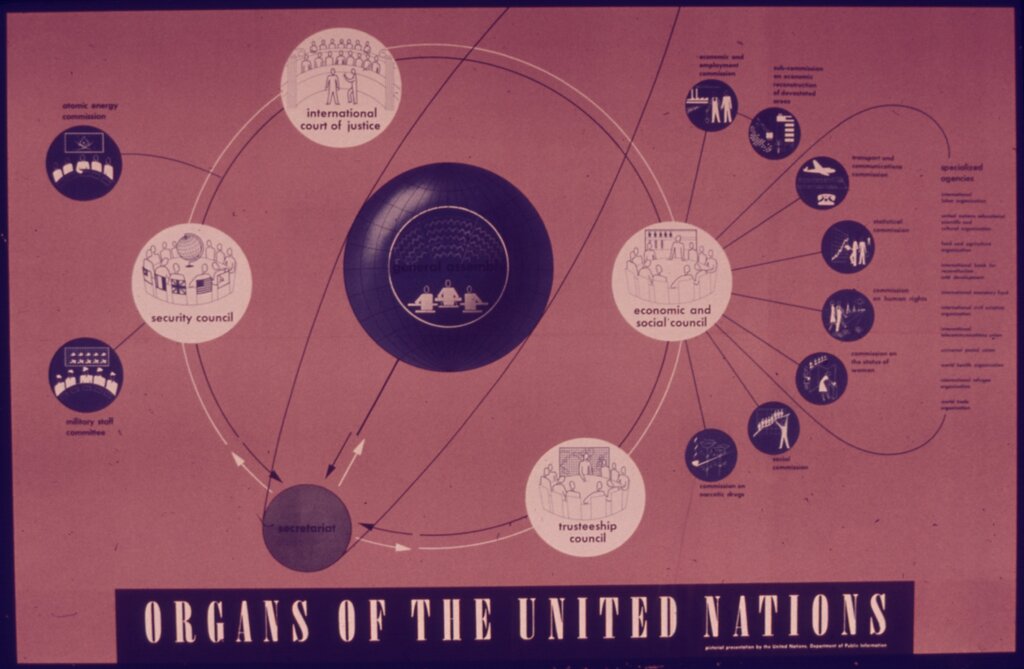
The UN is the world's premier general-purpose IGO. It has multiple principal organs, including the General Assembly for discussion, the Security Council for peace and security issues, and the International Court of Justice for legal disputes.
World Health Organization (WHO)
noun
A specialized agency of the United Nations responsible for international public health. Its main objective is the attainment by all peoples of the highest possible level of health.
The WHO is a prime example of a specific-purpose IGO. It directs and coordinates global health responses, sets health standards, provides technical assistance to countries, and monitors global health trends. Its work is crucial during pandemics and other health crises.
International Monetary Fund (IMF)
noun
An international financial institution that aims to promote global monetary cooperation, secure financial stability, facilitate international trade, and reduce poverty around the world.
The IMF is another specific-purpose IGO, focused on the global economy. It acts like a credit union for its member countries, providing loans to nations in economic trouble. It also monitors economic policies and provides analysis to help prevent financial crises before they start.
Understanding these organizations is the first step to grasping how global governance works. They are the frameworks through which countries attempt to manage a complex and interconnected world.