Volume of Fluid Method for Two-Phase Flow CFD
Introduction to Two-Phase Flow
When Fluids Don't Fly Solo
In many everyday situations, we see fluids moving on their own. Water flows from a tap, and air blows as wind. But often, different substances are mixed together, flowing at the same time within the same space. This is called two-phase flow. It's the simultaneous flow of two materials in different states, or phases, of matter.
The most common examples involve a liquid and a gas, like bubbles rising in a soda or steam traveling through a pipe. But it can also be a liquid and a solid (muddy water) or a gas and a solid (dust in the air).
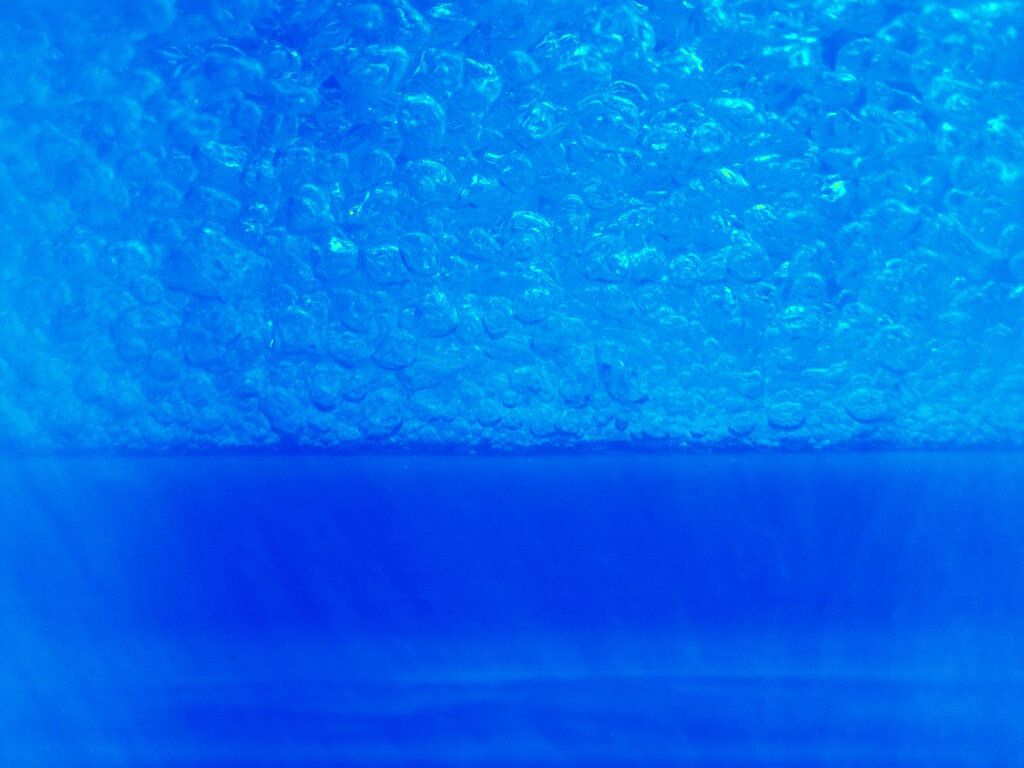
For our purposes, we'll focus mostly on liquid-gas and liquid-liquid flows, where two fluids that don't mix, like oil and water, flow together. The key feature is the presence of an interface, a clear boundary separating the two phases.
Why It Matters
Understanding two-phase flow isn't just an academic exercise. It's critical for designing and operating countless engineering systems safely and efficiently. In a power plant, the process of boiling water to create steam to turn a turbine is a two-phase flow problem. In the oil and gas industry, crude oil is often pumped from underground reservoirs mixed with natural gas and water. Engineers need to predict how this mixture will behave to design pipelines and separators.
Think about a rocket launching into space. The liquid fuel inside its tanks sloshes around during flight. This sloshing is a two-phase flow (liquid fuel and pressurized gas) that can affect the rocket's stability. Even something as simple as pouring cream into coffee creates a temporary, complex two-phase flow. Accurately modeling these interactions is essential for optimization and safety.
The Simulation Challenge
Simulating two-phase flow is significantly harder than simulating a single fluid. The main difficulty lies in tracking the interface between the two phases. This boundary isn't a fixed wall; it's a dynamic, moving surface that can stretch, deform, break apart into droplets, or merge together. Capturing its exact position and shape over time is a major computational challenge.
Another major challenge is accounting for forces that only exist at the interface, like surface tension.
surface tension
noun
A property of liquids where the surface tends to shrink into the minimum possible surface area. It's what allows insects to walk on water and causes water to form droplets.
This force, which acts like a thin, stretched membrane on the liquid's surface, can dominate the flow's behavior, especially at small scales. In simulations, we need special methods to model this force accurately. Furthermore, if one phase can change into the other, like water boiling into steam, the complexity increases even more. We have to track not just the movement of mass, but also the transfer of energy that causes the phase change.
Because of these difficulties, specialized techniques are needed to build reliable simulations of two-phase systems.
What is the key feature that defines a two-phase flow?
Which of the following is a major computational challenge specific to simulating two-phase flow compared to single-phase flow?