Voice Agent Interruption Handling
Introduction to Voice Agents
Beyond the Chatbot
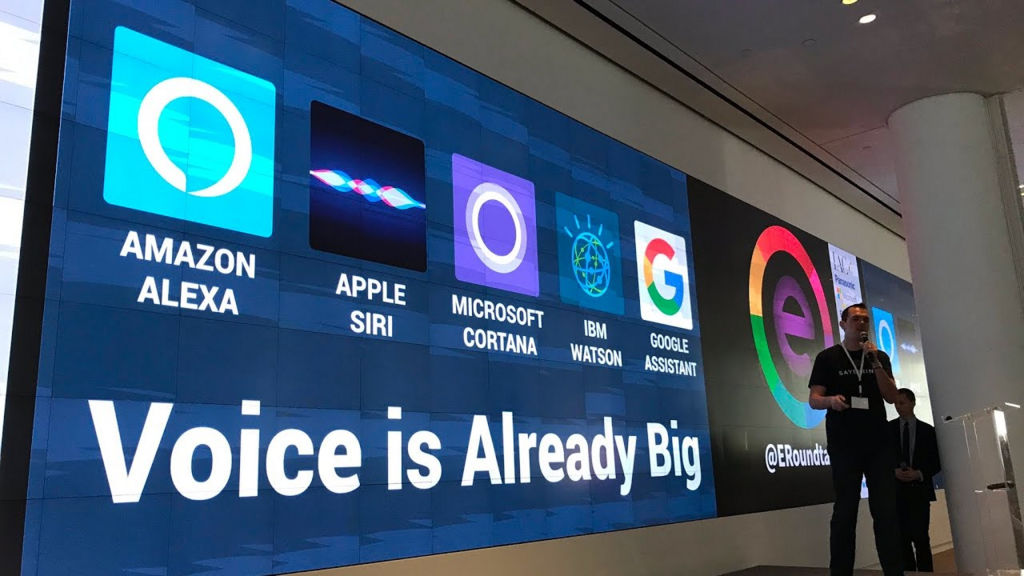
You’ve probably talked to a computer today. Maybe you asked your phone for the weather, told your car to navigate home, or called a company and spoke to an automated assistant. These are all examples of voice agents: AI systems designed to understand and respond to human speech.
Unlike a text-based chatbot, a voice agent's job is to make interacting with technology feel as natural as talking to a person. They free up our hands and allow us to communicate with devices more directly. But how do they actually work? How does a machine turn our spoken words into a useful action?
It's a four-step process that happens in the blink of an eye. Let’s break down the journey your voice takes, from the moment you speak to the moment the agent replies.
From Sound to Meaning
The first challenge for a voice agent is to convert the sound waves of your voice into something a computer can read: text. This is handled by a component called Automatic Speech Recognition, or ASR.
Automatic Speech Recognition (ASR) acts like a digital transcriber. Its sole job is to listen to your speech and turn it into written words. It has to overcome challenges like background noise, different accents, and fast or mumbled speech to get the text right.
Once your words are in text form, the agent needs to figure out what you actually mean. This is the job of Natural Language Understanding, or NLU.
Natural Language Understanding (NLU) is the interpretation engine. It analyzes the transcribed text to identify your goal, or intent. For example, the NLU knows that "What's the forecast?" and "Will I need an umbrella today?" are both requests for the weather.
The NLU extracts the key pieces of information it needs to fulfill the request. In a command like, "Set an alarm for 7 a.m.," the NLU identifies the intent (set an alarm) and the important details (7 a.m.).
Crafting a Reply
After the agent understands what you want, it needs to decide what to do and how to respond. This is where Dialogue Management comes in.
Dialogue Management is the agent's brain. It takes the intent from the NLU and determines the next logical step. If you ask, "Book a flight to Boston," the dialogue manager knows it needs more information and will ask, "For what date?" It manages the back-and-forth of a conversation to gather all the necessary details.
Once the dialogue manager has decided on a response, it formulates it as text. But you're not reading a screen, you're listening. The final step is to turn that text back into sound.
Text-to-Speech (TTS) is the voice of the agent. This system takes the text generated by the dialogue manager and synthesizes it into audible speech. Modern TTS systems work hard to sound natural, with human-like pitch and intonation, so the interaction feels less robotic.
These four components work together in a continuous loop, allowing for a seamless conversation.
The Need for Speed
For a voice conversation to feel natural, it has to be fast. Delays or long pauses can make the interaction awkward and frustrating. This is why real-time processing is critical.
The entire cycle—from ASR to NLU, to Dialogue Management, to TTS—needs to happen almost instantly. A lag of even a second can make the agent feel slow and unhelpful. The goal is to mimic the rhythm of human conversation, where responses are quick and timely.
This demand for speed is what makes building voice agents so challenging. They must be not only accurate in their understanding but also incredibly efficient in their processing to create a smooth user experience.
What are the four core components of a voice agent's processing cycle, in the correct order?
In the command "Set a timer for 15 minutes," what is the primary role of the Natural Language Understanding (NLU) component?
That's the basic architecture of a voice agent. By breaking the problem down into these four steps, developers can build systems that make talking to technology an everyday reality.