Vocal Sight-Reading Mastery
Music Notation Basics
The Musical Framework
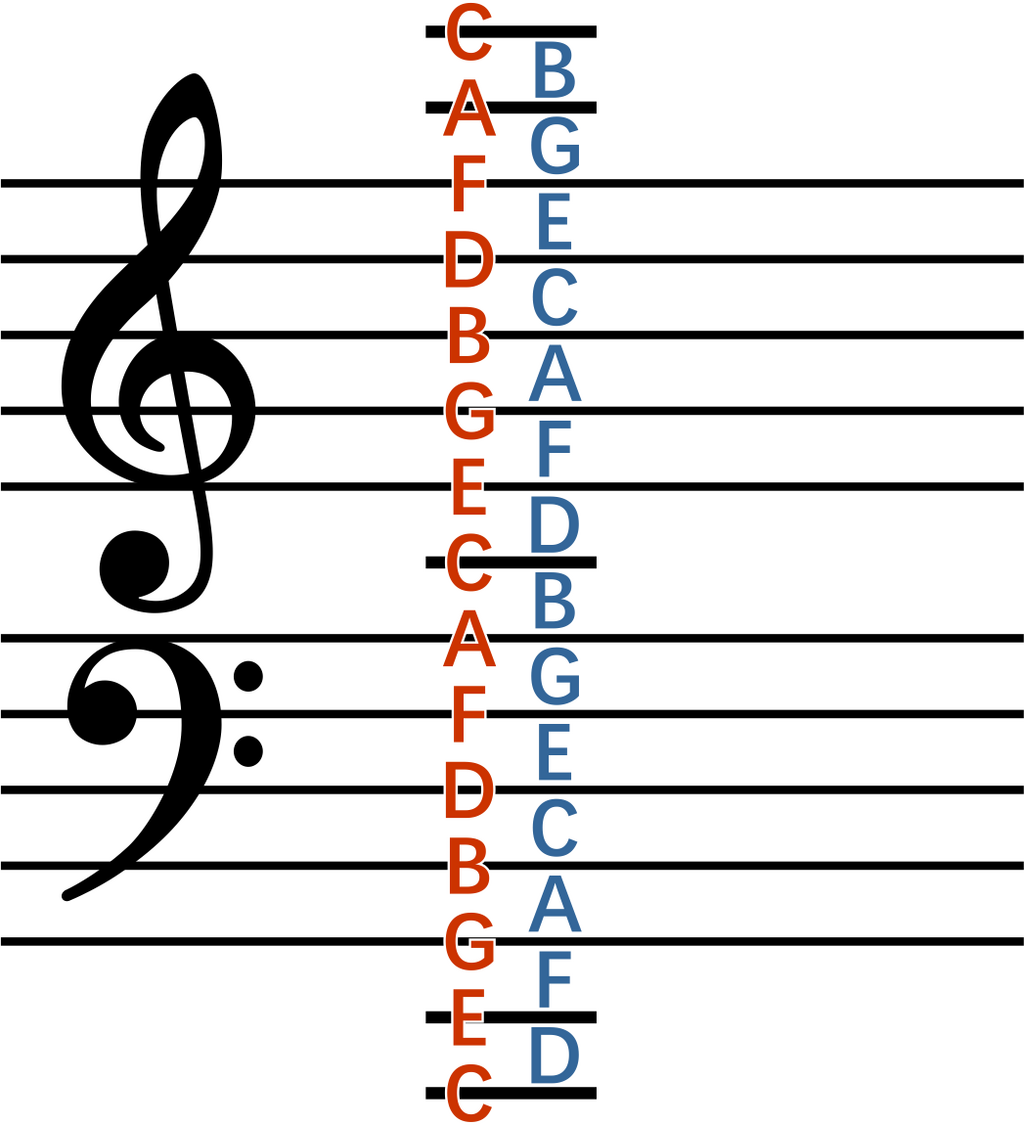
Music is written on a set of five horizontal lines and four spaces called a staff. Each line and space represents a different musical pitch. The higher a note is placed on the staff, the higher its pitch.
To know which specific notes the lines and spaces represent, we use a symbol at the beginning of the staff called a clef. For singing, you'll most commonly see two types of clefs.
The treble clef, or G-clef, is used for higher voices (soprano and alto). The curl of the clef wraps around the second line from the bottom, which is the note G.
A common way to remember the notes on the treble clef lines is the phrase "Every Good Boy Does Fine," starting from the bottom line. The notes in the spaces simply spell out "FACE."
The bass clef, or F-clef, is for lower voices (tenor and bass). The two dots of the clef surround the fourth line from the bottom, which is the note F.
For the bass clef lines, you can use "Good Boys Do Fine Always." For the spaces, think of "All Cows Eat Grass."
Often, these two staves are joined together by a brace to form the grand staff. The note in the middle, sitting on a small line of its own called a ledger line, is Middle C.
Rhythm and Silence
Pitch is only half the story. Music also needs rhythm. The shape of a note tells you how long to hold it. Each note value also has a corresponding rest, which indicates a period of silence of the same duration.
| Note | Rest | Name | Duration |
|---|---|---|---|
| ♩ | │ | Quarter Note/Rest | 1 beat |
| ♪ | ╎ | Eighth Note/Rest | ½ beat |
| H | ▬ | Half Note/Rest | 2 beats |
| W | ▬▬ | Whole Note/Rest | 4 beats |
The quarter note is often the basic unit of time. A half note lasts twice as long as a quarter note, and a whole note lasts four times as long. An eighth note is half the length of a quarter note.
Organizing the Beat
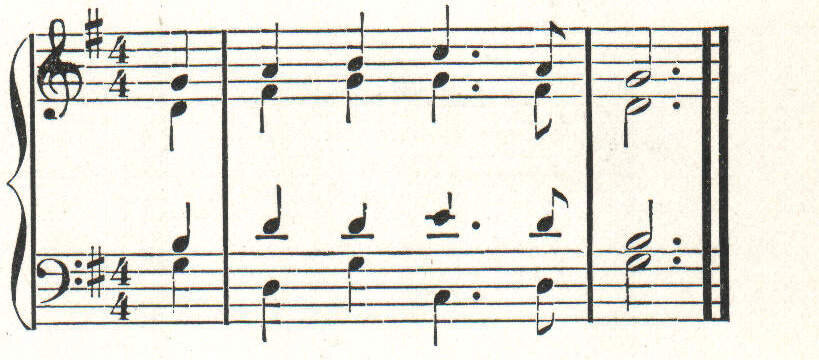
Music is organized into small, regular sections called measures, separated by vertical lines called bar lines. A time signature, which looks like a fraction, appears at the beginning of the music to tell you how many beats are in each measure.
So, a time signature of means there are four beats per measure, and the quarter note gets one beat. A time signature of means three beats per measure, with the quarter note still getting one beat.
Setting the Key
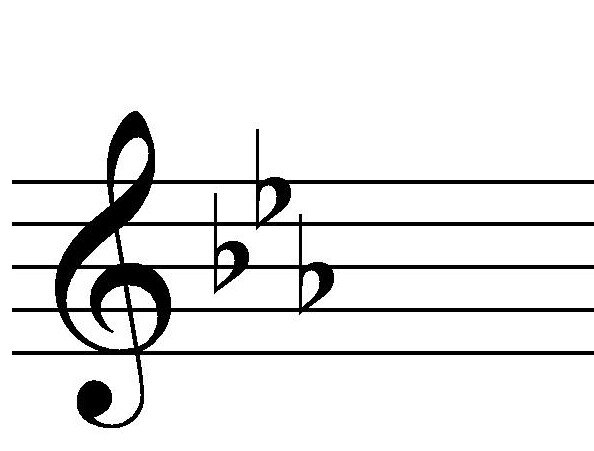
The key signature is a set of sharp () or flat () symbols placed on the staff right after the clef. It tells you which notes to sing consistently higher or lower throughout the entire piece, unless otherwise noted.
For example, a key signature with one flat on the B line means every B you see should be sung as a B-flat. A key signature with one sharp on the F line means every F should be sung as an F-sharp.
Instead of writing a sharp or flat next to every single F or B in the piece, the key signature is a shorthand that applies to the whole song.
These basic elements—staff, clefs, notes, rests, time signatures, and key signatures—are the building blocks of written music. Understanding them is the first step to reading any melody you see.
Ready to test your knowledge? Let's see how well you've grasped these fundamentals.
What is the set of five horizontal lines and four spaces on which music is written called?
Using the mnemonic "Every Good Boy Does Fine," what note is on the top line of the treble clef staff?