vLLM: Efficient LLM Serving
Introduction to Large Language Models
What Are Large Language Models?
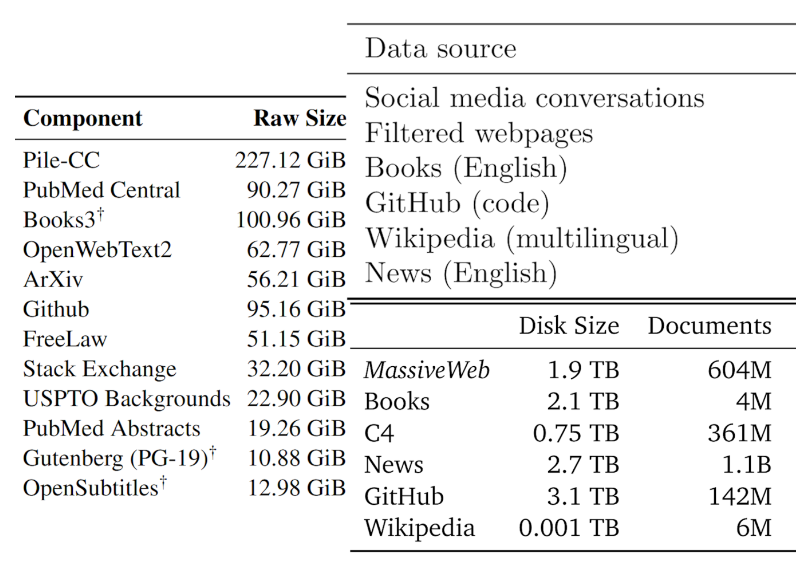
At its core, a large language model (LLM) is an AI program trained to understand and generate human language. Think of it as a sophisticated pattern-matching machine. After analyzing billions of sentences from books, articles, and websites, it learns the statistical relationships between words. Its primary goal is to predict the next word in a sequence.
Given the text "The cat sat on the...", an LLM calculates the most probable next word. It might be "mat," "couch," or "floor," based on the patterns it learned from its training data.
The "large" in LLM refers to two things: the immense size of the dataset it's trained on and the number of parameters it uses. Parameters are the internal variables the model learns during training, which essentially store its knowledge. Modern LLMs can have hundreds of billions, or even trillions, of parameters.
From Chains to Transformers
Early language models, like Recurrent Neural Networks (RNNs), processed text sequentially, one word at a time. This worked for short sentences, but they struggled to remember context from earlier in a long paragraph. It was like trying to remember the beginning of a conversation after an hour of talking. Information would get lost along the way.
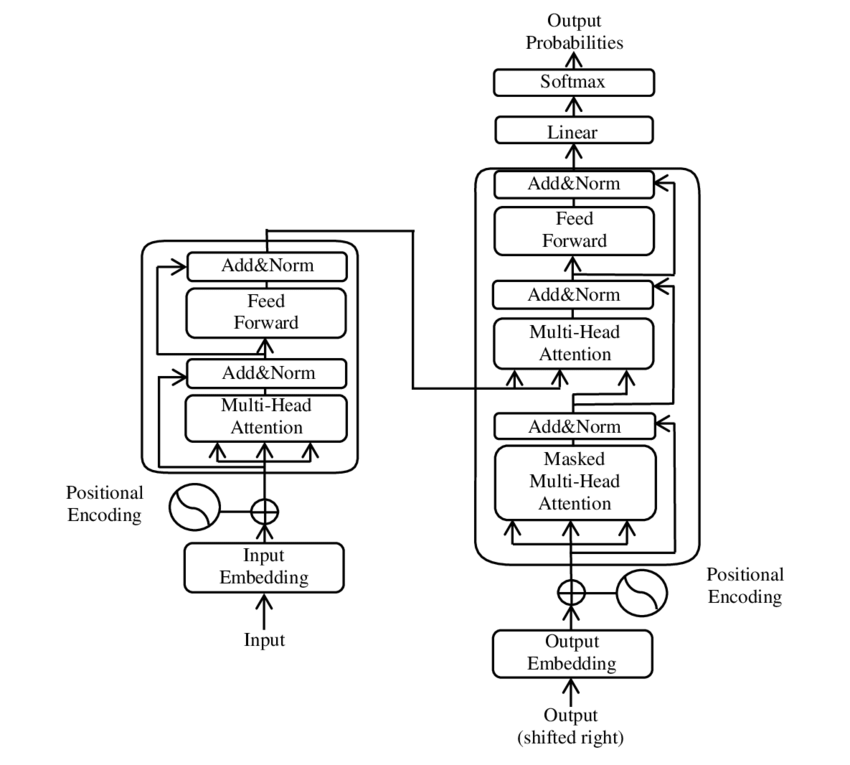
A major breakthrough came in 2017 with the introduction of the Transformer architecture. Instead of processing words one by one, Transformers can process them all at once. This is possible because of a key innovation called the attention mechanism.
The attention mechanism allows the model to weigh the importance of different words in the input text when processing any given word. It helps the model understand context and relationships, no matter how far apart words are.
For example, in the sentence, "The robot picked up the ball, but it was too heavy," the attention mechanism helps the model understand that "it" refers to the "ball," not the "robot." This ability to handle long-range dependencies revolutionized what language models could do.
Applications and Challenges
The power of modern LLMs has unlocked a wide range of applications across many fields. They are not just chatbots; they are powerful tools for creativity, analysis, and automation.
| Domain | Application |
|---|---|
| Software Development | Code generation, debugging, documentation |
| Customer Service | Automated chatbots, sentiment analysis |
| Healthcare | Summarizing medical records, answering patient queries |
| Content Creation | Writing articles, drafting emails, generating scripts |
| Education | Personalized tutoring, language translation |
Despite their impressive capabilities, deploying LLMs comes with significant challenges. Their massive size demands immense computational power, often requiring specialized and expensive hardware like GPUs. This leads to a few key problems.
First is latency, which is the delay between a user's request and the model's response. For a real-time conversation, even a few seconds of delay can make the experience feel clunky and unnatural.
Second is scalability. How do you provide fast responses to millions of users simultaneously without costs spiraling out of control? Serving LLMs efficiently means managing memory and processing power very carefully to handle high demand.
Finally, the cost of running these models is substantial. The energy consumption and hardware requirements for training and deploying LLMs are enormous, making them inaccessible for many smaller organizations.
What is the primary function of a large language model (LLM)?
In the context of LLMs, what are 'parameters'?