Visualization and Spatial Intelligence
Introduction to Spatial Intelligence
Your Mind's Eye
Have you ever assembled a piece of furniture just by looking at the diagram? Or navigated a new city using a map, picturing the turns in your head before you make them? If so, you were using your spatial intelligence.
Spatial Intelligence
noun
The ability to generate, retain, retrieve, and transform well-structured visual images.
This cognitive skill is essentially your ability to think in three dimensions. It’s the capacity to visualize objects, shapes, and their relationships in space, even when they aren't physically present. It allows you to mentally rotate objects, understand how they fit together, and perceive the world and your place within it accurately.
People with well-developed spatial intelligence tend to think in images rather than words.
Not Just for Maps
Spatial intelligence isn't just an abstract concept; it's a practical skill we use constantly. When you parallel park a car, you're mentally calculating distances and angles. When you pack a suitcase, you're visualizing how to fit objects of different shapes and sizes into a limited space. Even arranging furniture in a room requires you to mentally map out the layout to see what works.
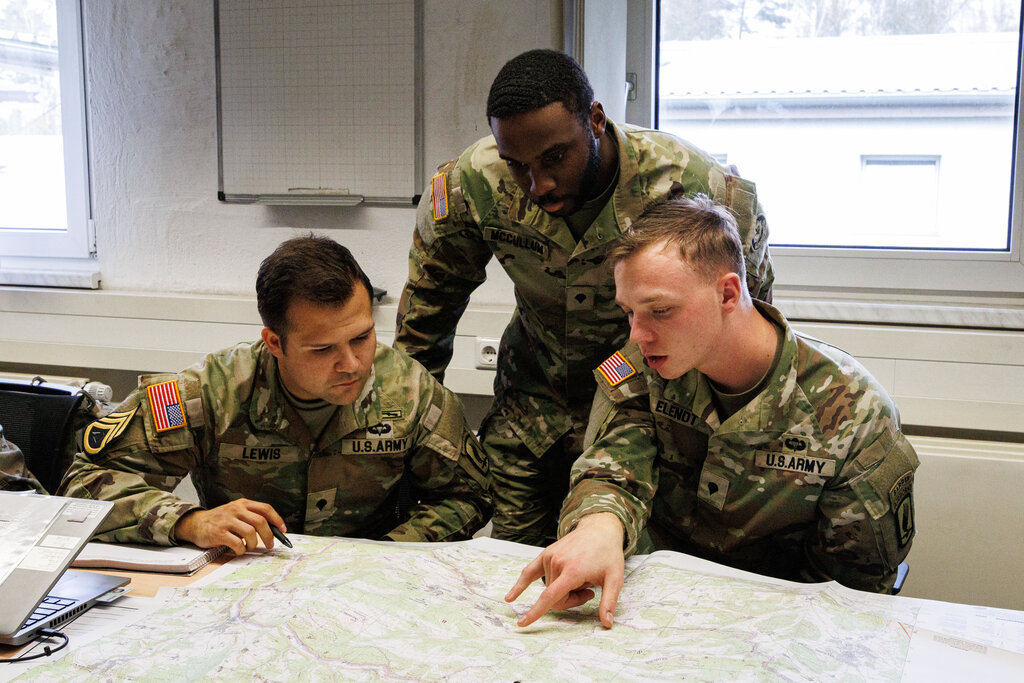
In the professional world, this ability is critical. For many careers, it's not just helpful, it's essential. Architects must visualize a building's structure from a 2D blueprint. Surgeons need to understand the complex, three-dimensional relationships of organs and tissues inside the human body. Pilots navigate in 3D space, while engineers design intricate machinery that must function perfectly.
| Profession | How They Use Spatial Intelligence |
|---|---|
| Architect | Visualizing 3D structures from 2D plans |
| Surgeon | Navigating the complex anatomy of the human body |
| Pilot | Orienting an aircraft in three-dimensional space |
| Graphic Designer | Arranging elements to create a balanced composition |
| Chess Player | Anticipating future moves on a 2D board |
A Piece of a Bigger Puzzle
Spatial intelligence doesn't operate in a vacuum. It works alongside our other cognitive abilities to help us understand the world and solve problems. It's closely linked to logical-mathematical reasoning, especially in fields like geometry, where understanding shapes and their properties is key. It also connects to creativity, allowing artists, designers, and inventors to bring their visions to life.
Think of it as one of the essential tools in your mental toolkit. It enables a unique way of thinking that complements verbal and mathematical reasoning. By understanding how we perceive and interact with the space around us, we gain a fuller picture of human intelligence.