Visual Language Action in Robotics
Introduction to VLA Models
What Can See, Understand, and Do?
Imagine asking a robot to “please hand me the blue mug on the table.” For a person, this is simple. You see the mugs, identify the blue one, and pick it up. For a robot, this has historically been a monumental challenge. It requires seeing the world, understanding language, and then physically acting on that understanding.
This is where Vision-Language-Action (VLA) models come in. They are a type of AI designed to give robots these three connected abilities:
- Vision: To perceive and interpret their surroundings through cameras.
- Language: To understand instructions given in everyday human language.
- Action: To translate that understanding into physical movements.
VLAs are what allow a robot to connect the words “blue mug” to the specific pixels in its camera feed and then calculate the precise arm movements needed to grasp it.
Think of a VLA as a self-contained robotic brain: it perceives through “eyes” (vision sensors), reasons with “words” (language models), and acts with “limbs” (action policies).
By integrating these skills, VLA models move robots beyond pre-programmed, repetitive tasks. They open the door to machines that can adapt to new situations and collaborate with humans in a natural, intuitive way.
The Journey to VLA
VLA models didn't appear overnight. They are the result of decades of progress in separate fields of AI. For a long time, robotics research focused on creating specialized machines. A factory robot might weld a car door thousands of times, following a precise set of instructions. It was incredibly efficient but couldn't do much else. It didn’t need to understand language or navigate a messy kitchen.
Then came major breakthroughs in two key areas. First, computer vision became powerful enough for machines to reliably identify objects in images. Second, Large Language Models (LLMs) changed how AI processes text, enabling nuanced understanding and reasoning.
These advances led to Vision-Language Models (VLMs). A VLM can look at a picture of your desk and generate a text description: “There is a laptop, a coffee mug, and a notebook.” This was a huge step, but it was still passive. The model could describe the scene, but it couldn't interact with it. Adding the ability to act was the next logical step.
By injecting action components into the VLMs, Vision-Language-Action Models (VLAs) can be naturally formed and also show promising performance.
The “Action” component links perception and understanding to physical reality. It transforms the AI from a knowledgeable observer into a capable participant.
Putting It All Together
So how do these three parts work together? Think of it as a continuous loop. A robot equipped with a VLA model first takes in visual information from its cameras. This stream of images tells it what's happening in its environment.
When you give it a command, the language part of the model processes your words. The magic happens when the model links the two. It connects the words in your command—like “apple” or “drawer”—to the objects it sees.
Finally, the action component plans and executes the necessary physical steps. It determines the path for the robot's arm, the right amount of grip pressure, and the sequence of movements to complete the task. This entire process is dynamic, allowing the robot to adjust its actions based on what it sees.
This integration has a profound impact. In manufacturing, a robot could fetch different tools based on verbal requests. In healthcare, it could assist patients by retrieving items. And in our homes, a VLA-powered robot could tidy up a room by following general instructions like “put the toys in the box.”
The goal is to create robots that can operate safely and effectively in messy, unpredictable human environments, not just sterile, controlled factory floors.
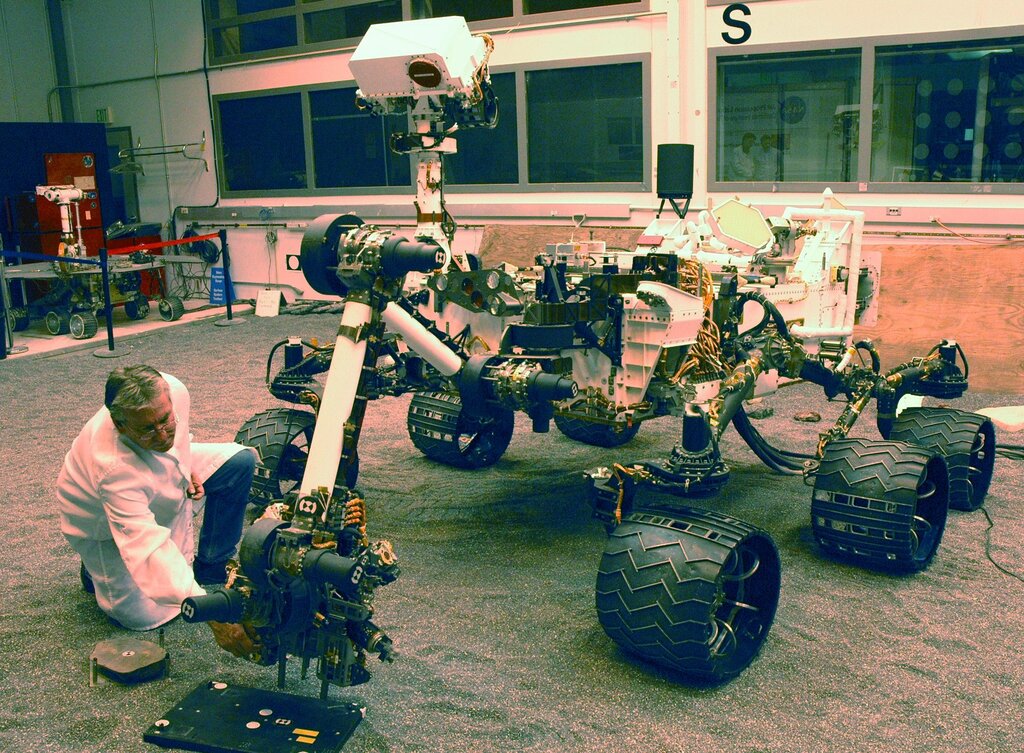
The development of VLA models marks a significant shift toward more intelligent and capable robots that can see, understand, and act in the world much like we do.