Virtual Cells and Multi-Omics
Introduction to Multi-Omics Data
The Cell's Many Layers
To truly understand a cell, we need to look at it from multiple angles. Think of a cell as a bustling city. Just having the city map—the genome—isn't enough to understand its daily life. You also need to know which roads are busy, what the factories are producing, and what messages are being sent around. This is the idea behind multi-omics.
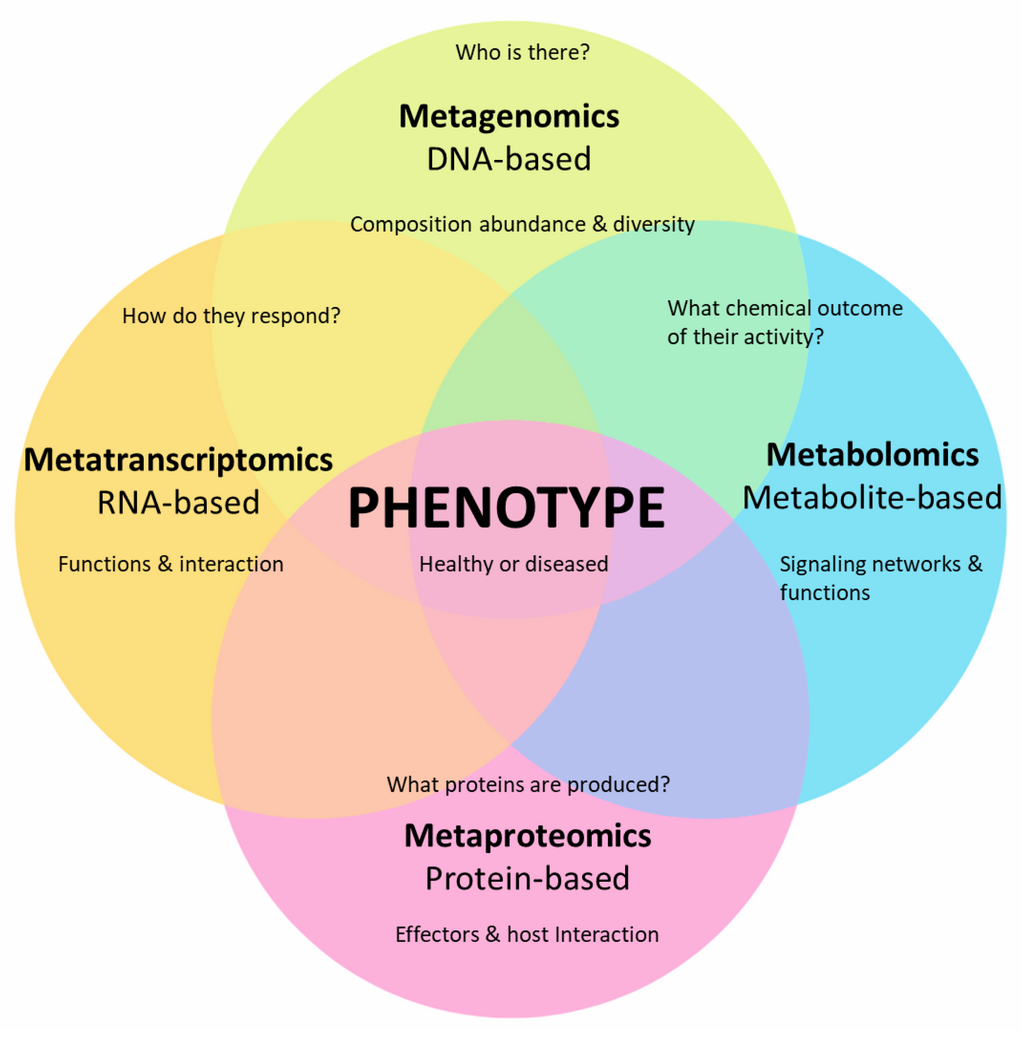
Multi-omics is an approach that combines data from different biological layers to get a complete picture. Instead of studying just one aspect of a cell, like its DNA, we look at its genes, RNA molecules, proteins, and metabolites all together. This layered view helps us understand how a cell functions, responds to its environment, and contributes to the health or disease of an organism.
Genomics: The Blueprint
Genomics is the starting point. It's the study of an organism's complete set of DNA, known as the genome. You can think of the genome as the master blueprint for everything the cell can possibly do. It contains all the genes, which are the instructions for building proteins and other essential molecules.
Scientists acquire genomic data through a process called DNA sequencing. Machines read the sequence of the four chemical bases—adenine (A), cytosine (C), guanine (G), and thymine (T)—that make up DNA. By analyzing this sequence, researchers can identify genes, find variations that might lead to disease, and compare the genetic makeup of different organisms.
Application: Genomics can reveal a person's genetic risk for conditions like heart disease or certain cancers, paving the way for personalized medicine.
Transcriptomics: The Working Orders
If the genome is the entire library of instruction manuals, the transcriptome is the set of pages that are actually being read at any given moment. Transcriptomics is the study of all the RNA molecules in a cell, collectively called the transcriptome.
RNA acts as a messenger, carrying instructions from the DNA in the cell's nucleus out to the machinery that builds proteins. By studying the transcriptome, we can see which genes are active, or "expressed," and which are silent. A skin cell and a brain cell have the same DNA, but their transcriptomes are vastly different, which is why they look and act so differently.
The main technique here is RNA sequencing (RNA-Seq). It allows scientists to capture a snapshot of all the RNA molecules in a cell at a specific time, telling them which genes are switched on and how active they are.
Application: Transcriptomics helps researchers understand how a cell responds to a new drug by showing which genes the drug turns on or off.
Proteomics: The Workforce
Proteins are the workhorses of the cell. They are the enzymes, structural components, and signaling molecules that perform the vast majority of cellular functions. Proteomics is the large-scale study of all these proteins, known as the proteome.
While the transcriptome shows which genes are active, the proteome shows which proteins are actually present and carrying out their jobs. The link isn't always direct; an RNA molecule might not always be translated into a protein. Proteomics gives us a direct look at the cell's functional machinery.
Data is often acquired using a technique called mass spectrometry. This method identifies and quantifies proteins in a sample by measuring their mass-to-charge ratio. It's a powerful tool for cataloging the thousands of different proteins at work in a cell.
Application: Proteomics is used to find biomarkers—proteins whose presence or absence can indicate a particular disease, such as cancer.
Metabolomics: The Fuel and Materials
Finally, we have metabolomics. This field studies the metabolome, which is the complete set of small molecules, or metabolites, within a cell or organism. These include sugars, fats, amino acids, and other molecules that are the products and fuel of all the cell's chemical reactions.
Metabolites provide a real-time snapshot of a cell's physiological state. Because metabolite levels can change very rapidly in response to the environment, studying the metabolome gives us a dynamic view of cellular activity. It reflects the outcome of all the genomic, transcriptomic, and proteomic activities.
Like proteomics, mass spectrometry is a key technique in metabolomics, along with nuclear magnetic resonance (NMR) spectroscopy. These methods help identify and quantify the hundreds or thousands of different metabolites in a biological sample.
Application: Doctors can use metabolomics to diagnose metabolic disorders in newborns by screening for abnormal levels of certain metabolites in their blood.
| Omics Field | What It Studies | Analogy |
|---|---|---|
| Genomics | DNA | The master blueprint |
| Transcriptomics | RNA | The active working orders |
| Proteomics | Proteins | The cellular workforce |
| Metabolomics | Metabolites | The fuel and end products |
Each of these 'omics' layers offers a unique window into the cell. By looking through all of them, we can begin to build a much richer, more complete understanding of how life works.