Viral Marketing Strategies
Introduction to Viral Marketing
What is Viral Marketing?
Viral marketing isn't about creating ads; it's about creating messages that people choose to spread. Think of it like a biological virus. It starts with one person, who shares it with a few others, who then share it with their friends, and so on. Before you know it, an idea, video, or product has spread exponentially, all on its own.
Viral Marketing
noun
A marketing technique that uses social networks to increase brand awareness or achieve other marketing objectives through self-replicating viral processes, analogous to the spread of viruses.
The importance of this approach is its organic nature. Instead of paying for eyeballs, you earn them. This makes it incredibly cost-effective and can generate a level of trust and authenticity that traditional advertising often struggles to achieve. When a friend recommends something, it carries more weight than a billboard.
The Psychology of Sharing
Why do we share? The decision to click "share" is rarely random. It's driven by deep-seated psychological triggers. Understanding these triggers is the key to creating content that people feel compelled to pass along.
One major driver is social currency. We share things that make us look good. This could be content that makes us seem smart, funny, or in-the-know. Sharing becomes a form of self-expression, a way to build our own identity in the eyes of others.
Another trigger is practical value. If we find something genuinely useful—a life hack, a helpful tip, an insightful article—we are naturally inclined to share it with people who might also benefit. It’s a way of helping our friends and strengthening social bonds.
Ultimately, we don't just share information; we share emotion. Content that makes us feel something is content we want others to feel, too.
Finally, there’s the power of the public trigger. When we see other people doing something, we're more likely to do it ourselves. Making behavior observable encourages imitation. This is why you see brands create things like wristbands or distinctively designed products; they turn private choices into public statements.
Emotion and Storytelling
Of all the psychological triggers, emotion is arguably the most powerful. But not all emotions are created equal. Research shows that high-arousal emotions—those that fire us up—are the most likely to drive sharing.
Think about feelings like awe, excitement, and amusement. These positive emotions make us want to connect and share the joy. On the flip side, high-arousal negative emotions like anger and anxiety can also be potent drivers. They make us want to vent, warn others, or seek validation. Low-arousal emotions like sadness or contentment are far less likely to spur action.
If there’s one defining trait of viral videos, it’s their ability to stir deep emotional connections—whether they make us laugh, cry, or gasp in amazement.
How do you package these emotions? Through storytelling. Humans are wired for stories. A good narrative provides a structure for information, making it more engaging, memorable, and easier to pass on. A list of facts is forgettable, but a story about a single person overcoming an obstacle can stick with us for years.
A compelling story has a clear beginning, middle, and end. It introduces relatable characters, presents a conflict, and offers a resolution. This structure acts as a Trojan horse, carrying the marketing message inside a package that people genuinely want to consume and share.
How Ideas Spread
Ideas don't spread in a vacuum. They travel through social networks, moving from person to person and group to group. The structure of these networks plays a huge role in how fast and how far a message can go.
Think of social networks as a series of interconnected hubs and spokes. Some people (influencers or connectors) act as major hubs with vast numbers of connections. Getting a message to one of these hubs can cause it to spread rapidly through their network.
At the same time, the strength of individual connections matters. We are more influenced by people we have strong ties with, like close friends and family. However, weaker ties—acquaintances from different social circles—are often the bridges that allow information to jump from one distinct community to another, achieving true widespread reach.
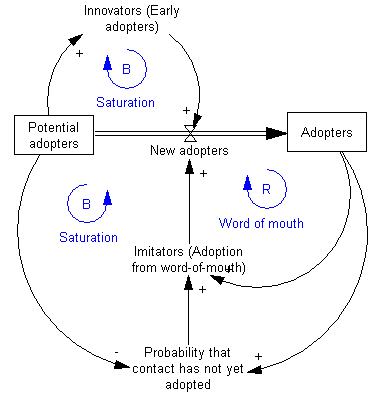
The entire process is a feedback loop. A user discovers the content, shares it with their network, and some of those people become new users who then repeat the cycle. The goal of viral marketing is to make this loop as efficient and frictionless as possible.
What is the primary characteristic that distinguishes viral marketing from traditional advertising?
A food blogger shares a recipe that makes cooking a complex dish simple and quick. The post is shared thousands of times. Which psychological trigger is the main reason for its viral success?
These core concepts form the foundation of any viral marketing effort. It's less about a specific platform and more about understanding human nature—what makes us feel, what makes us talk, and what makes us share.