Vipassana Breathing Meditation
Introduction to Vipassana
What Is Vipassana?
Vipassana is a straightforward way of looking inward. The word itself comes from the ancient Pali language and means "to see things as they really are." It's not about chanting, visualizing, or emptying your mind. Instead, it’s a practice of self-observation.
Vipassanā
noun
A Pali word that means "to see things as they really are," referring to a form of insight meditation.
The core purpose is to cultivate two key qualities: mindfulness and insight. Mindfulness is the ability to pay attention to the present moment without judgment. Insight is the deep understanding that comes from this focused attention. Through this practice, you begin to see the true nature of your own mind and body.
A Brief History
The technique of Vipassana is said to have been rediscovered by Gotama the Buddha more than 2,500 years ago. He taught it as a universal remedy for universal ills. For centuries, the practice was preserved in its pure form in Burma (now Myanmar) through a long line of teachers.

It remained largely unknown to the rest of the world until the 20th century, when it began to spread from Burma to India and eventually to countries all over the globe. The emphasis has always been on direct experience, not blind faith. The technique is presented as a scientific method for exploring your own reality.
The Role of the Breath
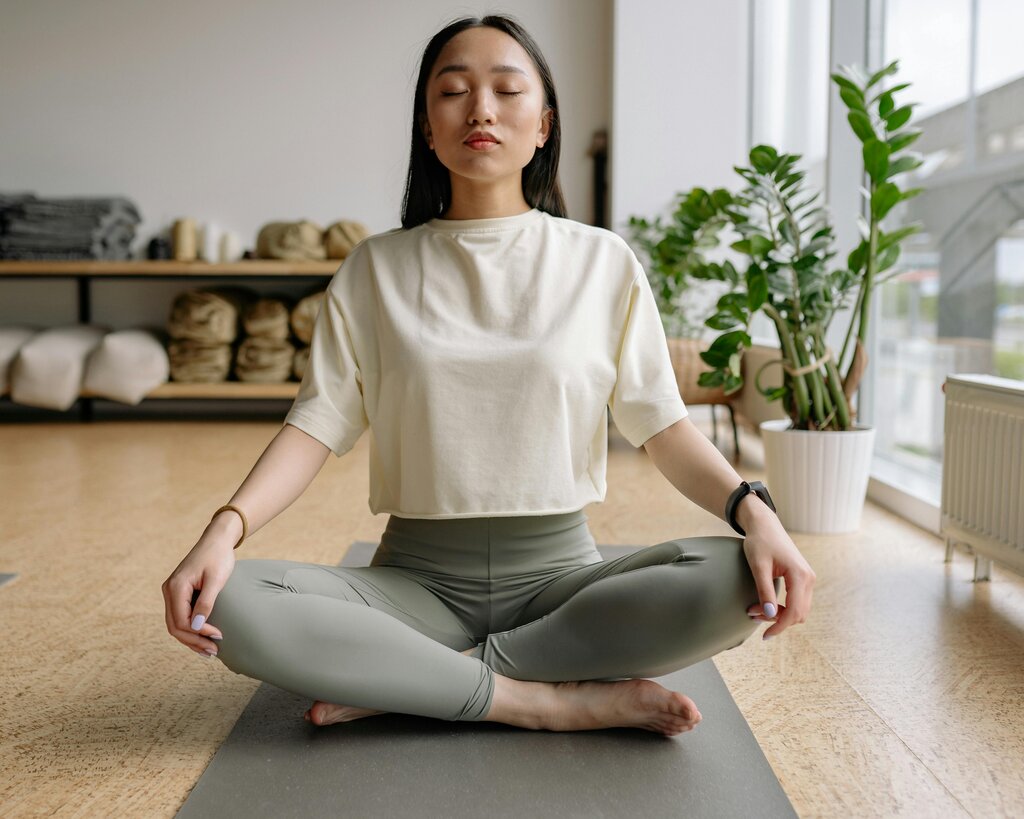
So where do you start? With the breath. Vipassana uses the natural, normal breath as the initial point of focus. It's an ideal object for meditation because it's always with you, and it's completely neutral. You don't have to create it or control it.
The instruction isn't to change your breathing. It's simply to observe it as it is. Notice the sensation of the air entering and leaving your nostrils.
This focus on the breath serves a practical purpose. It helps to calm and concentrate the mind. When your mind is wandering, the breath acts as an anchor, gently bringing your awareness back to the present moment. This builds the foundation of mindfulness needed to observe more subtle sensations throughout the body later on.
Mindfulness and Insight
As you practice observing your breath, you are developing mindfulness. You're learning to keep your attention on one thing without being carried away by thoughts, memories, or plans. This is the first objective.
The second objective, insight, arises from this sustained mindfulness. As you stay present with your experiences, you start to understand them on a deeper level. You might notice, for example, that all sensations—pleasant, unpleasant, and neutral—are constantly changing. Nothing is permanent.
Insight isn't an intellectual idea. It's a direct, personal realization that comes from your own experience of observing reality moment by moment.
This direct understanding of impermanence, and other universal truths, is the 'Vipassana'—the seeing of things as they truly are. It’s this insight that gradually purifies the mind. Now, let's review these concepts.
Ready to check your understanding?
What does the Pali word "Vipassana" literally mean?
In the context of Vipassana, what is the primary role of focusing on the natural breath?
By understanding these foundational principles, you have a solid starting point for exploring the practice.