Violin Making Masterclass
Wood Selection
The Soul of the Sound
A violin isn't just an assembly of parts; it's a carefully crafted instrument where every component plays a role in creating its unique voice. The most critical element, by far, is the wood. The choice of timber determines the violin's tonal character, its responsiveness, and its ability to last for centuries. Luthiers, the artisans who build violins, are experts in wood selection, understanding that the right piece of spruce or maple can be the difference between a good instrument and a great one.
Two types of wood form the foundation of almost every violin: spruce and maple. Each is chosen for specific acoustic properties and structural roles.
Spruce and Maple
The top plate of the violin, also called the belly, is typically made from spruce. This wood has a remarkable combination of lightness and strength. Its high stiffness-to-weight ratio allows it to vibrate freely and efficiently when the strings are played, transforming their movement into sound waves. Think of it as the speaker cone of the instrument. For this reason, luthiers seek out spruce with a straight, tight, and even grain, as this structure helps transmit vibrations consistently across the surface.
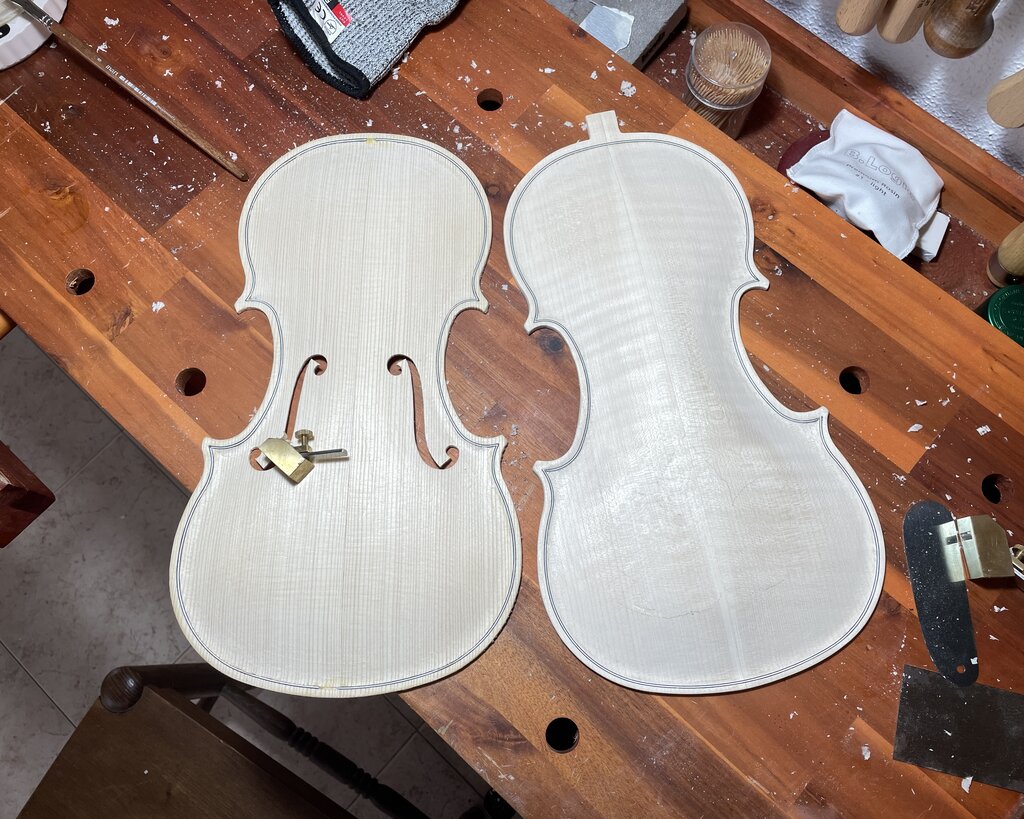
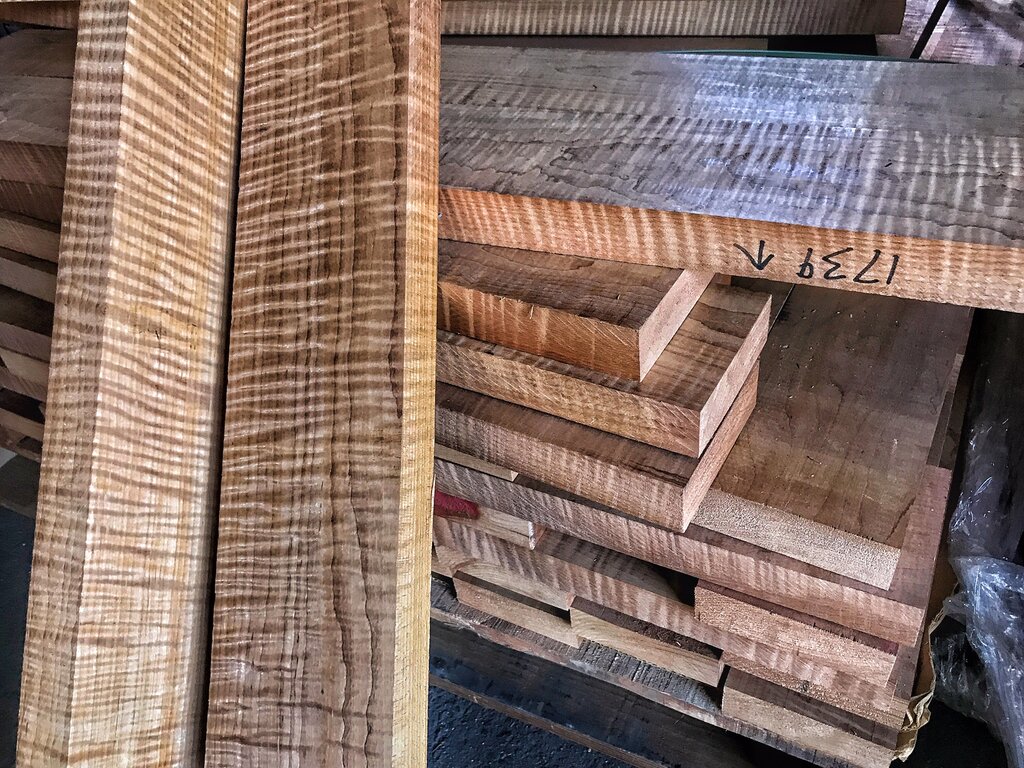
The back, sides (or ribs), and neck of the violin are made from maple. Maple is denser and harder than spruce. Its job isn't to generate sound but to reflect and amplify it within the hollow body. The hardness of the maple provides a resonant chamber that colors the tone, adding warmth and complexity. While its acoustic properties are primary, maple is also prized for its beautiful appearance. Highly figured maple, with a wavy or "flamed" pattern, is often used for high-quality instruments, giving each violin a unique visual signature.
Preparing the Wood
Simply choosing the right species is not enough. How the wood is cut and aged is just as important. The best tonewood is quarter-sawn. This means the log is cut into quarters first, and then planks are sliced perpendicular to the tree's growth rings. This method produces wood with straight, parallel grain lines, making it very stable and resistant to warping over time. This stability is crucial for an instrument under constant tension from its strings.
After being cut, the wood must be seasoned, or dried, to remove moisture. This is a slow, patient process. The best tonewood is air-dried naturally for many years, sometimes even decades. This gradual drying stabilizes the wood, preventing future cracks and warping. It also enhances the wood's resonance, as the cell structure changes over time, becoming more crystalline and sonorous.
Quickly drying wood in a kiln can make it brittle and acoustically dead, which is why traditional luthiers insist on the long wait.
The final sound of a violin is born long before the instrument is built. It begins in the forest, with the right tree, and is refined through years of patient seasoning.
The density, grain, and seasoning of the wood all work together. A dense piece of maple on the back will produce a powerful, bright sound, while a slightly less dense piece might yield a warmer, mellower tone. A spruce top with very fine grain will vibrate differently than one with wider grain. A luthier's skill lies in selecting and matching these pieces of wood to achieve a specific tonal goal, creating an instrument that is balanced, responsive, and beautiful to both the eyes and ears.
Time to check what you've learned about choosing wood for violins.
What is the primary role of spruce in the construction of a violin?
The ideal method for cutting tonewood to ensure stability and a straight, parallel grain is known as _______-sawn.
This careful selection and preparation is the first, and perhaps most important, step in a long journey from raw timber to a finished violin.