Villi Structure and Function Unveiled
Introduction to Villi
The Absorbing Surface
After leaving the stomach, digested food enters the small intestine. This long, coiled tube is where the real magic of digestion happens: nutrient absorption. For your body to use the carbohydrates, proteins, and fats from your food, they need to pass from the intestine into your bloodstream. But how does the body make this transfer happen efficiently?
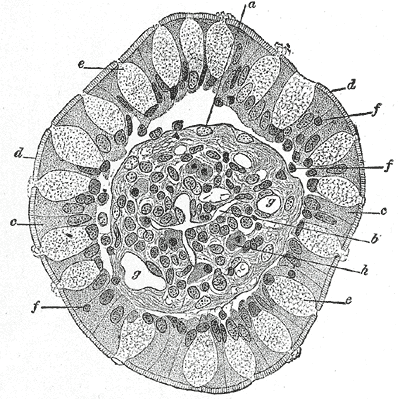
The answer lies in the incredible structure of the small intestine's inner lining. It's not smooth like a pipe. Instead, it's covered in millions of tiny, finger-like projections called villi.
Villi
noun
Tiny, finger-like projections that line the inside of the small intestine, responsible for absorbing nutrients.
Imagine trying to soak up a spill with a flat paper towel versus a towel with a thick, shaggy texture. The shaggy towel works much better because its many fibers create a much larger surface area to absorb the liquid. The villi work on the same principle.
Maximizing Surface Area
The primary job of the villi is to dramatically increase the internal surface area of the small intestine. If the inside of your small intestine were perfectly smooth, it would have a surface area of about half a square meter, roughly the size of a pillowcase. But with all the folds and the millions of villi, its total surface area is enormous, often compared to the size of a tennis court. This vast area is crucial for absorbing as many nutrients as possible from the food passing through.
As the soupy mixture of digested food, called chyme, moves through the small intestine, it flows over and around these millions of villi. This close contact allows the tiny nutrient molecules to pass through the walls of the villi and enter the bloodstream, which then carries them to the rest of your body to be used for energy, growth, and repair.
It is important to mention that the entire length of the inside of the small intestine is covered in villi.
Without villi, our bodies would be unable to absorb enough nutrients to survive, no matter how much food we ate. They are a simple but brilliant solution for making the most out of every meal.
What is the primary function of the villi in the small intestine?
The soupy mixture of digested food that flows over the villi is called ______.