Vietnamese American Lives and Legacies
Vietnamese American History
Waves of Arrival
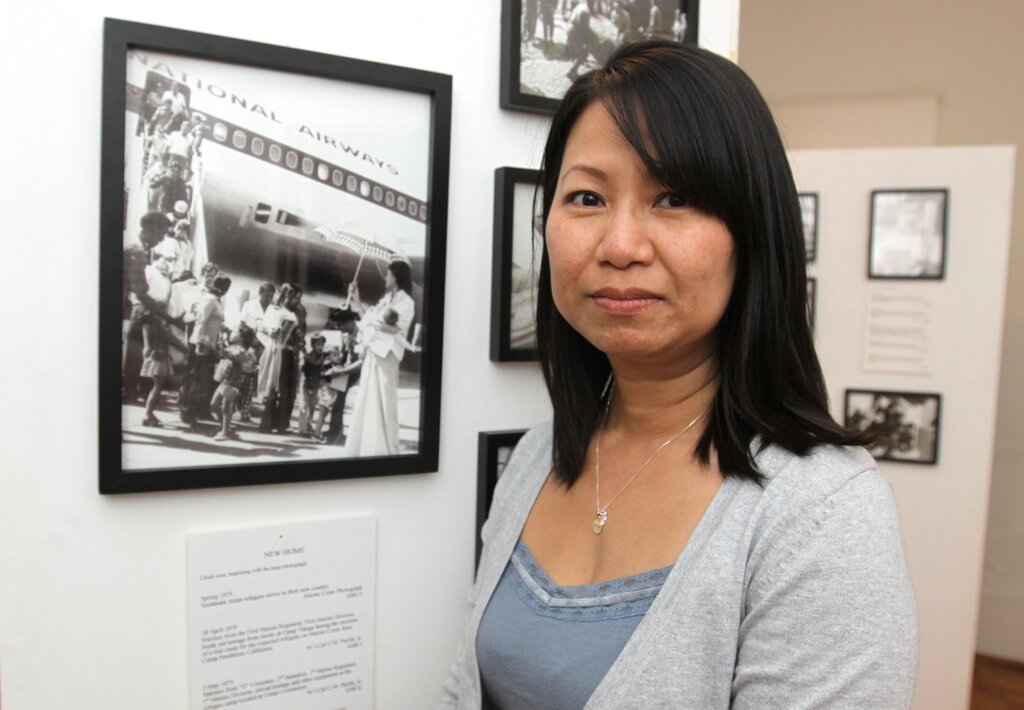
The story of Vietnamese Americans as a large community begins dramatically with the end of the Vietnam War in 1975. As Saigon fell, the United States evacuated approximately 130,000 Vietnamese citizens. This first wave consisted mainly of military personnel, government officials, and educated professionals who had worked with the American government and feared for their lives under the new communist regime.
Evacuees were first taken to processing centers on Guam and Wake Island, and then to one of four military bases in the U.S.: Camp Pendleton in California, Fort Chaffee in Arkansas, Eglin Air Force Base in Florida, and Fort Indiantown Gap in Pennsylvania. They waited in these camps for sponsorship from American individuals or organizations who would help them begin their new lives.
A Policy of Dispersion
To manage the influx of refugees, the U.S. government implemented a unique strategy called the Refugee Dispersion Policy. The goal was to scatter the Vietnamese refugees across all 50 states. Policymakers believed this would minimize the economic impact on any single community and encourage faster assimilation into American society.
Nine voluntary agencies (VOLAGs) were tasked with finding sponsors—churches, families, or community groups—for the refugees. A refugee family couldn't leave a camp until they had a sponsor. As a result, small groups of Vietnamese families found themselves in towns and cities all over the country, often with no other Vietnamese people nearby. This policy, while well-intentioned, often led to profound isolation, loneliness, and culture shock for the newcomers.
Building Communities Anew
Despite the government's dispersion policy, it wasn't long before Vietnamese refugees began to move again, this time within the United States. This process is known as secondary migration. Families and individuals left their initial placements in search of better economic opportunities, warmer climates similar to Vietnam's, and, most importantly, the comfort of community.
They sought out relatives, friends, and fellow Vietnamese who had been settled elsewhere. Over time, this secondary migration led to the formation of vibrant, concentrated Vietnamese American enclaves. Areas like Orange County in California, Houston in Texas, and the Washington, D.C. suburbs in Northern Virginia grew into major hubs of Vietnamese culture and life. These communities provided a sense of belonging that had been missing in their initial, more isolated placements.
Factors driving secondary migration included a desire for warmer weather, the availability of jobs, and the powerful draw of reconnecting with family and building a supportive ethnic community.
Life for the early refugees was filled with challenges. Many arrived with little more than the clothes they were wearing, having lost their homes, careers, and possessions. They faced significant language barriers, struggled to find work that matched their previous skills, and dealt with the psychological trauma of war and displacement.
In response to these struggles, the Vietnamese community organized itself. They formed Mutual Assistance Associations (MAAs), which were grassroots organizations run by and for the refugees. These MAAs played a crucial role in the resettlement process. They provided essential services like job placement, language training, and help navigating American systems. They also became cultural centers, organizing community events and festivals to preserve Vietnamese traditions for future generations.
Let's review the key concepts of the Vietnamese American resettlement experience.
The first wave of approximately 130,000 Vietnamese refugees who arrived in the U.S. in 1975 were primarily...
What was the main purpose of the U.S. government's Refugee Dispersion Policy?
Through resilience and a strong community focus, these refugees overcame immense obstacles to establish a new home in the United States.