Vietnam Political and Social History
Colonial Governance Dynamics
From Empire to Bureaucracy
Before the French arrived, 19th-century Vietnam was a centralized empire under the Nguyễn Dynasty. The emperor, ruling from the city of Huế, held absolute authority. His power flowed outward through a complex hierarchy of mandarins, scholar-officials who managed the provinces. This system, built on Confucian principles, had governed Vietnam for centuries. But it was not built to withstand the industrial and military might of a European colonial power.
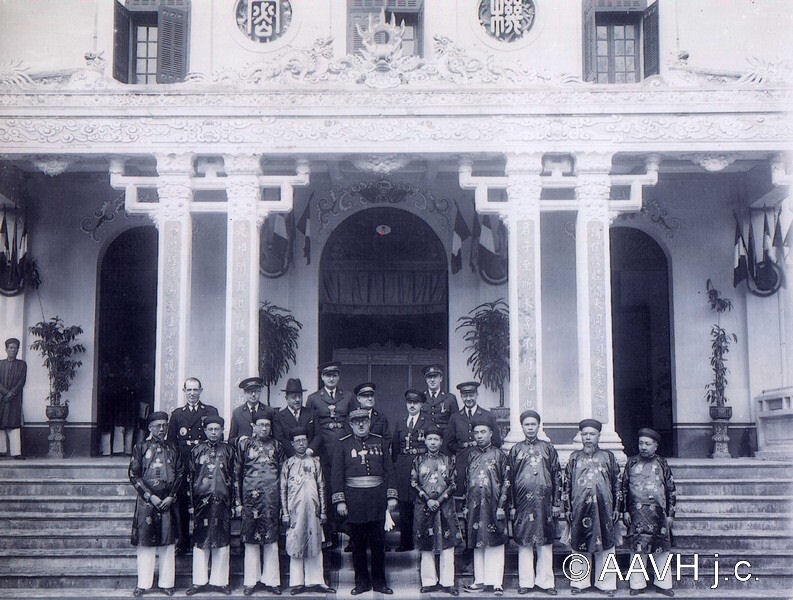
France’s conquest did not happen overnight. It was a gradual process of treaties, military campaigns, and political maneuvering. A key turning point came in the 1880s. After a series of conflicts, France forced the Nguyễn court to sign treaties that effectively dismantled Vietnamese sovereignty. Instead of abolishing the empire outright, the French chose a more insidious strategy: divide and rule. They split Vietnam into three distinct administrative regions, each with a different legal status.
| Region | French Status | Administration |
|---|---|---|
| Tonkin | Protectorate | Northern region, nominally under Nguyễn authority but ruled by a French Resident-Superior. |
| Annam | Protectorate | Central region, including the imperial capital of Huế. The emperor's direct rule was limited to this area. |
| Cochinchina | Colony | Southern region, ruled directly by the French as a colony. Represented in the French Parliament. |
This tri-partition was a deliberate political act. By breaking the country apart, France weakened national identity and prevented unified resistance. Cochinchina, the wealthiest region centered around the Mekong Delta, was made a direct colony to ensure full control over its lucrative rice exports. Annam and Tonkin were labeled protectorates, a fiction that allowed the French to rule indirectly through a puppet emperor and a neutered bureaucracy.
The Governor-General's Rise
The real power in French Indochina, which included Vietnam, Cambodia, and Laos, was the Governor-General. This position, created in 1887, concentrated all executive and military authority in one person. While the Nguyễn emperor still sat on his throne in Huế, he was a monarch in name only. His decrees were subject to French approval, and his court was slowly starved of its traditional power.
The final blow to the old system came with the appointment of Paul Doumer as Governor-General in 1897. A skilled and ruthless administrator, Doumer centralized all tax revenues, created government monopolies on salt, alcohol, and opium, and launched massive public works projects. Railroads, bridges, and telegraph lines were built, connecting the three regions of Vietnam like never before. But this modernization came at a tremendous cost.
To fund these projects, Doumer imposed heavy taxes on the Vietnamese population. The monopolies he created became a primary tool of economic extraction. The Nguyễn emperor and his mandarins were officially placed on the colonial payroll, transformed from rulers into salaried civil servants of the French state. Their traditional legitimacy evaporated. The French legal code began to replace traditional Vietnamese laws, further eroding the authority of local customs and the mandarin class that upheld them.
A New Economic Order
Doumer’s reforms, and a second wave of investment after World War I, were designed for one purpose: to make Indochina profitable for France. The economy was reoriented around the extraction of key resources. In Cochinchina, vast tracts of land were consolidated into massive plantations to produce rice and rubber for export. In Tonkin, mines were developed to extract coal, zinc, and tin. The new railroads didn't serve to connect Vietnamese communities; they served to move raw materials from the interior to the ports, where they could be shipped to France.
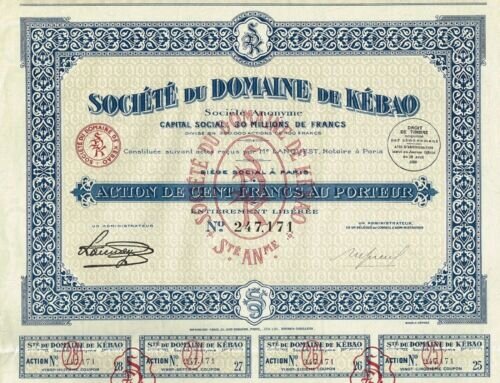
This system created deep social and economic divisions. A small number of French colonists and privileged Vietnamese landowners grew incredibly wealthy. Meanwhile, millions of peasants lost their land and were forced into grueling labor on plantations and in mines for meager wages. The traditional mandarin class, once the respected leaders of society, found themselves powerless and irrelevant. This widespread discontent and the destruction of the old social order would ultimately fuel the rise of the nationalist movements that fought to reclaim Vietnam's independence in the 20th century.
Now, let's test your understanding of these colonial dynamics.
What was the primary purpose of France's strategy to split Vietnam into three regions: Cochinchina, Annam, and Tonkin?
Which individual centralized French colonial power by establishing monopolies on key goods and launching massive public works projects funded by heavy taxation?
The shift from a Vietnamese empire to a French colonial state was not just a change of rulers. It was a fundamental restructuring of power, law, and economy that would shape the course of the nation's history for a century.