Video Production Fundamentals
Introduction to Video Production
The Three Acts of Video Creation
Making a video is like building a house. You don't just start hammering nails into wood. First, you need a blueprint. Then, you build the structure. Finally, you paint, furnish, and add the finishing touches. Video production follows a similar three-part structure: pre-production, production, and post-production. Each phase is critical for turning a simple idea into a polished final product.
Pre-Production: The Blueprint
Pre-production is all about planning. This is where you lay the groundwork for everything that follows. The goal is to answer every possible question and solve every potential problem before the camera starts rolling. A well-planned project is much more likely to run smoothly, stay on budget, and achieve its creative vision.
This phase includes writing the script, creating storyboards to visualize shots, casting actors, scouting locations, and creating a detailed shooting schedule. It’s the least glamorous part of the process, but it’s arguably the most important. Good preparation in this stage saves a massive amount of time, money, and stress later on.
Think of it this way: for every minute you see on screen, hours or even days were spent in pre-production.
Several key players collaborate to bring the plan together.
| Role | Responsibility |
|---|---|
| Producer | The project manager. Handles budget, scheduling, and logistics. |
| Director | The creative visionary. Shapes the story and guides the actors and crew. |
| Screenwriter | Crafts the story, dialogue, and action into a script. |
| Casting Director | Finds and selects the right actors for each role. |
Production: The Shoot
This is the phase most people picture when they think of filmmaking. Production is when the actual recording happens. The crew arrives on set, lights are positioned, sound is checked, and the director yells, "Action!" All the meticulous planning from pre-production comes to life here.
The production team's job is to capture all the necessary footage and audio according to the script and storyboard. This phase can be intense and fast-paced, often involving long days to stick to the schedule. A successful production phase relies on clear communication and everyone on the team knowing their specific role.
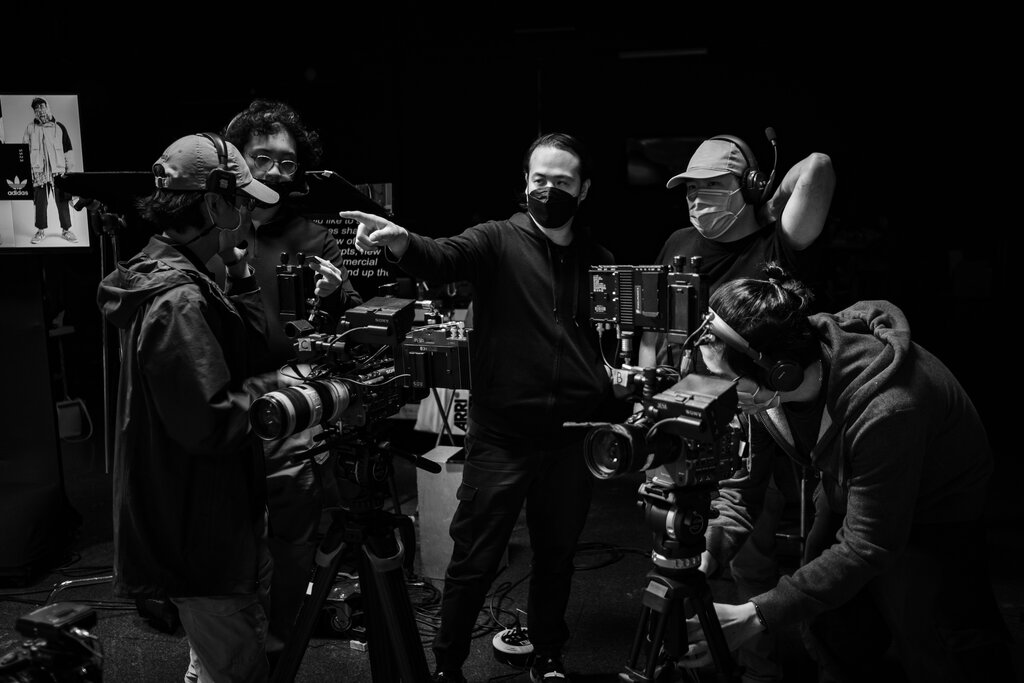
The team on set expands during the production phase.
| Role | Responsibility |
|---|---|
| Director of Photography | Also called the DP or Cinematographer. Responsible for the visual look, including camera and lighting choices. |
| Gaffer | The head of the lighting department. Works with the DP to create the lighting for each shot. |
| Sound Mixer | Captures clean, high-quality audio on set. |
| Grip | Builds and maintains all the equipment that supports the camera, from tripods to dollies. |
Post-Production: The Polish
Once all the footage is captured, the project moves into post-production. This is where the raw material is assembled, refined, and polished into the final video. The story that was planned in pre-production and shot in production finally takes its complete form here.
This process involves editing the video clips together, color correcting the footage to create a consistent look, mixing the sound, adding music and sound effects, and creating any necessary visual effects or graphics. It’s a detail-oriented phase that requires both technical skill and creative intuition.
Video editing and post-production: Editing the video is a crucial step to ensure it looks professional and gets your message across effectively.
The post-production team brings it all home.
| Role | Responsibility |
|---|---|
| Editor | Assembles the raw footage, selecting the best takes and piecing them together to tell the story. |
| Colorist | Adjusts the color and tone of the video to create a specific mood and ensure visual consistency. |
| Sound Designer | Adds and mixes all audio elements, including dialogue, music, and sound effects. |
| Visual Effects (VFX) Artist | Creates or integrates computer-generated imagery into the footage. |
Understanding these three distinct phases and the roles within them is the first step in appreciating the collaborative art of video production. Each stage builds on the last, turning a simple concept into a compelling story on screen.
Ready to test your knowledge?
What is the correct sequence of the three main phases of video production?
Which of the following activities is the primary focus of the post-production phase?