Video Editing Essentials
Introduction to Video Editing
Crafting Stories with Cuts
At its heart, video editing is the art of selection and arrangement. You take raw footage—all the shots, scenes, and audio clips—and piece them together to tell a story, make a point, or create a feeling. It's the invisible craft that transforms a collection of random moments into a coherent, engaging narrative.
Think of an editor as a sculptor. The raw footage is a block of marble. The editor's job is to chip away the unnecessary parts, smooth the rough edges, and shape what remains into a finished work. Every cut, transition, and sound effect is a deliberate choice designed to guide the viewer's attention and emotion.
Editing is just storytelling with clips.
From Scissors to Software
Not long ago, video editing was a very physical job. Editors worked with long strips of celluloid film. To make a cut, they would literally use a machine with a razor blade to slice the film. To join two shots, they'd tape them together. This was called linear editing.
In linear editing, you had to assemble your video in order, from start to finish. If you wanted to change something at the beginning, you might have to rebuild the entire sequence that followed. It was slow, painstaking, and left little room for error.
Imagine writing an essay with a typewriter. If you wanted to add a sentence to the first paragraph, you couldn't just create space. You’d have to retype the whole thing. That's what linear editing felt like. It required immense planning and precision because undoing a mistake was a massive headache.
The Non-Linear Leap
The biggest change in editing history was the shift to digital. The arrival of computers introduced non-linear editing systems, or NLEs. This completely revolutionized the process.
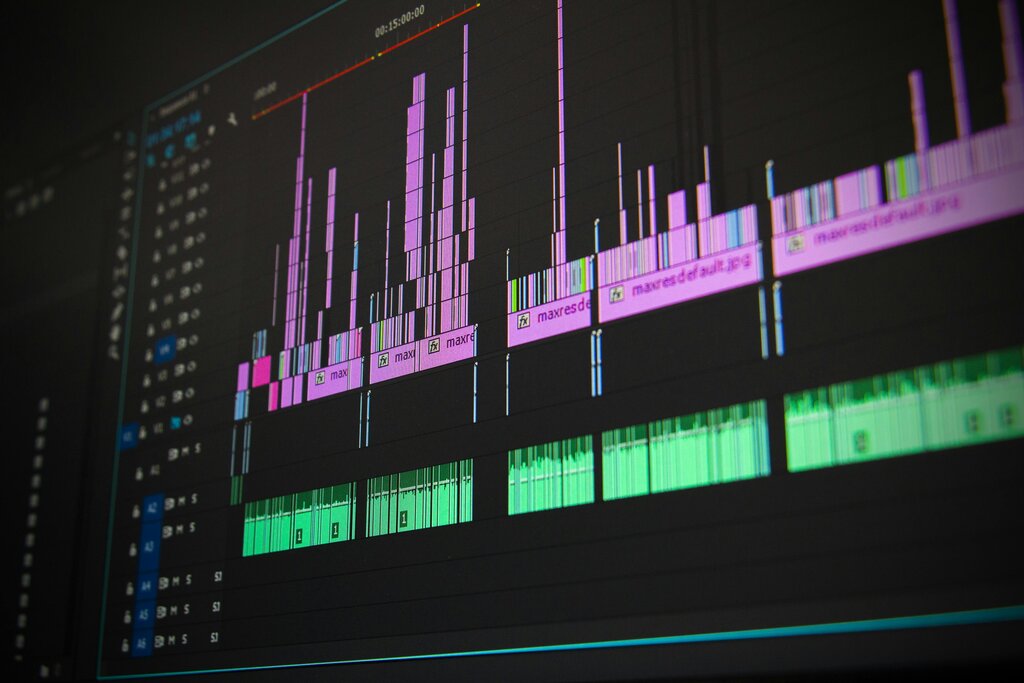
With a non-linear system, all your video footage is digitized and stored on a computer. This means you can instantly jump to any point in any clip without needing to rewind or fast-forward. You can place clips anywhere on a timeline, trim them, move them, or delete them with a click. Want to insert a new shot at the beginning? Just drag and drop it, and everything else shuffles down automatically.
This newfound freedom allowed for endless experimentation. Editors could try out different versions of a scene, play with pacing, and easily undo mistakes. The creative possibilities exploded.
More importantly, digital technology made video editing accessible. What once required bulky, expensive machines that filled a room now fits onto a laptop. This democratization of tools means that anyone, from a Hollywood director to a student making a class project, can now shape and share their stories through video.
The core of video editing is best described as the art of...
Editing on physical film by literally cutting and taping it together is known as ______ editing.