Victorian Femininity Explained
Victorian Era Overview
The Age of Queen Victoria
When Queen Victoria took the throne in 1837, Britain was a rural nation. By the time she died in 1901, it was a modern, industrialized global power. This period, known as the Victorian era, was a time of staggering change, profound contradictions, and rapid invention. It was an age of steam engines, sprawling cities, and strict social rules, all existing at the same time.
A Tale of Two Britains
At the heart of the Victorian transformation was the Industrial Revolution. This wasn't a single event but a massive shift in how people lived and worked. Britain moved from an economy based on farming to one centered on manufacturing and machinery. New inventions like the steam engine and the power loom revolutionized industries like textiles and coal mining.
Cities like Manchester, London, and Glasgow swelled as people left the countryside in search of jobs. This rapid urbanization created immense wealth and a growing middle class of factory owners, bankers, and merchants. It also led to overcrowded slums, dangerous working conditions, and widespread poverty. For many, life in the new industrial cities was a harsh struggle for survival.
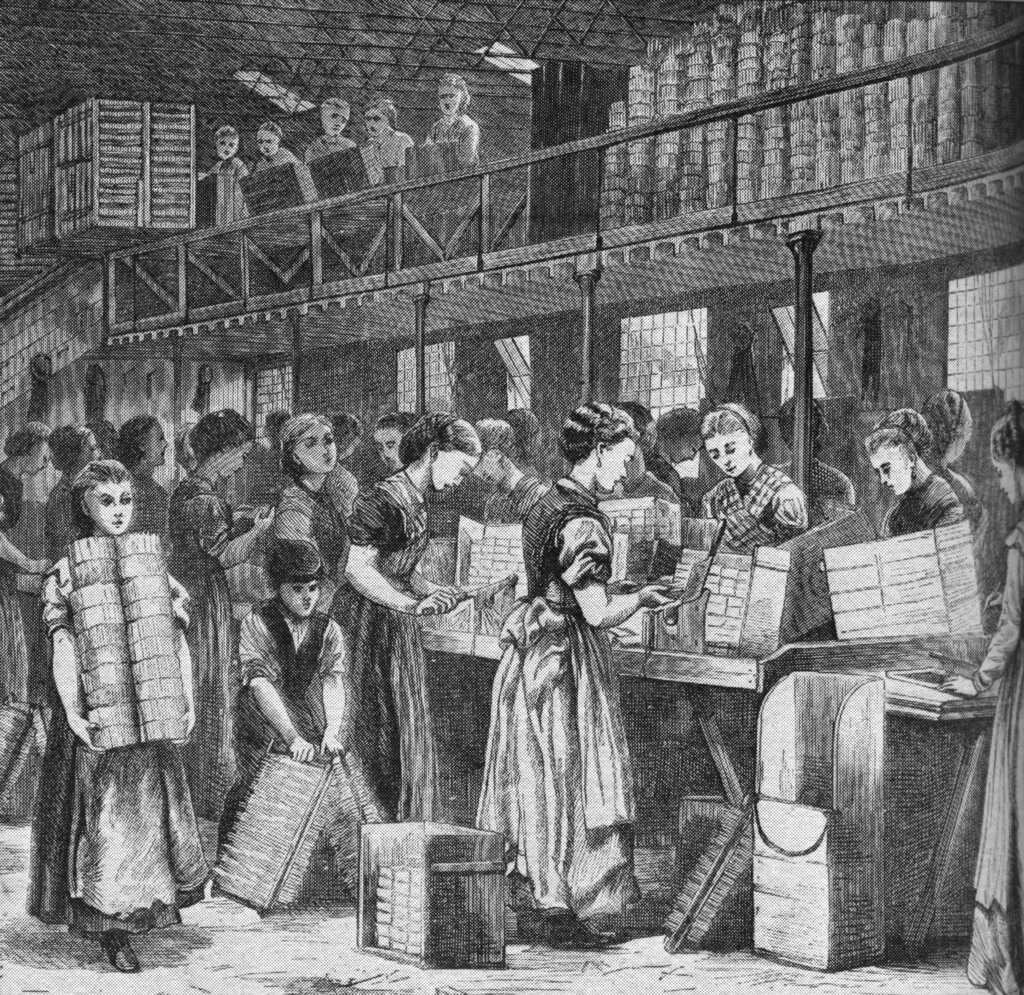
This industrial power didn't just reshape Britain; it fueled its expansion across the globe.
The Empire on Which the Sun Never Set
The Victorian era was the peak of the British Empire. Fueled by its industrial might and commanded by a powerful navy, Britain extended its control over vast territories. At its height, the empire covered about a quarter of the world's land area and ruled over a quarter of its population.
Colonies in India, Canada, Australia, and large parts of Africa supplied raw materials for British factories and served as markets for finished goods. This expansion brought enormous wealth and influence to Britain, cementing its status as the world's leading superpower. Events like the proclamation of Queen Victoria as Empress of India in 1877 symbolized the immense scale and power of the empire.
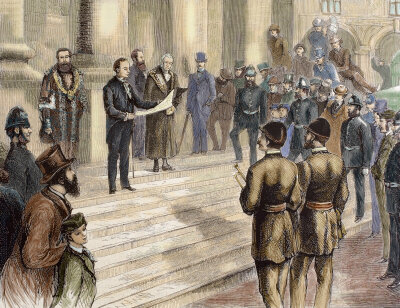
Back home, this imperial and industrial success reinforced a rigid social structure.
The Class System
Victorian society was sharply divided by social class. Where you were born often determined your entire life, from your education and career to whom you could marry. While the Industrial Revolution created opportunities for some to climb the social ladder, the class lines were generally clear and difficult to cross.
| Class | Who They Were |
|---|---|
| Upper Class | Aristocracy and nobility; inherited land, wealth, and titles. |
| Middle Class | Factory owners, merchants, doctors, lawyers; wealth came from work. |
| Working Class | Factory workers, miners, farm laborers; lived day-to-day on wages. |
The Upper Class, or aristocracy, lived lives of leisure, their status derived from land ownership and family lineage. Below them was the rapidly expanding Middle Class. This group valued hard work, religious morality, and social respectability. Their rise was one of the defining features of the era. At the bottom was the vast Working Class, whose manual labor powered the factories and built the empire. Their lives were often marked by poverty, long hours, and poor living conditions.
The era was also a time of significant cultural and intellectual change. The Great Exhibition of 1851, held in London's Crystal Palace, showcased Britain's industrial and technological prowess to the world. At the same time, new scientific ideas, most notably Charles Darwin's theory of evolution, began to challenge long-held religious beliefs, sparking intense debate across society.
Let's review what made the Victorian era such a transformative period.
What was the primary economic shift that characterized the Victorian era in Britain?
How did the Industrial Revolution directly fuel the expansion of the British Empire?
This period of industrial growth, imperial expansion, and rigid social order set the stage for the specific roles and expectations that would come to define life in Victorian Britain.