Vices and Virtues of 18th Century British Literature
Augustan Satire
Wit as a Weapon
In the early 18th century, Britain was a nation in flux. The political landscape was turbulent, financial markets were inventing new ways to boom and bust, and society was grappling with rapid change. Writers of this period, who saw themselves as heirs to the golden age of Roman literature under Emperor Augustus, used their sharpest tool to critique the world around them: satire.
This wasn't just about telling jokes. For authors like Jonathan Swift and Alexander Pope, satire was a moral and political weapon. They wielded humor, irony, and exaggeration to expose what they saw as the corruption, vanity, and foolishness of their time. They believed in reason, order, and classical ideals, and they saw a society straying far from that path.
Satire
noun
The use of humor, irony, exaggeration, or ridicule to expose and criticize people's stupidity or vices, particularly in the context of contemporary politics and other topical issues.
The Scriblerus Club
The heart of this literary movement was an informal group of friends known as the Scriblerus Club. Its core members included Jonathan Swift, Alexander Pope, John Gay, Thomas Parnell, and John Arbuthnot. Their collective mission was to mock the abuses of learning and the rise of what they called "dullness" in all its forms.
They invented a fictional scholar, Martinus Scriblerus, through whom they could satirize pedantic academics, questionable scientific experiments, and the flood of poorly written pamphlets and books emerging from London's publishing houses. This collective project was a powerful expression of Augustan ideals, championing classical clarity and intellectual rigor against the perceived chaos of modern life.
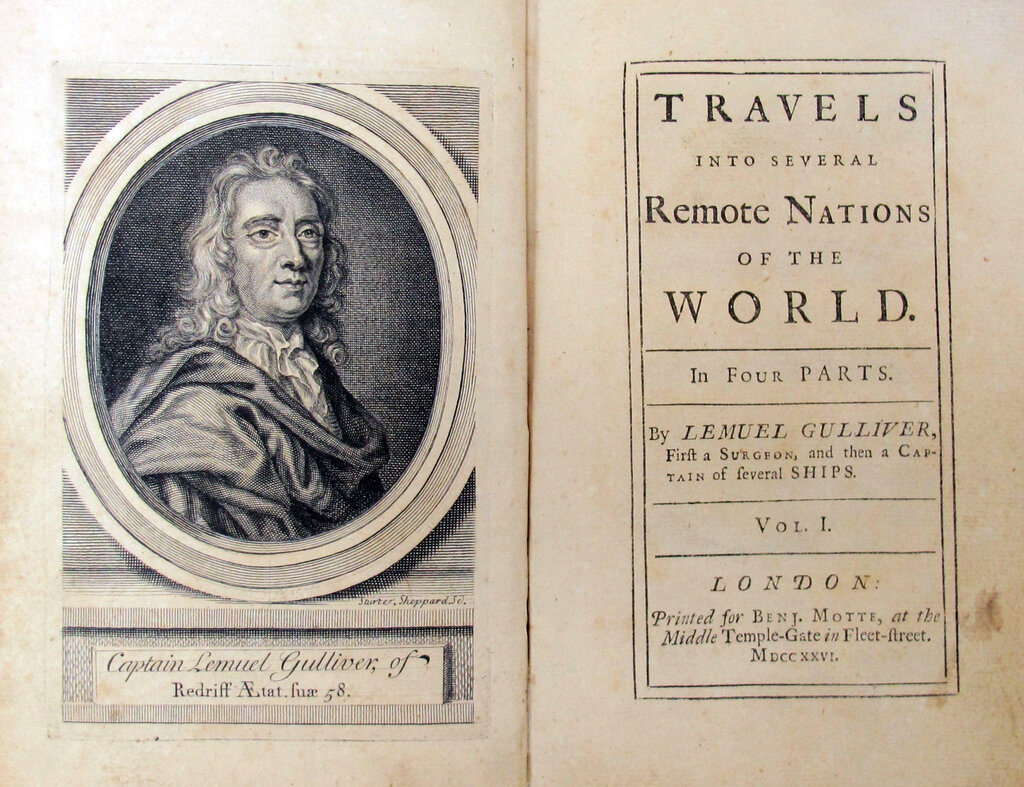
Jonathan Swift’s Gulliver’s Travels is perhaps the most famous work to emerge from this circle. While it reads like a fantastical adventure story, it’s a searing critique of the British government and human nature itself. The seemingly absurd societies Gulliver encounters are carefully constructed mirrors of Swift's own world.
The petty conflicts between the tiny Lilliputians, for example, directly satirized the pointless political squabbles between Britain’s Whig and Tory parties. Gulliver’s voyage to the land of the Houyhnhnms—rational, intelligent horses who rule over savage human-like creatures called Yahoos—forces a harsh look at humanity’s capacity for reason and its descent into vice. This biting, often cynical style is a hallmark of Menippean satire, which uses fantasy and narrative to attack broad societal attitudes and philosophies.
Satire serves as a powerful tool for social critique, enabling authors to expose the absurdities and moral failings of contemporary society.
Swift took aim at specific targets, too. His commentary often alluded to the corrupt administration of Robert Walpole, Britain's de facto first Prime Minister, and the disastrous South Sea Bubble of 1720, a financial crisis that ruined many investors and exposed widespread greed.
Pope's Polished Ridicule
While Swift’s satire was often dark and sweeping, Alexander Pope specialized in a different form. His masterpiece, The Rape of the Lock, is a brilliant example of a mock-epic. He took a trivial real-life event—a nobleman cutting a lock of hair from a lady's head without permission—and treated it with the grandiose language and structure of a classical epic like Homer's Iliad.
The poem features gods, goddesses, epic battles (played out over a card game), and dramatic speeches, all to highlight the vanity and absurdity of high society's concerns. By blowing up a minor social spat to epic proportions, Pope masterfully satirizes the rigid social hierarchies and misplaced priorities of the aristocracy. This gentler, more playful approach, which pokes fun at social follies rather than attacking them with moral outrage, is known as Horatian satire.
| Satire Type | Style | Target | Augustan Example |
|---|---|---|---|
| Horatian | Gentle, witty, light-hearted | Social follies, common human flaws | Alexander Pope's The Rape of the Lock |
| Menippean | Harsh, cynical, narrative-based | Societal structures, philosophical errors | Jonathan Swift's Gulliver's Travels |
The power of satire was not lost on the government. Playwrights, in particular, used the stage to launch direct and often vicious attacks on political figures. Worried about public dissent, Robert Walpole's government passed the Licensing Act of 1737.
This act required that all new plays be approved by a government official, the Lord Chamberlain, before they could be performed. This effectively censored the theatre, forcing many satirists, like the novelist Henry Fielding, to turn from drama to the newly emerging form of the novel. The act dramatically altered the landscape of British literature, inadvertently helping to fuel the rise of the novel as the dominant literary form for the rest of the century.
What was the primary collective mission of the Scriblerus Club, which included authors like Jonathan Swift and Alexander Pope?
In Jonathan Swift's Gulliver's Travels, the conflict between the tiny Lilliputians was a satirical representation of what?
The Augustan satirists left a lasting legacy, establishing a tradition of using literature not just to entertain, but to question and critique the world.