Vibration Analysis for Truck-Mounted Electronics
Vibration Fundamentals
What is Vibration?
At its core, vibration is simply a back-and-forth motion around a point of equilibrium. Think of a guitar string after you pluck it. It moves rapidly up and down, eventually returning to rest. That movement is a vibration.
This oscillation can be periodic, like the steady swing of a pendulum, or random, like a car shaking on a bumpy road. In engineering, especially when dealing with electronics mounted on vehicles, understanding these movements is crucial. Uncontrolled vibrations can shake components loose, crack circuit boards, and lead to system failure.
Vibration
noun
A mechanical phenomenon whereby oscillations occur about an equilibrium point.
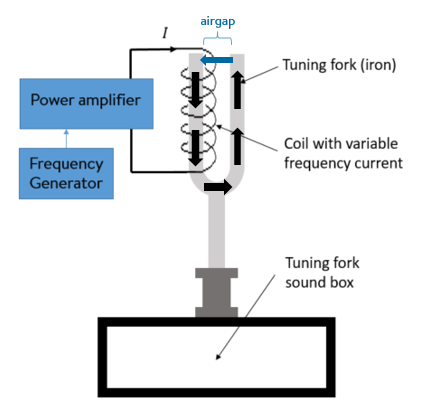
A classic tool for studying vibration is the tuning fork. When struck, its prongs oscillate at a very specific rate, creating a pure tone. This predictable movement makes it a perfect example of a simple vibrating system.
The Language of Vibration
To describe and analyze vibrations, we use a few key parameters. These help us measure a vibration and predict its effect on a system.
The first is amplitude, which is the maximum displacement or distance moved by a point on a vibrating body from its position of equilibrium. Simply put, it's how big the vibration is. A gentle hum has a low amplitude, while a violent shake has a high amplitude.
Next is frequency, which tells us how fast the vibration occurs. It's measured in Hertz (Hz), where 1 Hz is one cycle, or one complete back-and-forth motion, per second.
Frequency
noun
The rate at which a vibration occurs over time, measured in cycles per second (Hertz).
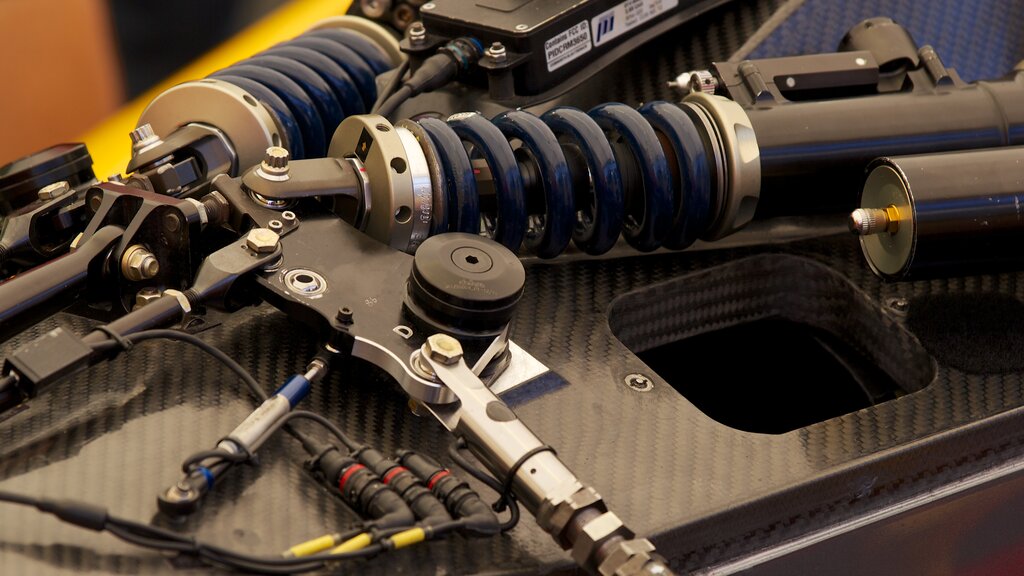
Finally, we have damping. In the real world, vibrations don't last forever. Energy is lost due to friction and other resistance, which causes the amplitude to decrease over time. This decay is called damping. A good suspension system in a truck provides a lot of damping to smooth out the ride.
Types of Vibration
We can categorize vibrations based on what's causing them and whether they fade away. The main distinction is between free and forced vibration.
Free vibration occurs when you disturb a system and then let it go. Imagine tapping a bell. It rings and then slowly fades to silence. The initial tap provides the energy, and the bell vibrates at its own natural frequency until damping causes it to stop.
Forced vibration is caused by an ongoing external force. The shaking of a washing machine during the spin cycle is a forced vibration. It's caused by the rotating, unbalanced load and it only happens when the machine is running. The frequency of the vibration is determined by the frequency of the external force (in this case, the speed of the spinning drum).
These types can also be either undamped or damped.
| Undamped | Damped | |
|---|---|---|
| Free Vibration | Vibrates forever at its natural frequency (ideal case). | Vibrates at its natural frequency, but the amplitude slowly decays to zero. |
| Forced Vibration | Vibrates at the frequency of the external force. Amplitude can become infinite if frequencies match (ideal resonance). | Vibrates at the frequency of the external force, but damping limits the amplitude, even at resonance. |
The Danger of Resonance
Every object has a set of natural frequencies at which it prefers to vibrate. When the frequency of an external force matches one of these natural frequencies, something dramatic happens: resonance.
Think about pushing a child on a swing. If you push at random times, you won't accomplish much. But if you time your pushes to match the swing's natural back-and-forth rhythm, the swing will go higher and higher. You are in resonance with the swing. The same principle applies to mechanical structures.
Resonance is a phenomenon where the amplitude of a vibration grows dramatically because a forcing frequency matches the system's natural frequency.
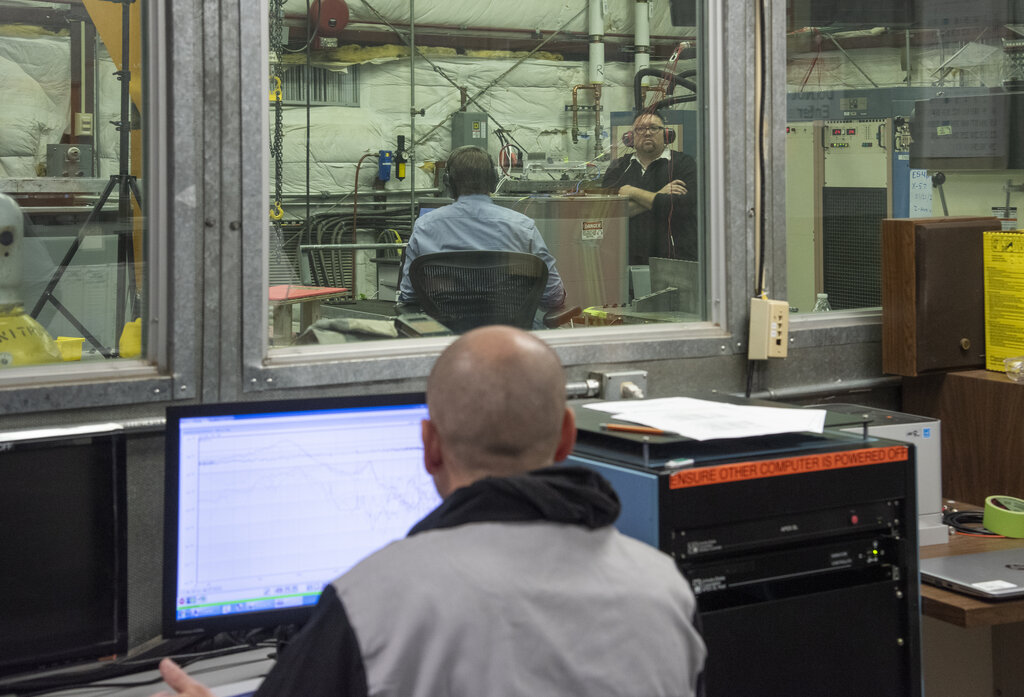
In a truck, the engine, tires on the road, and airflow all create forced vibrations at various frequencies. If one of these frequencies matches the natural frequency of an electronic component or its mounting bracket, resonance can occur. The amplitude of the vibration can increase until the component fatigues and breaks.
This is why engineers spend so much time analyzing and testing for resonance. By understanding the natural frequencies of components, they can design systems to avoid matching them with the frequencies they'll experience during operation.
By grasping these fundamentals—amplitude, frequency, damping, and resonance—you can begin to understand how vibrations behave and why managing them is so critical for building reliable systems.
The shaking of a washing machine during its spin cycle is a classic example of what kind of vibration?
What is resonance?