Vibing in Code
Introduction to Vibe Coding
What is Vibe Coding?
Programming traditionally involves writing precise instructions, one line at a time, in a language a computer can understand. This requires deep knowledge of syntax and logic. But a new approach is changing the landscape, one that relies more on conversation than on commands. It’s called vibe coding.
Vibe coding is a way of building software where you express intent in natural language, let an AI (usually a large language model) generate runnable code, and iterate on the live behavior rather than painstakingly authoring every line yourself.
The term was introduced by engineer Andrej Karpathy in February 2025. The core idea is simple: you describe the goal, or the “vibe,” of what you want to build to an AI. This AI, a large language model (LLM), acts as your programming partner. It takes your high-level, natural language descriptions and translates them into functional source code.
The developer’s role shifts from a writer to an editor or a director. Instead of typing out every function and variable, you guide the AI, test the code it produces, and provide feedback to refine the result. This makes software development more accessible, allowing people without years of training to create applications.
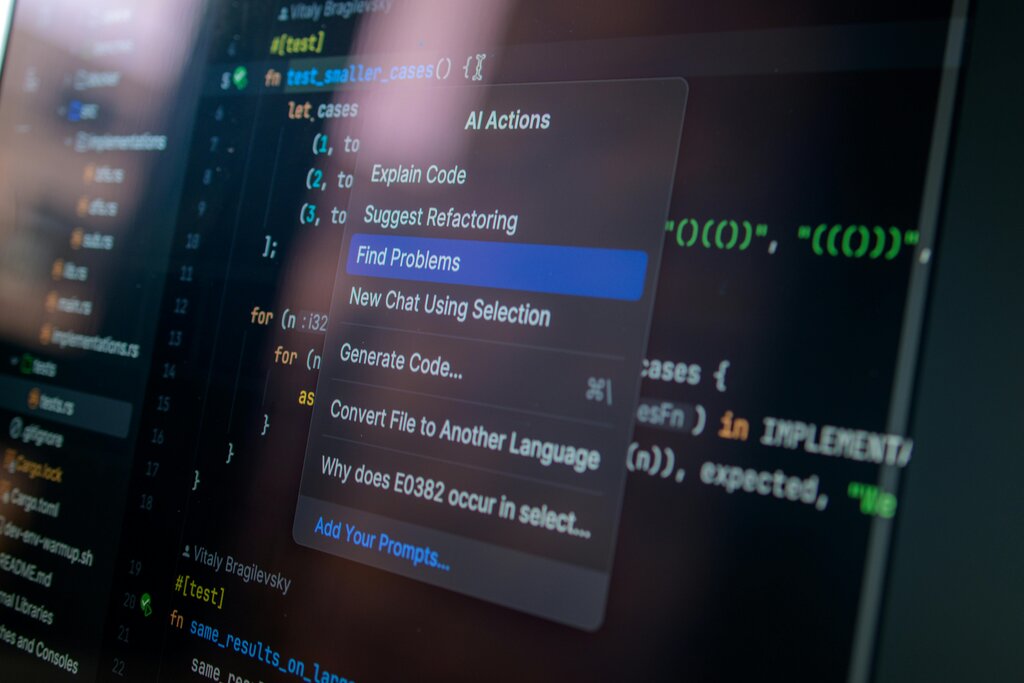
How It Compares
The difference between vibe coding and traditional coding is like the difference between giving a taxi driver an address and drawing them a map. In traditional coding, you draw the map, detailing every single turn. With vibe coding, you just state your destination and let the driver, the AI, figure out the best route.
| Feature | Traditional Coding | Vibe Coding |
|---|---|---|
| Process | Manual, line-by-line | Conversational, iterative |
| Focus | Syntax and logic | Intent and functionality |
| Skillset | Deep language knowledge | Strong communication & testing |
| Initial Output | Precise and controlled | A functional starting point |
| Speed | Can be slow, methodical | Very fast for prototypes |
Benefits and Limitations
The most obvious benefit of vibe coding is speed. It allows for rapid prototyping and development, turning an idea into a working product in a fraction of the time. It also lowers the barrier to entry. Artists, designers, and entrepreneurs can build tools without becoming expert programmers.
However, this approach has its drawbacks. The code generated by an LLM isn't always perfect. It can be inefficient, contain subtle bugs, or have security vulnerabilities. Debugging can be tricky because the developer didn't write the code and might not fully understand its logic. It's like trying to fix a car engine you've never seen before. There's also a risk of over-reliance on the AI, which could stifle a deeper understanding of programming principles.
The goal isn't to replace developers, but to empower them. Vibe coding allows builders to focus more on the 'what' and less on the 'how'.
Ready to check your understanding?
What is the core idea of "vibe coding"?
In the analogy provided, traditional coding is compared to drawing a detailed map for a taxi driver. What does vibe coding represent?
Vibe coding represents a significant shift in how we create software, making it a more collaborative and intuitive process between human and machine.