Vibecoding Explained
Introduction to Vibe Coding
What Is Vibe Coding?
Imagine describing a software idea in plain English and watching it come to life. That’s the core of vibe coding. Instead of writing code line by line, you tell an AI, specifically a large language model (LLM), what you want to build. The AI then generates the source code for you.
Vibe coding is a way of building software where you express intent in natural language, let an AI (usually a large language model) generate runnable code, and iterate on the live behavior rather than painstakingly authoring every line yourself.
The focus shifts from mastering complex syntax to clearly articulating your vision. You act as a director, guiding the AI through prompts and feedback. The AI handles the technical implementation, turning your
A New Way to Build
Traditional programming requires you to meticulously craft every instruction. You write the code, find bugs, and fix them by hand. It’s a process that demands deep technical knowledge and attention to detail.
Vibe coding flips this dynamic. The primary skill isn't writing perfect code, but providing clear, high-level instructions and then evaluating the outcome. You test the software the AI produces, and if it's not right, you refine your prompt and try again. It’s a rapid, experimental loop of ideation and iteration.
| Feature | Traditional Coding | Vibe Coding |
|---|---|---|
| Developer's Role | Write code line by line | Describe goals and intent |
| Primary Skill | Syntax and logic | Communication and iteration |
| Process | Write, compile, debug | Prompt, generate, test, refine |
| Focus | Code correctness | Desired outcome |
| Pace | Methodical and detailed | Fast and experimental |
The AI Behind the Scenes
Vibe coding is powered by large language models. These are complex AI systems trained on enormous amounts of text and code from the internet. This training allows them to understand the nuances of human language and recognize patterns in programming.
When you give an LLM a prompt like, "Build a simple web page with a button that shows a random cat photo," it draws on its vast knowledge to generate the necessary HTML, CSS, and JavaScript. It's not just retrieving code; it's synthesizing a solution based on your request.
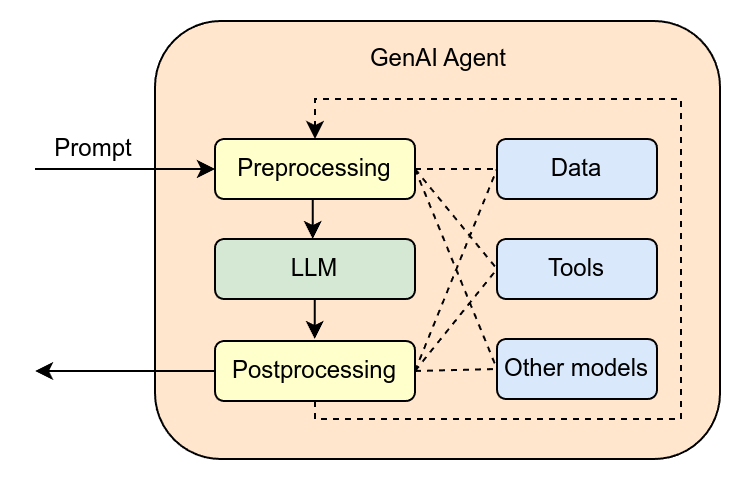
The process is conversational. You start with a simple idea, see what the AI creates, and then build on it with more specific instructions. For example, your next prompt might be, "Now, add a counter that tracks how many cat photos have been viewed."
Benefits and Challenges
This new approach comes with a unique set of trade-offs.
The biggest benefit is accessibility. Individuals without a formal programming background can now build software. It dramatically speeds up prototyping, allowing developers to test ideas quickly without getting bogged down in boilerplate code. This frees up creators to focus more on the user experience and high-level logic.
However, vibe coding has its challenges. The AI can produce code that is inefficient, unconventional, or contains subtle bugs. Debugging can be tricky, since you didn't write the code yourself and might not fully understand its logic. Relying on AI also means giving up a degree of control and predictability compared to writing code manually.
Vibe coding excels at turning ideas into working prototypes quickly, but it requires a different kind of debugging—one focused on refining prompts rather than fixing syntax.
Ready to check your understanding?
What is the primary role of a person using "vibe coding"?
Compared to traditional programming, the main focus in vibe coding shifts from...
Vibe coding represents a significant shift in how we create software, moving from direct manipulation of code to a partnership with AI. It lowers the barrier to entry and changes the very nature of a developer's workflow.