Vibecoding and Agentic Development
Shift to Intent
The Shift to Intent
Programming is undergoing a fundamental shift. For decades, developers have communicated with machines through strict, unforgiving syntax. Every comma, bracket, and semicolon had to be perfect. Your job was to translate a human idea into a machine's native tongue. Now, that's changing. The most important programming language is becoming... English.
This new paradigm is often called 'vibe coding,' a term popularized by AI researcher Andrej Karpathy. It's less about writing line-by-line instructions and more about communicating your high-level goals to an AI partner that handles the implementation details. You move from being a bricklayer, meticulously placing each brick, to an architect, designing the blueprint and ensuring the final structure matches your vision.
Your role shifts from writing code to shaping intent.
Command vs. Intent
Traditional programming is command-driven. You give the computer explicit, step-by-step commands. If you want to sort a list of numbers, you write the sorting algorithm yourself or call a specific library function. You are responsible for the 'how'.
Vibe coding is intent-driven. You describe the 'what.' Instead of writing a sorting algorithm, you might prompt an AI agent: "Take this list of user objects and display them with the newest sign-ups first." The agent understands the intent and generates the necessary code to fetch, sort, and render the data. This process is a form of agentic orchestration, where you direct AI agents to perform complex tasks.
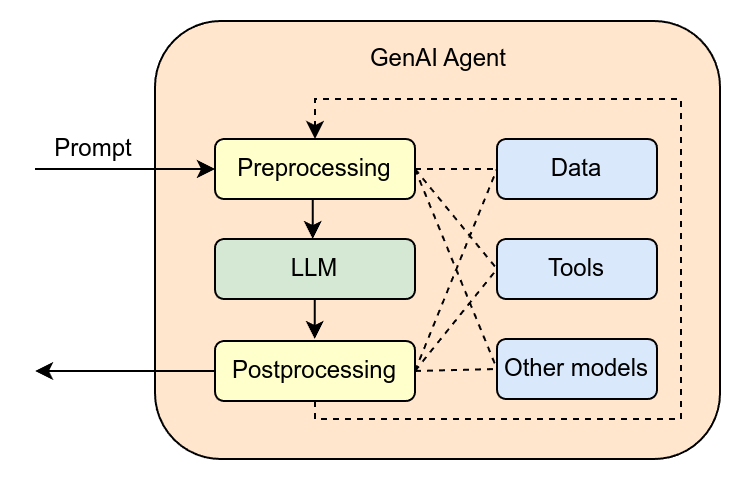
This frees you from writing repetitive code and allows you to focus on the truly creative aspects of software development: user experience, application logic, and the overall product vision. You're not just a coder; you're a conductor leading an orchestra of AI assistants.
The Vibecoding Loop
This new way of working isn't a single command but a rapid, iterative cycle. It's a conversation between you and the AI, aimed at quickly converging on the desired result. This is the vibecoding loop.
1. Think: Define the feature or fix. What is the goal? What should the end-user experience be?
2. Prompt: Describe your intent to the AI agent in natural language. Be descriptive. Provide context and examples.
3. Test: Run the generated code. Observe the behavior. Does it match your intent? Does it have bugs or edge cases?
4. Refine: Give the AI feedback. "That's almost right, but change the color to blue." or "You forgot to handle cases where the user isn't logged in." Then, repeat the cycle.
This loop is fast. Cycles can take seconds, not hours. The core mindset shifts from 'perfection before running' to 'momentum and rapid iteration.' The goal is to get a working version as quickly as possible and then shape it into the final product through conversation.
Ready to check your understanding? Let's see what you've learned about this new way of coding.
According to the text, what is the fundamental shift in programming described as 'vibe coding'?
Vibe coding is described as 'intent-driven'. What does this mean?
Vibe coding isn't about replacing developers. It's about augmenting them, changing their role from a scribe to a strategist. It's a collaborative process that prioritizes intent, creativity, and speed.